
Anti-Roll Bar Linkage Ball Joint: MOT Advisory Explained
Anti-roll bar linkage ball joint on your MOT: what a drop link does, why it rattles over speed bumps, and when play becomes a failure.

Anti-roll bar linkage ball joint on your MOT: what a drop link does, why it rattles over speed bumps, and when play becomes a failure.

Coil spring fractured on your MOT sheet? Why springs snap quietly, why the defect is a fail, and why pairs are the honest recommendation.

The straight answer to one of the most googled MOT questions, plus what a dead reversing lamp usually needs.

Britain’s most common MOT advisory: what tyre worn close to legal limit means, what edge wear is telling you, and how to plan the replacement.

Brake binding on your MOT certificate: what the rollers detected, the usual seized suspects, and why this advisory is worth acting on.

Headlamp aim is Britain’s most common MOT failure item. What the beam tester measures, why aim drifts, and how it’s fixed in minutes.

One of Britain’s most common MOT advisories explained: what worn, pitted or scored really means, and when a disc becomes a failure.

Brake pipe corroded on your MOT sheet? Where the line sits between advisory and failure, and how corroded pipes are properly replaced.

Failed your MOT for service brake efficiency below requirements? What the measured result means, why a car that feels fine can fail, and how it’s repaired.
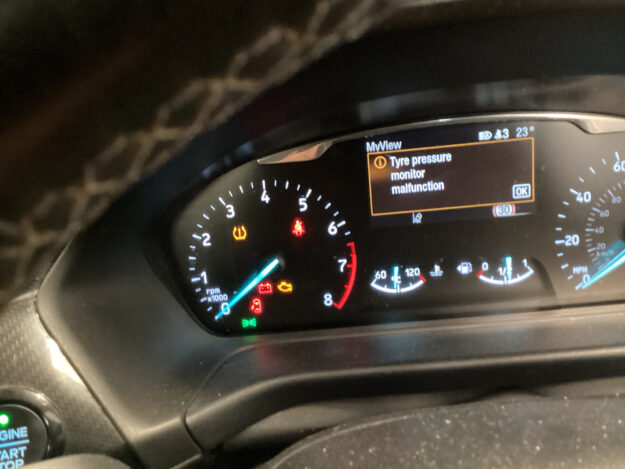
TPMS MOT failure explained: the exact defect wording testers use, real examples from our workshops, and how a free TPMS check helps you pass first time.