Failed Your MOT for a Fractured Coil Spring? Here’s What Happened
Of all the wording on an MOT failure sheet, this one surprises people the most, because half the time the driver never felt a thing:
Coil spring fractured or broken (5.3.1 (b) (i))
Or the advisory version, when the spring is rusting but still whole:
Coil spring corroded (5.3.1 (b) (i)) (advisory)
A snapped spring sounds like it should be unmissable. In reality, we lift cars every week at our branches across Nottinghamshire where a spring has been broken for weeks and the first anyone hears of it is the MOT.
In short: one of the car’s road springs has snapped or cracked, usually in the bottom coil. It is a Major defect, so the car fails, even if you have not felt a thing. A spring that is only corroded is recorded as an advisory: the car passes, but corrosion is what usually makes springs snap.
One quick translation before we go any further: nearside means the passenger side of the car, the side nearest the kerb. Offside means the driver’s side. So a defect recorded as nearside front is on the front passenger side, and offside rear is behind the driver. Front and rear, inner and outer, upper and lower simply pin down exactly which component the tester was looking at.
What a Coil Spring Does, and Why They Snap
Each corner of your car sits on a coil spring. It carries the car’s weight, keeps the tyre pressed onto the road and soaks up every pothole between your driveway and everywhere you have ever driven. Springs fail for a simple, very British combination of reasons:
- Corrosion: years of salt and moisture attack the spring’s protective coating, and rust creates a weak point, usually in the bottom coil where dirt sits.
- Potholes and speed bumps: one hard impact on a corroded coil is often the final straw. Unsurprisingly, we see a spike in snapped springs every winter.
- Fatigue: tens of millions of compressions over a car’s life eventually tell, especially on heavier cars. The extra weight of hybrid and electric vehicles works their springs harder still.
Why You Might Not Have Noticed
Springs usually break at the very top or bottom coil, and the broken piece often stays wedged in its seat. The car may sit a few millimetres lower on one corner, clunk over speed bumps or creak on full lock, but on a smooth road it can feel almost normal. That is exactly why the MOT checks for it: fractured means the tester found the break, and a spring that is corroded but still whole is recorded as an advisory, because corrosion is usually what makes a spring snap.
Why It’s a Failure and Not an Advisory
A fractured spring is a Major defect. The corner it supports is running with less control: braking and cornering grip suffer, and the sharp broken end can sit close enough to the tyre to slice it, which is how a snapped spring occasionally becomes a blowout. A heavily corroded but unbroken spring, by contrast, often earns an advisory: that is your early warning, and it is worth taking.
How It’s Repaired
- The broken spring is replaced. We strongly recommend replacing springs in axle pairs: a new spring next to a ten-year-old one leaves the car sitting and handling unevenly, and the old one is next in line anyway.
- The shock absorber, top mount and spring seats on that corner are inspected while everything is apart, because they age together and share the labour.
- The tyre beside the break is checked carefully for cuts from the broken coil.
- Where the car’s stance or steering was affected, wheel alignment is checked afterwards.
If the car has also been knocking, wandering or sitting oddly, our guide to the warning signs your suspension needs repairing covers the wider family, and the suspension arm bush MOT failure explains the other suspension wording that fills failure sheets.
Book a Suspension Check or MOT
If your car failed for a fractured coil spring, any of our 12 branches across Nottinghamshire can replace it, usually the same day for common cars, and prove the corner is right again before you leave. Not sure what that clunk is? Our free vehicle health check will find it, we will show you what we found, and nothing happens until you have agreed the price. Book an MOT or a check online today.

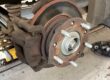
Flagged at our Mansfield branch this September: the bottom coil has snapped clean out of its seat. The driver had not noticed a thing.
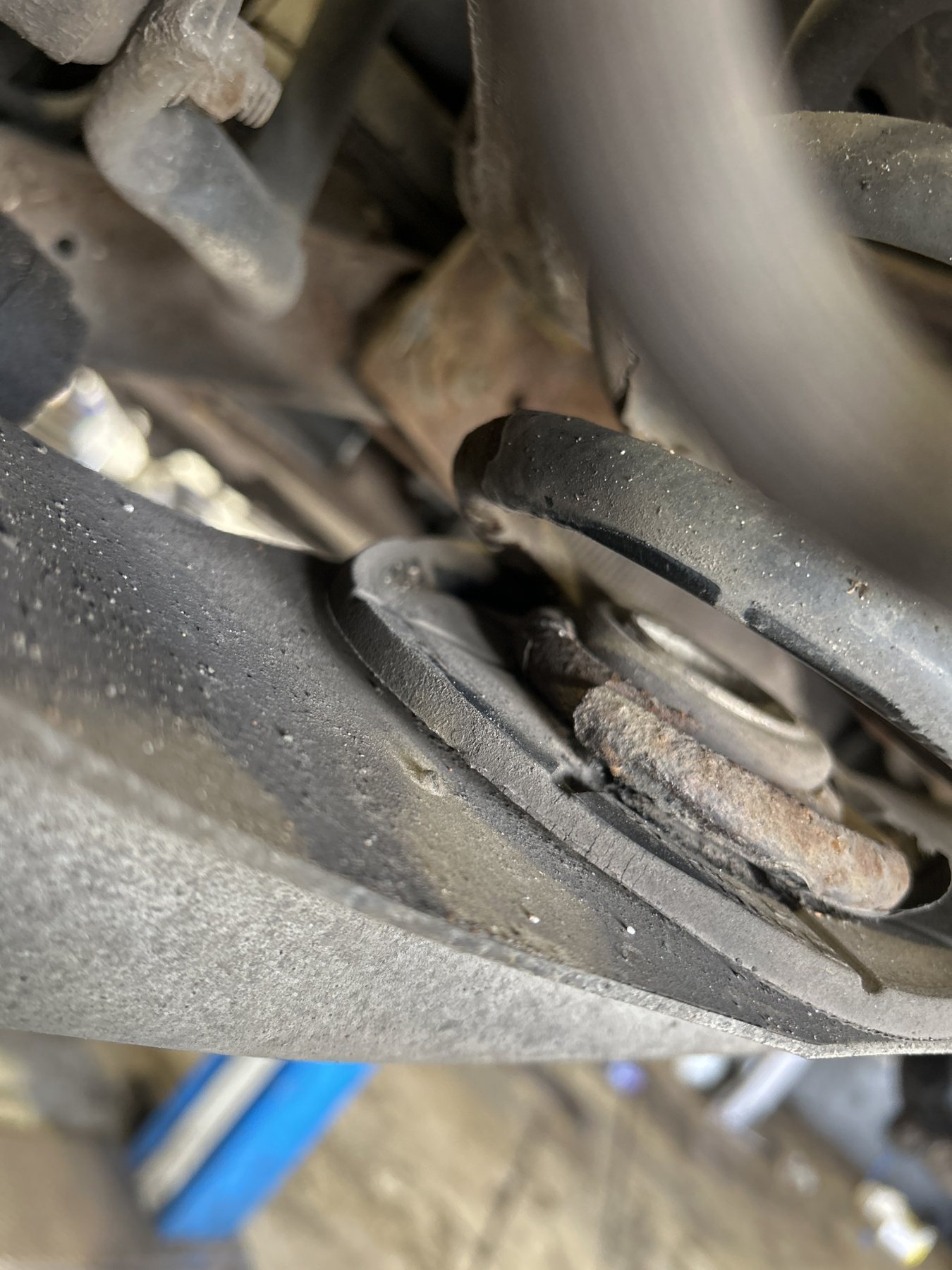
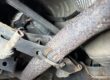
Another from the same fortnight, at Old Basford: the fractured end of a rear spring resting loose in its corroded seat.
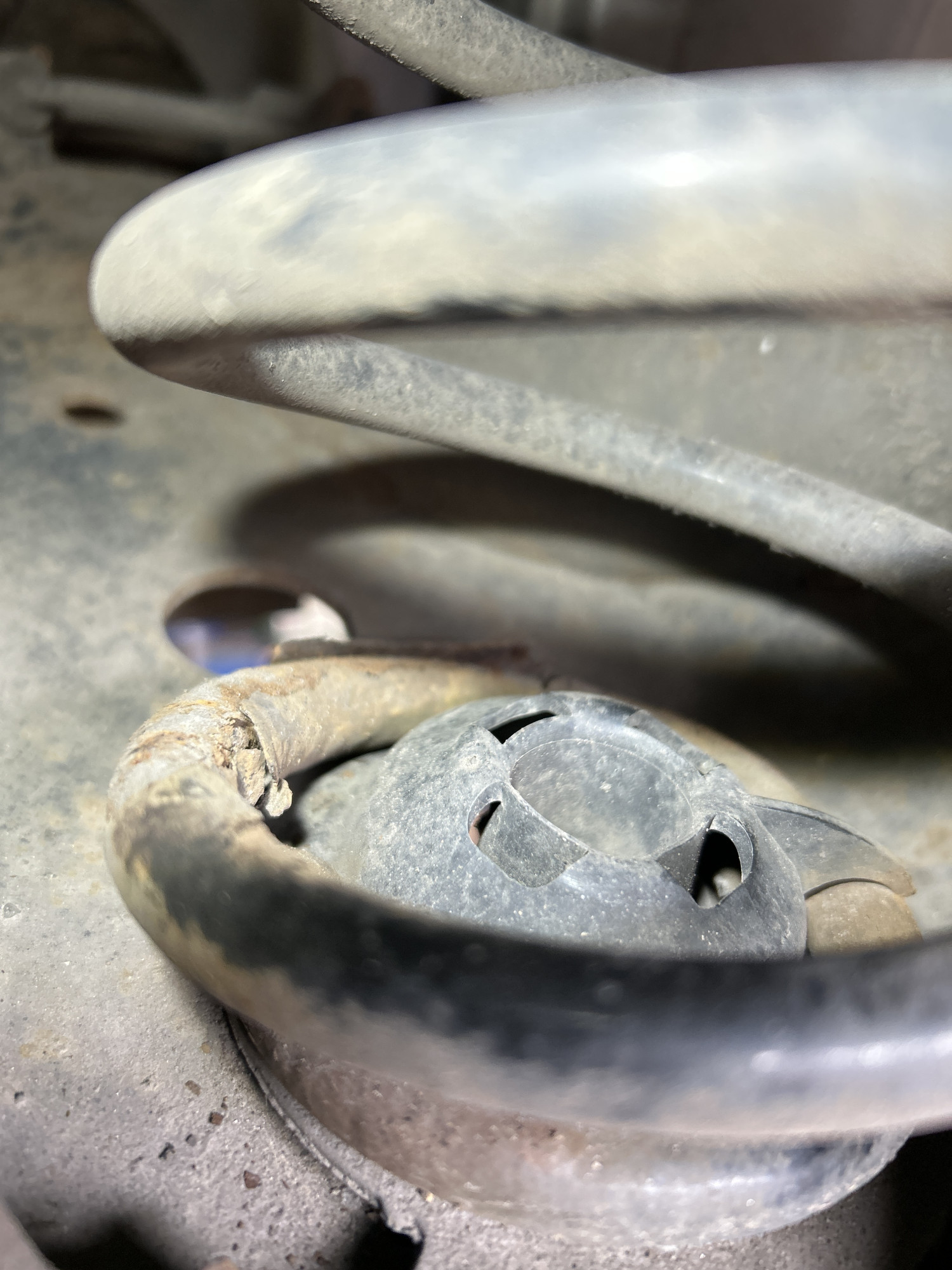
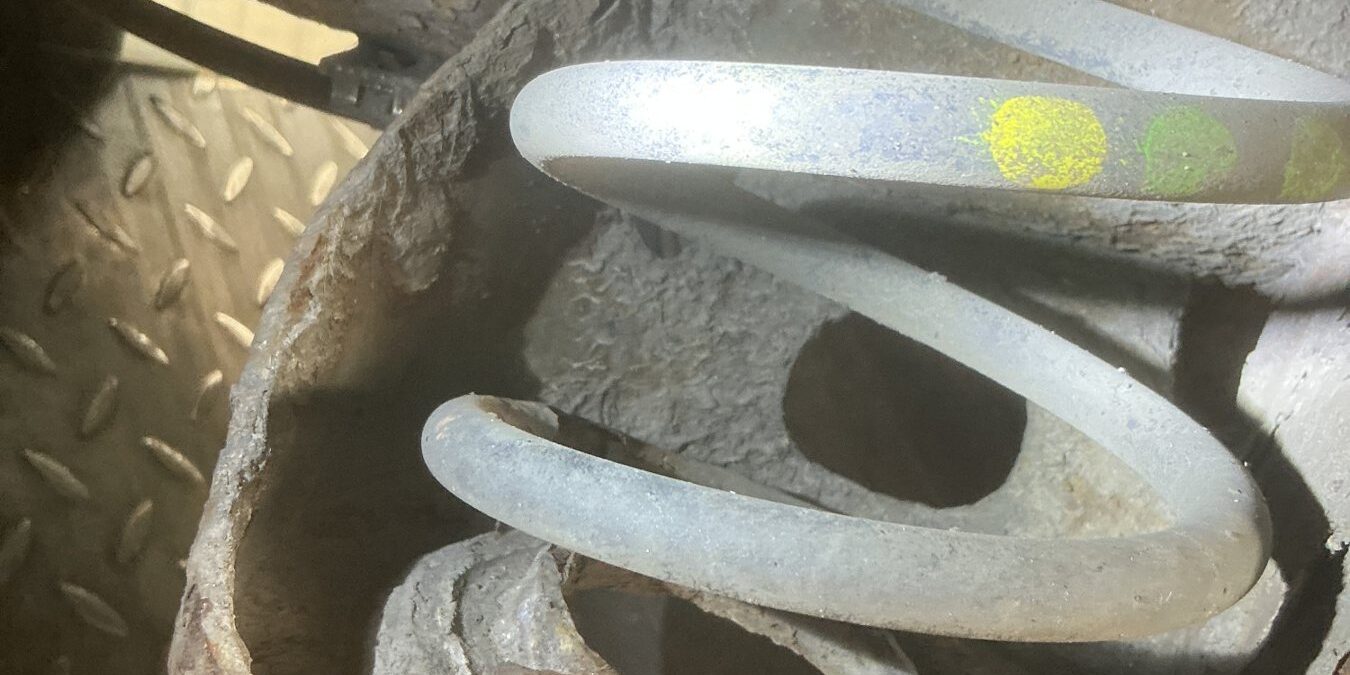
A fractured coil spring found on test: the break is hiding in the bottom coil.
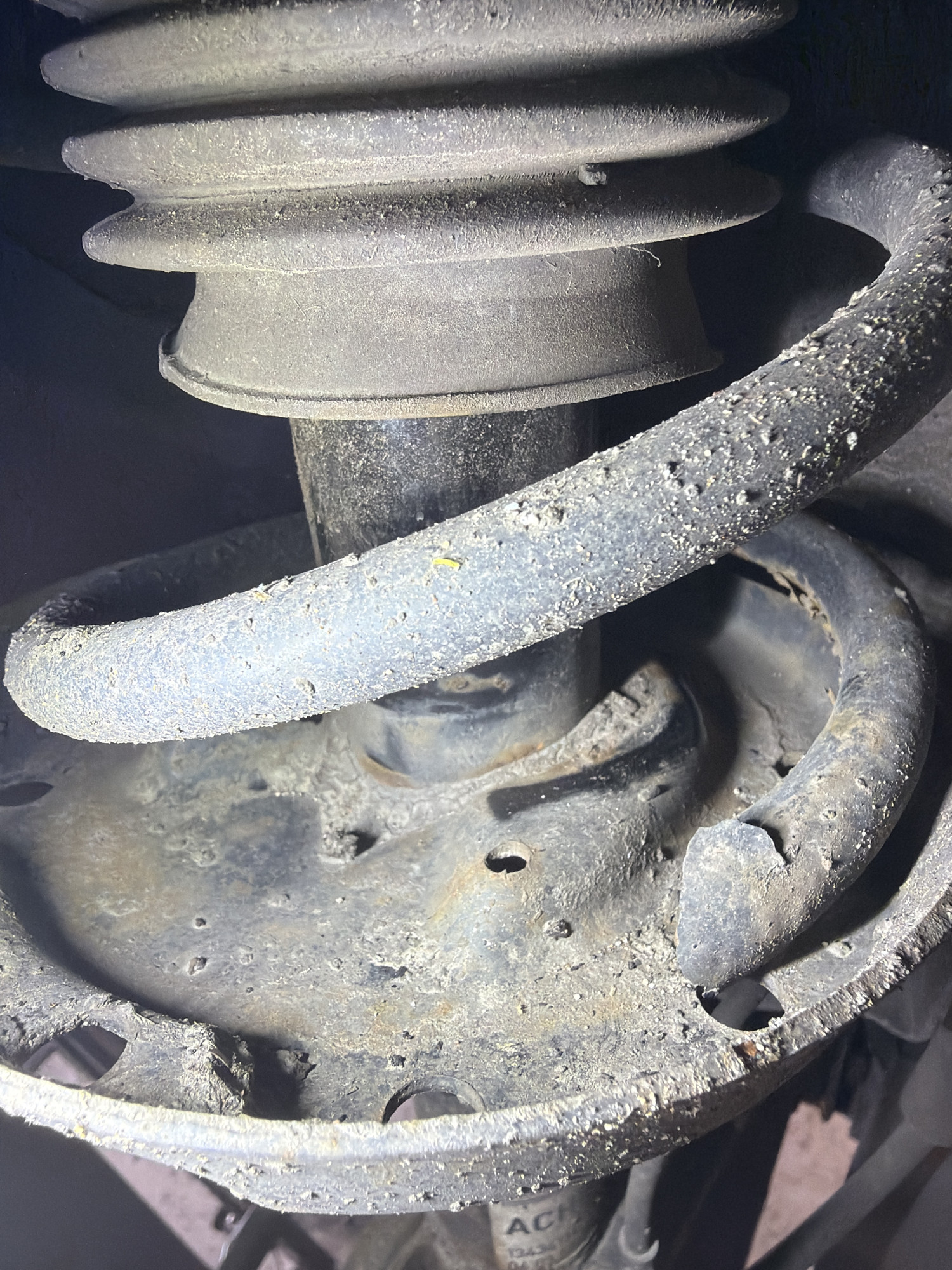
This snapped front spring was found during a routine service: the owner had not noticed a thing.
Frequently asked questions
What does “coil spring fractured or broken” mean?
The tester found a road spring that is broken, cracked or so badly corroded that failure is imminent. It is recorded under 5.3.1 (b) (i) as a Major defect, so the vehicle fails the MOT.
Can I drive my car with a broken coil spring?
It is a Major defect, and our honest advice is to keep driving to an absolute minimum. The corner has reduced control, and the broken coil can sit against the tyre. If your old MOT has expired you may only drive to a pre-booked test or to a garage for repair.
Why did my coil spring break without me hitting anything?
Corrosion does the slow work first: rust eats a notch into a coil over years, and then an ordinary bump finishes the job. That is why so many springs let go in winter, and why the car often feels normal afterwards: the break usually hides in the end coil.
Do coil springs need to be replaced in pairs?
We strongly recommend it. Springs on the same axle have lived identical lives: when one snaps, its twin has the same corrosion and the same mileage. A pair keeps the ride height even and saves paying most of the same labour twice within a year.
What do nearside and offside mean on an MOT?
Nearside is the passenger side of the vehicle, the side closest to the kerb when you are driving in the UK. Offside is the driver’s side. The MOT certificate uses these words so there is no confusion about which corner of the car the defect relates to.
How much does it cost to fix a broken coil spring?
It depends on the underlying cause and the vehicle, which is why we always inspect first. Once we can see exactly what is needed we will explain it in plain English and confirm the price with you before any work starts.