“Brake Binding But Not Excessively” on Your MOT: What It Means
Your car has passed its MOT, but there is a line on the certificate that sounds vaguely medical:
Service brake binding but not excessively (1.2.1 (f))
Or the version that stops the car passing at all:
Service brake excessively binding (1.2.1 (f))
One quick translation before we go any further: nearside means the passenger side of the car, the side nearest the kerb. Offside means the driver’s side. So a defect recorded as nearside front is on the front passenger side, and offside rear is behind the driver. Front and rear, inner and outer, upper and lower simply pin down exactly which component the tester was looking at.
What Does “Binding” Mean?
A binding brake is one that never fully lets go. When you take your foot off the pedal, the pads or shoes should release the disc or drum almost completely. On the MOT’s roller brake tester, each wheel is spun and the machine can feel a brake that is still dragging when it should be free. A little drag earns the advisory: binding, but not excessively. Heavy drag is a Major failure, because a brake that is permanently half-on is overheating itself and unbalancing the car.
The Symptoms You Might Have Noticed
- One wheel noticeably hot after a normal drive, sometimes with a hot, acrid smell.
- The car pulling gently to one side, or feeling like it is towing something.
- Fuel economy quietly getting worse for no obvious reason.
- A scraping or rubbing noise that changes with road speed, not engine speed.
- One disc looking scored or blued compared with the other side.
What Actually Causes a Binding Brake
In our workshops the same handful of causes come up again and again:
- Seized or dry caliper slider pins, so the caliper cannot float back off the disc.
- A sticking caliper piston, usually corrosion under a perished dust seal.
- A collapsed flexible brake hose acting as a one-way valve, holding pressure at one wheel long after you have released the pedal.
- Corroded or seized handbrake mechanisms and cables holding the rear brakes partially on.
- Rust build-up on a little-used car gluing pads to discs, especially after long periods parked.
If the car has also felt like the brakes grab or will not release after sitting, our guide to why brakes lock up and don’t release walks through the same failure family in more detail, and the symptoms of a bad brake caliper covers the most common culprit of all.
Is It Serious? Should You Act on the Advisory?
A lightly binding brake will not stop the car working today, which is why it is an advisory. But it never stays light. Heat is the enemy: a dragging brake glazes its pads, cooks its grease, warps its disc and can eventually seize solid, sometimes miles from home. It also costs you fuel every single mile. Of all the advisories on an MOT sheet, this is one we would genuinely not sit on: it is cheaper as a small job than as the big one it grows into.
How It’s Diagnosed and Repaired
- The wheel comes off and the caliper, sliders, piston and hoses are inspected and moved by hand: the seized part reveals itself quickly.
- Sliders are cleaned, greased or replaced; seized calipers are overhauled or renewed; collapsed hoses are replaced.
- Handbrake mechanisms and cables are freed off, adjusted or renewed on rear binding.
- Discs and pads damaged by the heat are measured and replaced in axle pairs if needed.
- The car goes back on the roller brake tester to prove every wheel now spins free and brakes evenly.
Book a Free Brake Check
If binding appears anywhere on your MOT certificate, call into any of our 12 branches across Nottinghamshire for a free brake check: we will tell you which corner, what is seized and what it genuinely needs, in plain English, before anything is agreed. Our brake repair service handles calipers, hoses, discs and pads for every make, or you can book an MOT online today.
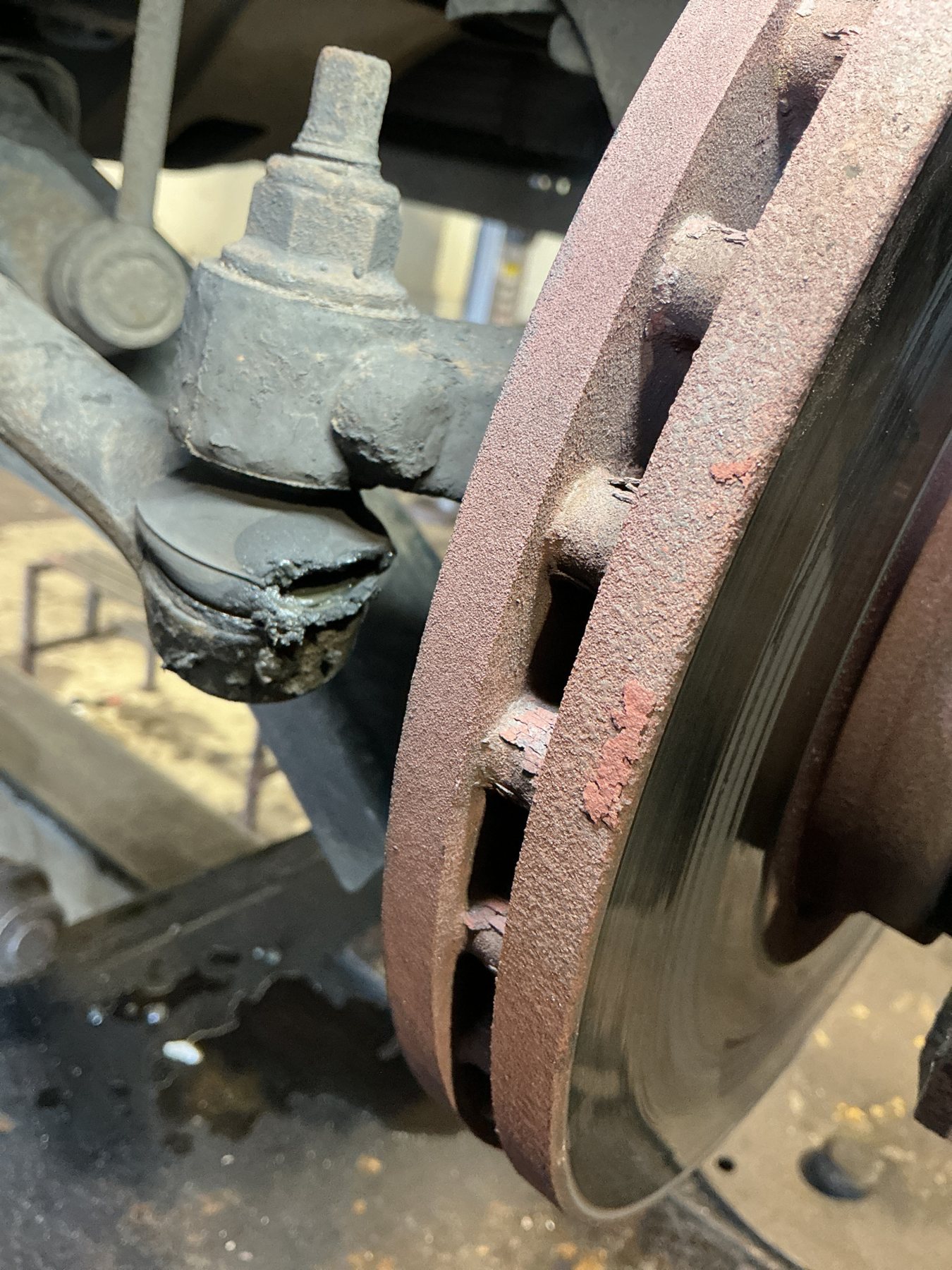
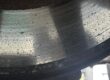
What binding does: a seized caliper left this disc dragging, the friction faces crusted over, and the heat damaged the ABS wiring alongside.
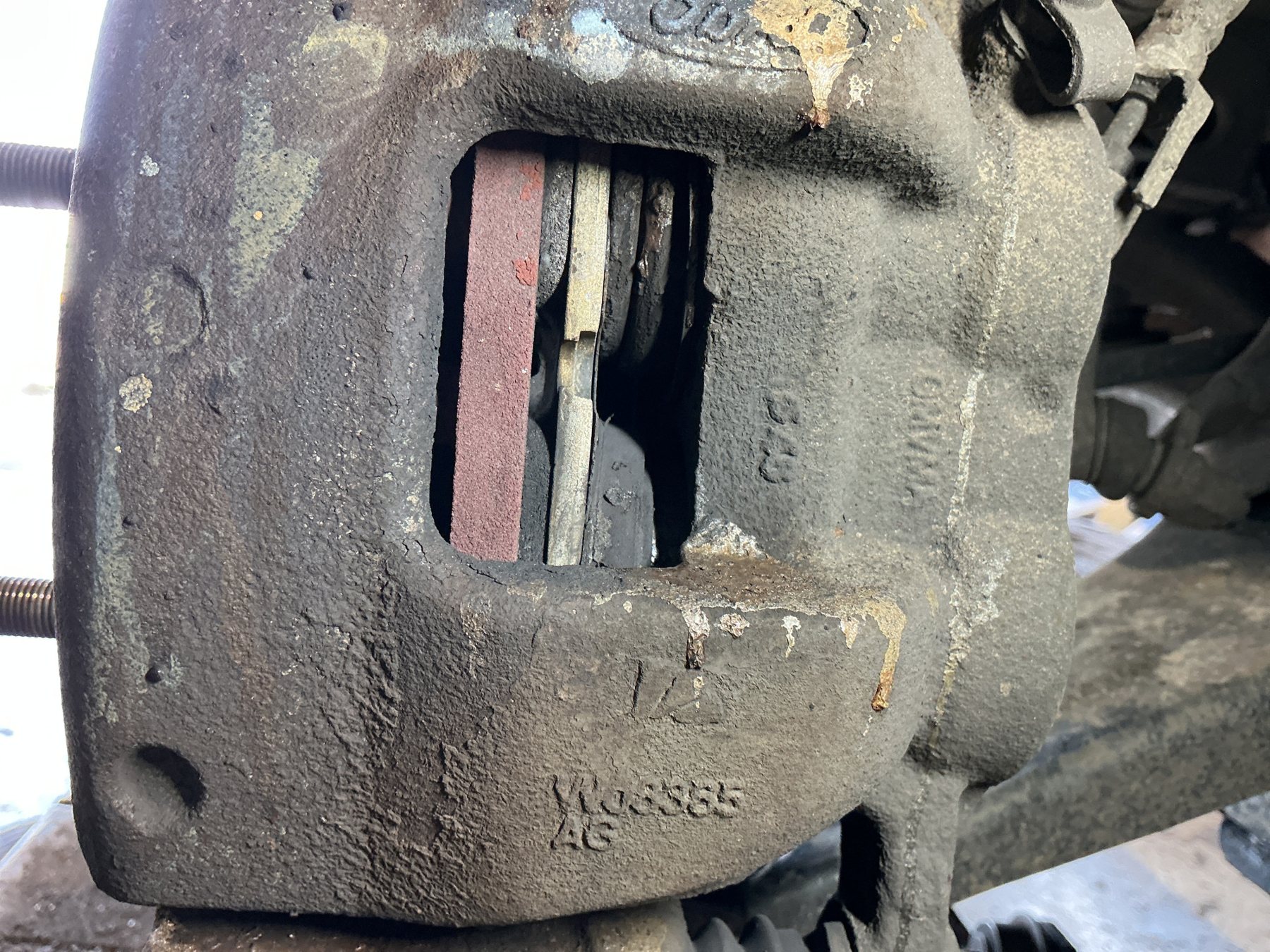
Through the caliper window: pads worn out of step are the signature of a piston that stopped releasing.
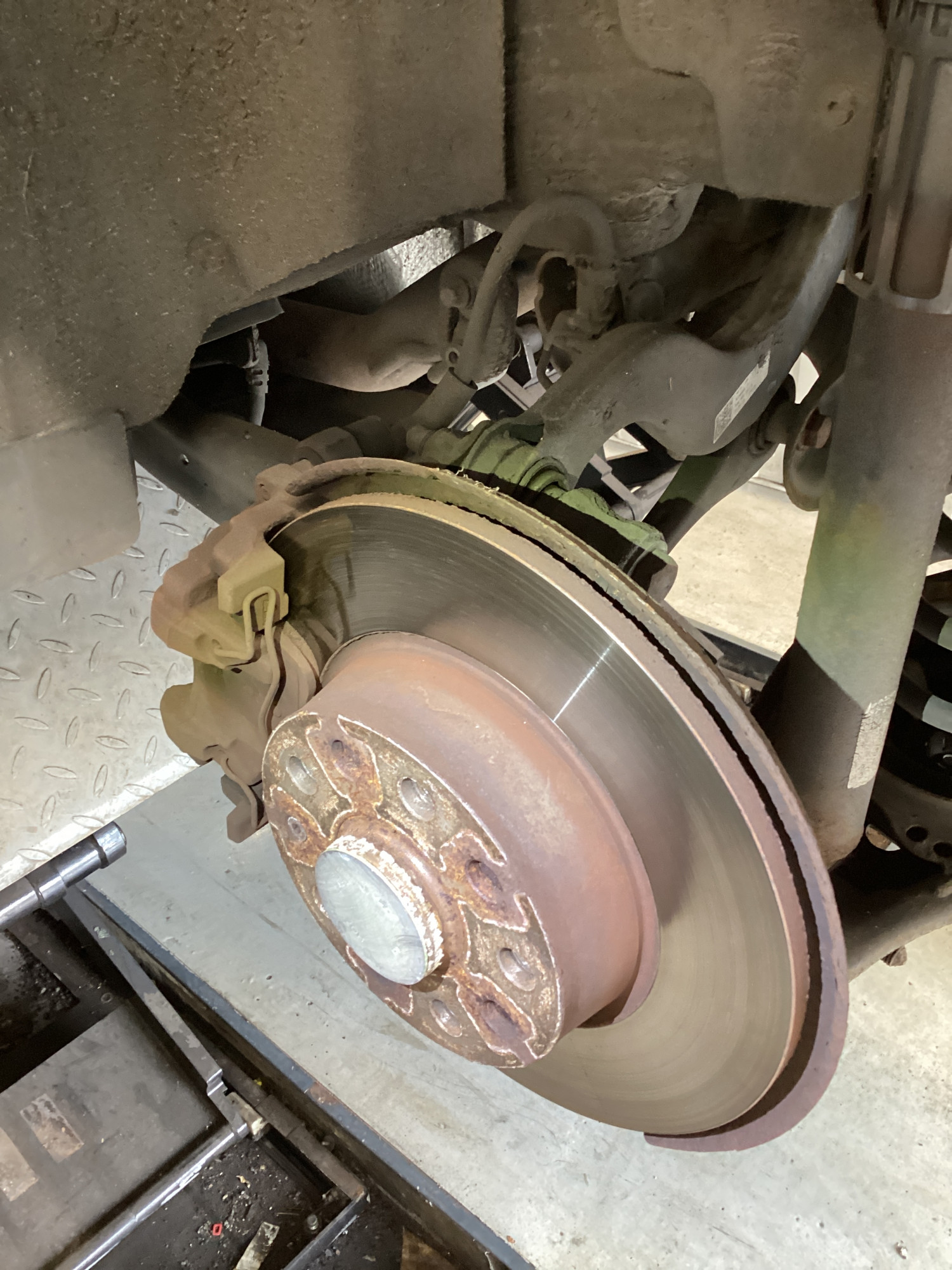
Wheel off, and the caliper, sliders and hoses are checked by hand: a binding brake gives itself away quickly.
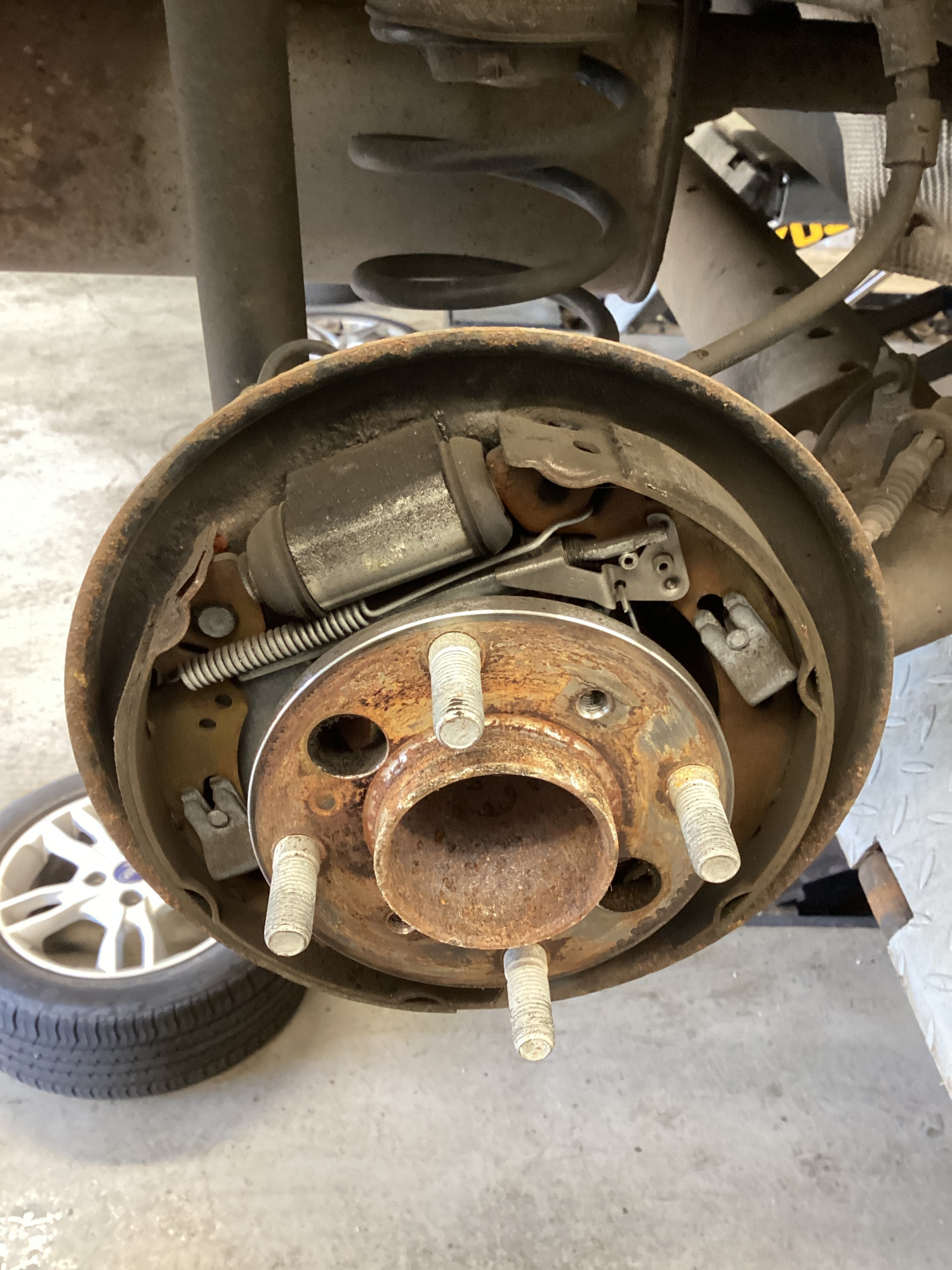
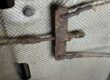
On drum rear brakes, a corroded handbrake mechanism is a classic cause of binding.
Frequently asked questions
What does “brake binding but not excessively” mean on an MOT?
The roller brake tester found a brake still dragging when it should have released fully. Because the drag was light, it is recorded as an advisory rather than a failure. Excessive binding under 1.2.1 (f) is a Major defect and fails the test.
Is a binding brake dangerous to drive with?
A lightly binding brake is not an immediate emergency, but it is a fault that worsens with heat, and a badly binding brake can pull the car, overheat the friction parts or seize completely. Treat the advisory as a prompt to get it inspected soon, not a note to file away.
Will a binding brake free itself off?
Surface rust binding after a week parked can release with a few gentle stops. A seized slider, piston, cable or collapsed hose will not fix itself: the mechanical cause has to be cleaned, freed or replaced.
What do nearside and offside mean on an MOT?
Nearside is the passenger side of the vehicle, the side closest to the kerb when you are driving in the UK. Offside is the driver’s side. The MOT certificate uses these words so there is no confusion about which corner of the car the defect relates to.
How much does it cost to fix a binding brake?
It depends on the underlying cause and the vehicle, which is why we always inspect first. Once we can see exactly what is needed we will explain it in plain English and confirm the price with you before any work starts.