Ball Joint Dust Cover Split: MOT Advisory or Failure?
It turns up on health check sheets as a split boot, a split gaiter or grease escaping from a bottom ball joint, and on MOT paperwork as a dust cover defect. It looks like nothing: a little rubber sock with a tear in it. Here is why testers care about that sock, and exactly where the MOT draws its lines.
In short: A suspension ball joint dust cover that is severely deteriorated is a Minor defect under 5.3.4 (b) (i): the car still passes. One that is missing, or split so it no longer keeps dirt out, is a Major defect under 5.3.4 (b) (ii) and fails. If the joint itself is excessively worn, that is Major too, under 5.3.4 (a) (i).
One quick translation before we go any further: nearside means the passenger side of the car, the side nearest the kerb. Offside means the driver’s side. So a defect recorded as nearside front is on the front passenger side, and offside rear is behind the driver. Front and rear, inner and outer, upper and lower simply pin down exactly which component the tester was looking at.
What the MOT Rules Actually Say
Suspension ball joints live in section 5.3.4 of the manual, suspension joints, pins and bushes. Two defect lines cover the boot. A suspension joint dust cover severely deteriorated is a Minor defect (5.3.4 (b) (i)): recorded, but a pass. A suspension joint dust cover missing or no longer prevents the ingress of dirt etc. is a Major defect (5.3.4 (b) (ii)) and fails the test. In plain terms: a boot that is cracked and perished but still sealed gets a note, a boot that is torn open fails.
The joint itself has its own lines: a suspension pin, bush, joint or bearing excessively worn is Major (5.3.4 (a) (i)), and one likely to become detached is Dangerous (5.3.4 (a) (ii)). The tester gets the wheels off the ground and levers against each joint to feel for play, which is why your MOT always involves the car going up in the air.
One wrinkle worth knowing: the steering versions of these joints, track rod ends, are tested under the steering section instead, and driveshaft CV boots under 6.1.7. The wording on your certificate tells you which one the tester meant. We have covered both: see our posts on track rod end dust covers and split CV boots.
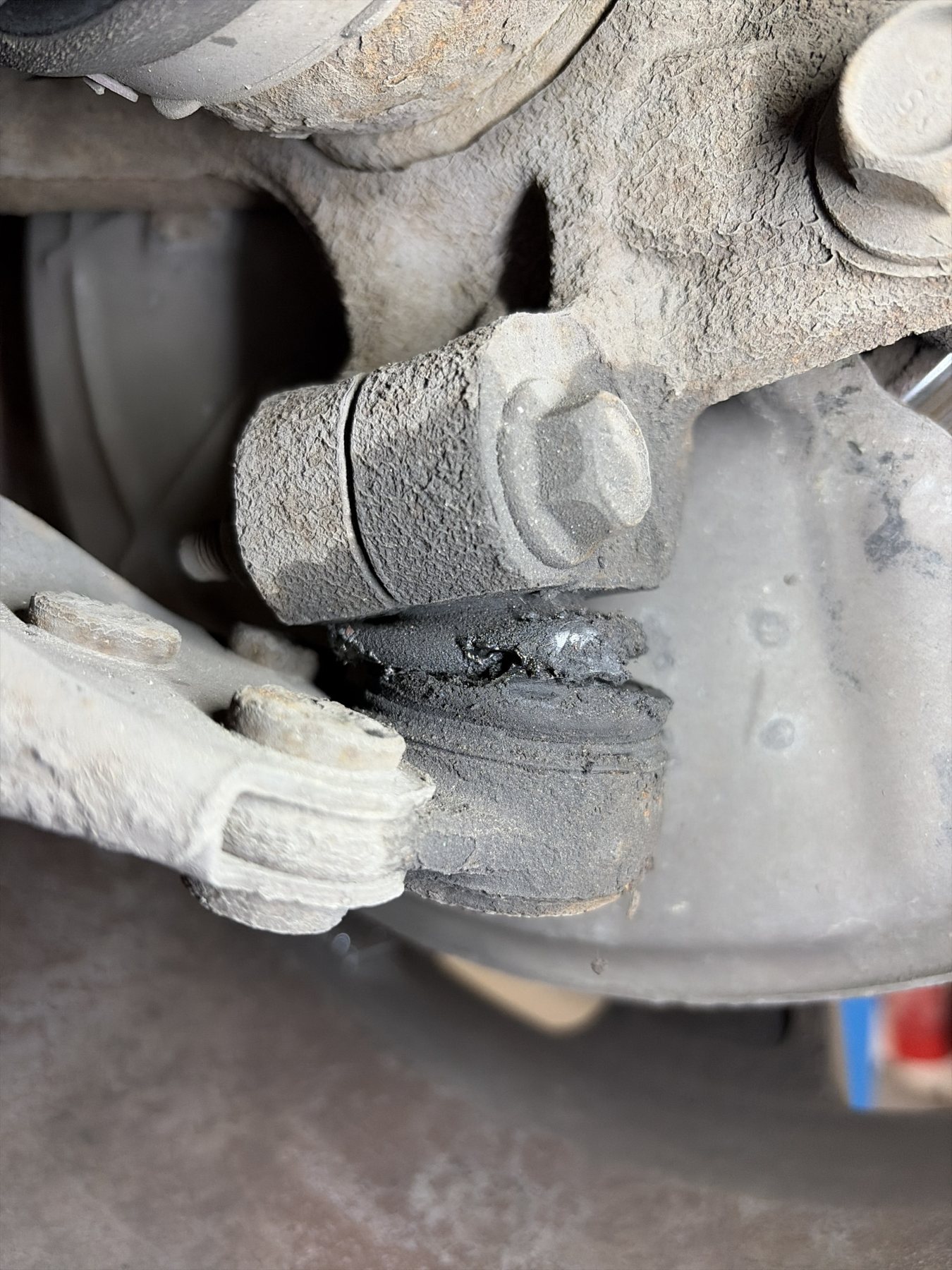
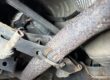
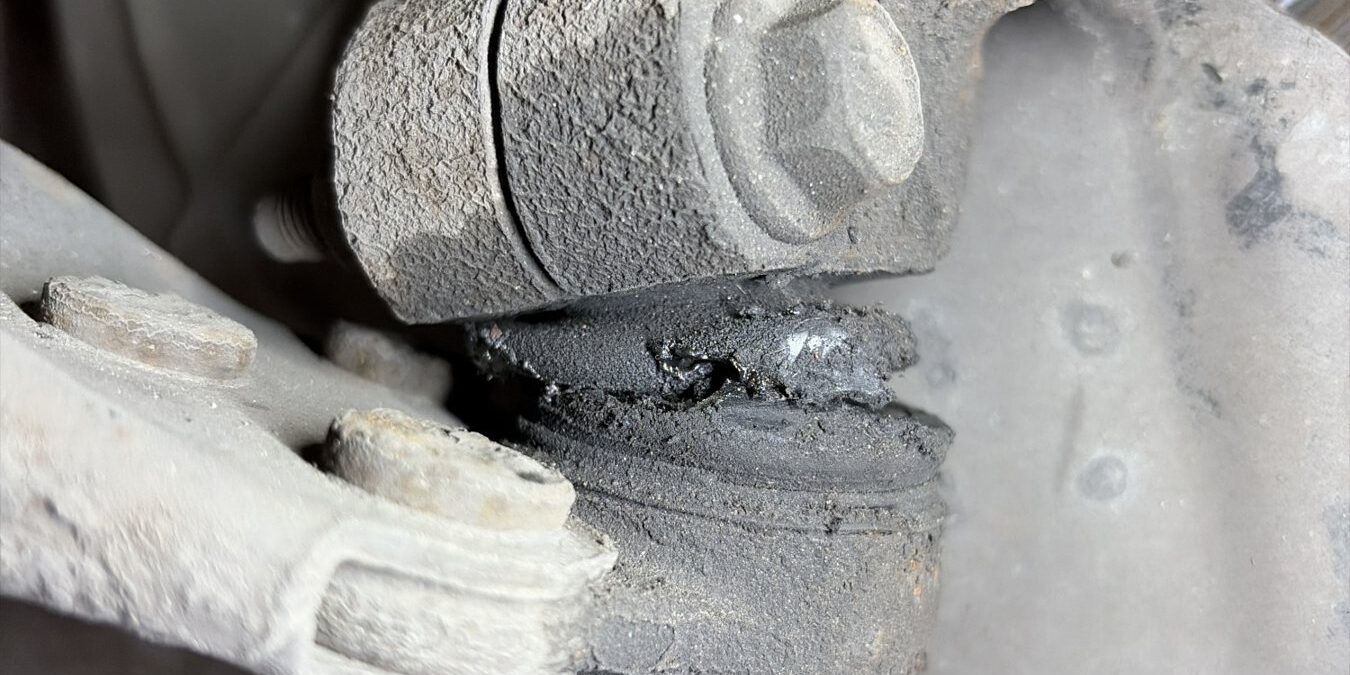
The one that prompted this post: both bottom ball joint boots split and leaking grease. Dirt is already getting in, so this is the Major side of the line.
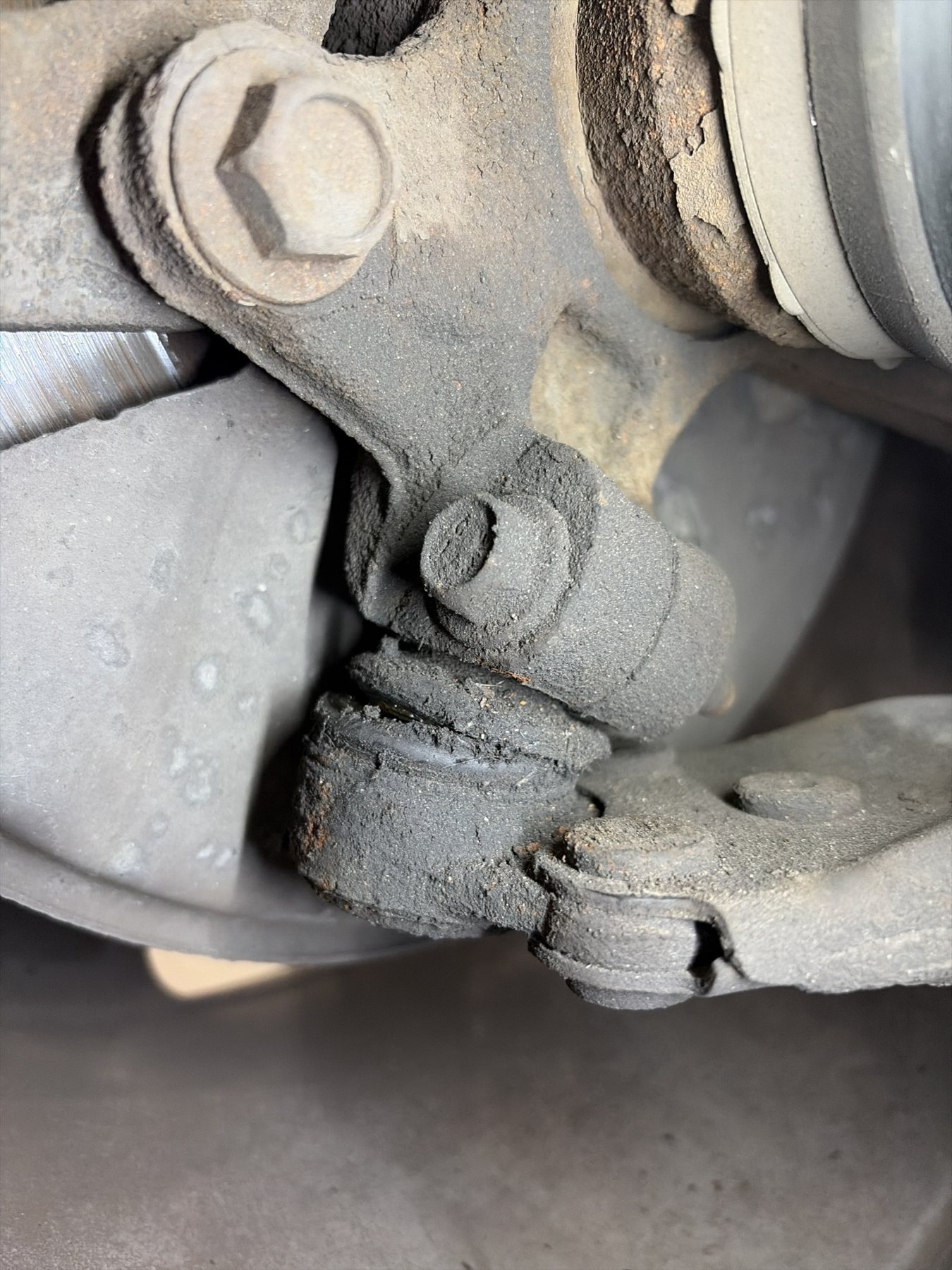
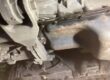
The same car’s other side. Once the grease picks up grit, the joint grinds itself out from the inside.
Why a Torn Boot Finishes the Joint
The ball joint is a polished steel ball running in a socket, packed with grease for life. The boot’s only job is keeping that grease in and grit and salt water out. Torn open, the joint starts machining itself: the grease washes out, grit gets in, and play develops over months. A worn bottom ball joint does not just clunk, it is one of the few parts that can let a wheel lean over if it lets go completely. That is why the boot, a part worth pennies, gets its own MOT defect code. The same logic applies across the arm’s rubber bushes, covered in our post on suspension arm bushes.
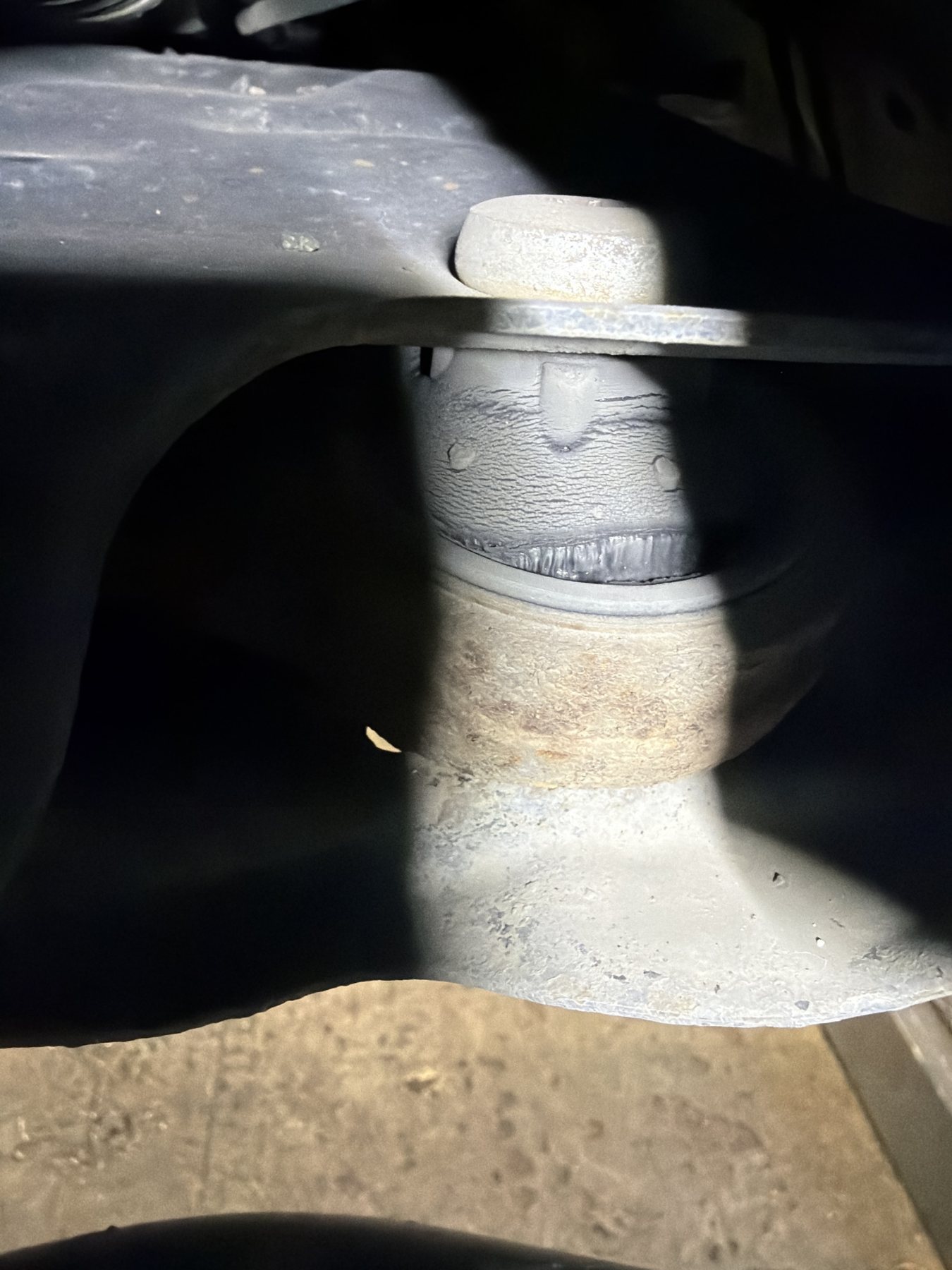
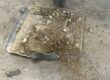
From the same section of the manual: a lower arm bush perishing and cracking. Bushes and joints wear as a family, so we check the lot while the wheel is off the ground.
Booked In Soon?
Got a split boot advisory, or a clunk from a front corner? Our free vehicle health check gets the car in the air and puts eyes on every joint. Any of our 12 branches across Nottinghamshire can take a look, and with over 20,000 MOT tests a year behind us there is not much we have not seen. We will show you what we found, explain it in plain English and confirm the price before any work starts. Book an MOT online when you are ready.
Frequently asked questions
Is a split ball joint boot an MOT failure?
If the split means the cover no longer keeps dirt out, yes: that is a Major defect under 5.3.4 (b) (ii). A boot that is perished or cracking but still doing its job is a Minor defect under 5.3.4 (b) (i), which is a pass with a note.
How long will a ball joint last with a split boot?
There is no fixed answer: it depends on weather, mileage and how much grit gets in. What is predictable is the direction: the joint only gets worse, and a boot replaced promptly is a far smaller job than a worn joint, which on many cars means a whole new arm.
Can you replace just the dust cover?
Sometimes. On some cars the boot is available separately and can be fitted if the joint underneath is still tight and clean. On many modern cars the joint comes as a sealed unit with the suspension arm, so a ruined joint means replacing the arm. We will always tell you which situation you are in before any work starts.
What do nearside and offside mean on an MOT?
Nearside is the passenger side of the vehicle, the side closest to the kerb when you are driving in the UK. Offside is the driver’s side. The MOT certificate uses these words so there is no confusion about which corner of the car the defect relates to.
How much does it cost to fix a split ball joint dust cover?
It depends on the underlying cause and the vehicle, which is why we always inspect first. Once we can see exactly what is needed we will explain it in plain English and confirm the price with you before any work starts.