Suspension Arm Bush MOT Failure Explained (With Real Workshop Photos)
A suspension arm bush MOT failure is one of the most common reasons vehicles fail an MOT. If your certificate says:
Nearside Front Suspension arm pin or bush excessively worn Rear bush (5.3.4 (a) (i))
Offside Front Suspension arm pin or bush excessively worn Rear bush (5.3.4 (a) (i))
you’re probably wondering what it actually means.
At Lindleys Autocentres, we see this MOT failure on a regular basis across our Nottinghamshire branches. Although the wording sounds technical, it’s actually one of the most common suspension faults we identify during MOT inspections.
In this guide, we’ll explain what a suspension arm bush does, why it fails an MOT, what it looks like and how it’s repaired using real workshop photos from our own workshop.
Understanding the Component
A suspension arm bush is a rubber mounting fitted between the suspension arm (also known as a wishbone or control arm) and the vehicle’s chassis.
Its job is to:
- Absorb vibrations from the road.
- Allow controlled movement of the suspension.
- Keep the wheels correctly aligned.
- Improve steering stability and ride comfort.
Over time, the rubber naturally deteriorates through age, mileage and everyday driving.
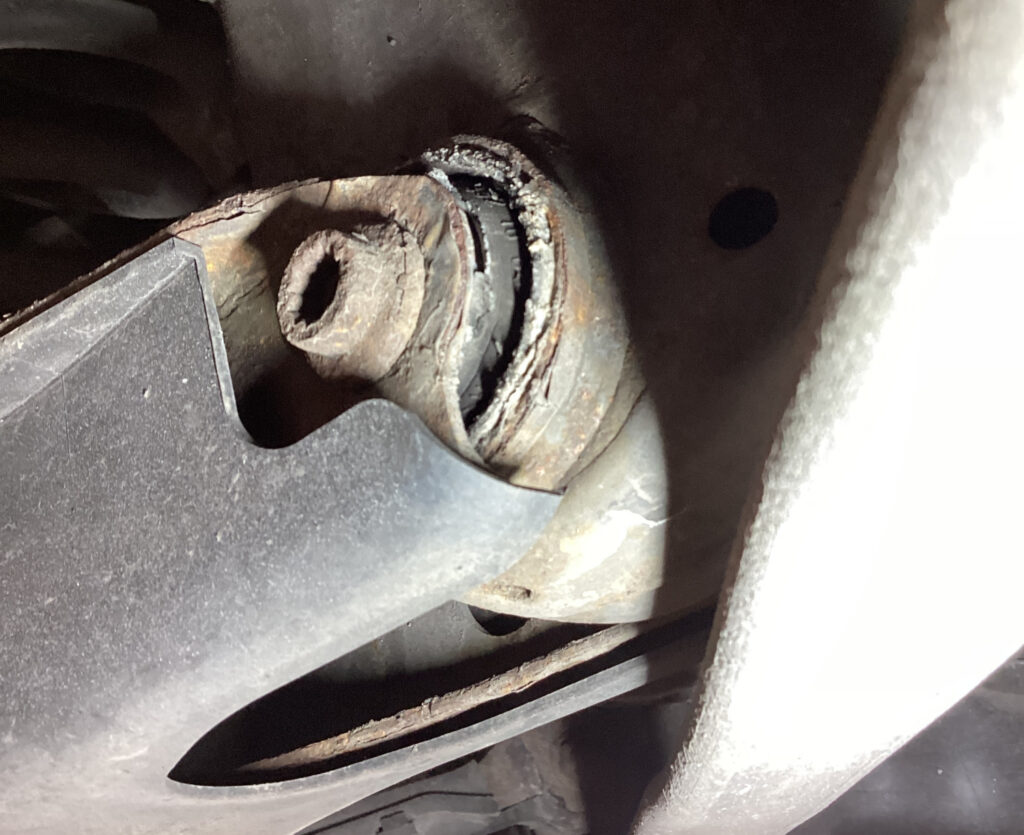
Worn rear suspension arm bush identified during an MOT inspection. Excessive deterioration in the rubber bush resulted in an MOT failure.
What Does “Suspension Arm Pin or Bush Excessively Worn” Mean?
When an MOT tester records:
Suspension arm pin or bush excessively worn (5.3.4 (a) (i))
it means the rubber bush has deteriorated to the point where there is excessive movement in the suspension arm.
As the bush wears, cracks can develop in the rubber before it eventually separates from its metal housing.
Once this movement exceeds DVSA limits, the vehicle will fail its MOT.
Real Workshop Examples
Here are a few genuine examples we’ve found during MOT inspections.
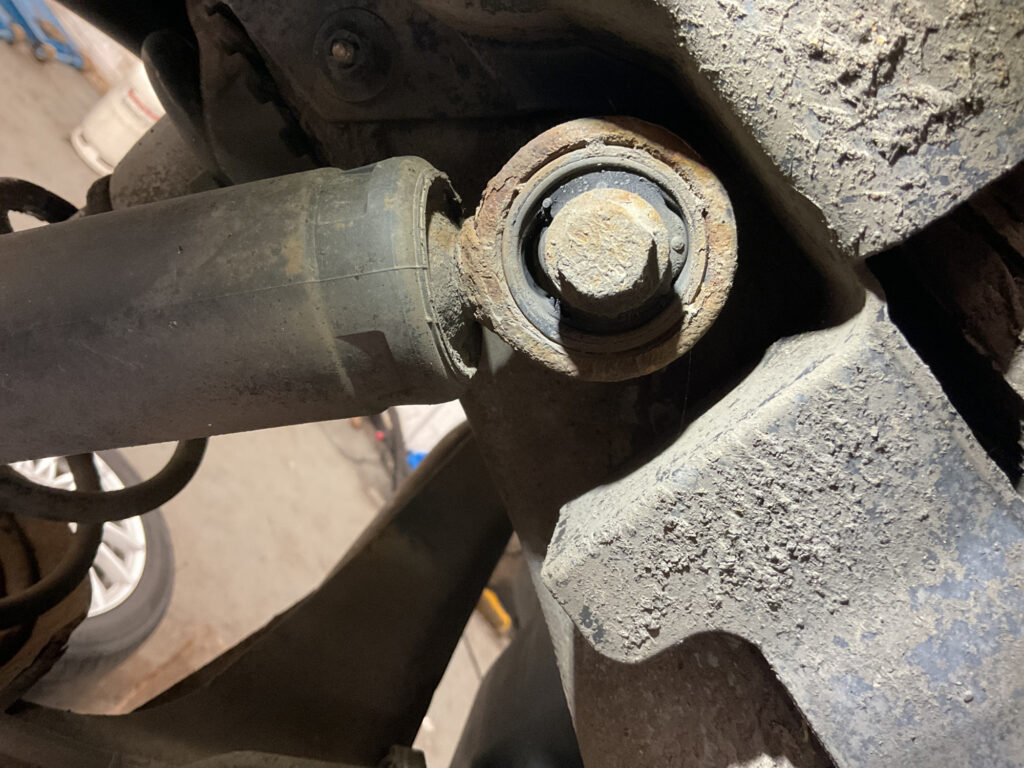
Early cracking beginning to appear around the suspension arm bush. As the rubber deteriorates, excessive movement can develop.
At this stage, the rubber has started to crack and separate. Although the vehicle may still drive normally, the bush is beginning to lose its ability to control movement within the suspension.
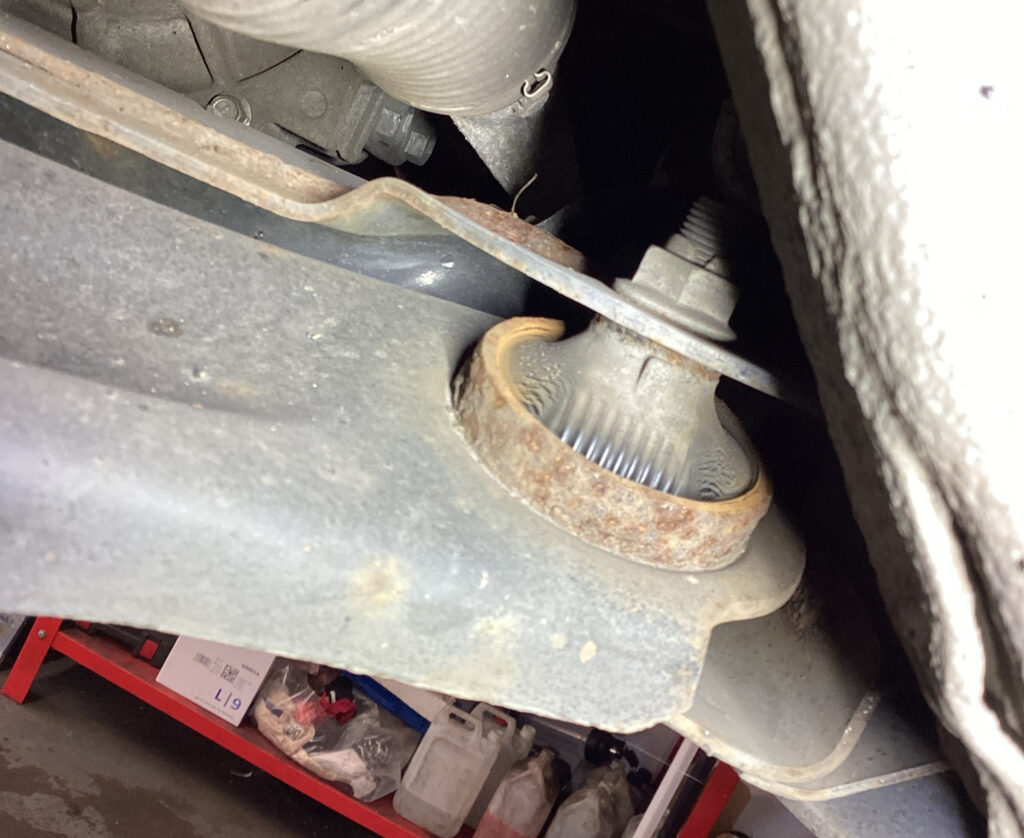
The suspension arm bush has deteriorated significantly, allowing excessive movement within the suspension.
As the rubber continues to deteriorate, the suspension arm is able to move far more than it was designed to. This can affect steering precision, braking stability and tyre wear.
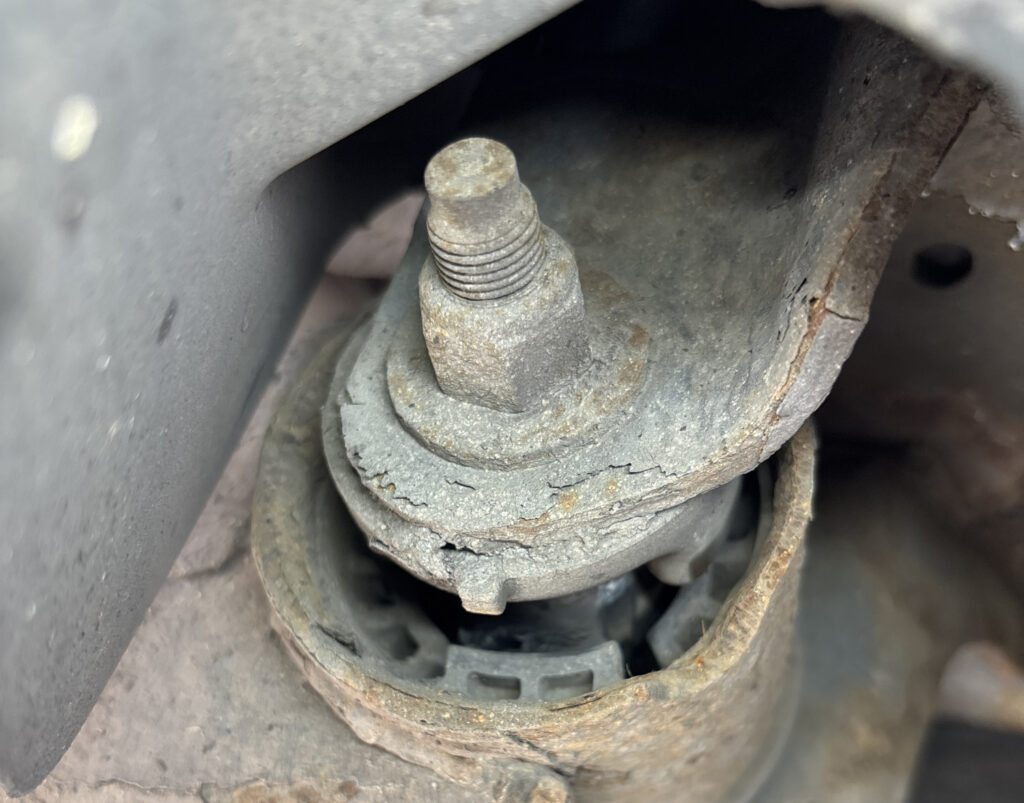
Severely worn suspension arm bush with the rubber separating from its housing, resulting in an MOT failure.
This is a much more advanced example where the rubber bush has almost completely separated from its housing. At this point, the suspension arm has excessive movement and requires repair before the vehicle can pass its MOT.
Why Does a Worn Suspension Arm Bush Fail an MOT?
Suspension bushes are responsible for keeping the suspension securely located whilst still allowing controlled movement.
If the bush becomes excessively worn, it can affect:
- Steering accuracy.
- Vehicle stability.
- Braking performance.
- Wheel alignment.
- Tyre wear.
Because these components directly affect the safe handling of the vehicle, excessive wear is classed as a Major MOT failure.
Can You Drive With a Worn Suspension Arm Bush?
Many drivers don’t notice a worn suspension bush straight away.
Others may experience symptoms such as:
- Knocking noises over bumps.
- Steering that feels vague or wanders.
- Uneven tyre wear.
- Increased vibration through the steering wheel.
If your vehicle has already failed its MOT because of worn suspension arm bushes, it’s best to have the repair carried out as soon as possible.
How Is the Fault Repaired?
Suspension arm bushes are wear-and-tear components.
Common causes include:
- High mileage.
- Ageing rubber.
- Potholes.
- Speed bumps.
- Road salt.
- General suspension movement over time.
Eventually, the rubber loses its flexibility and begins to crack before separating from the metal housing.
Can Suspension Arm Bushes Be Replaced?
Yes.
Depending on the vehicle, technicians may replace:
- The individual suspension arm bush.
- The complete suspension arm assembly.
The most suitable repair depends on the design of the vehicle and the overall condition of the suspension arm.
Can This Be Prevented?
Although suspension arm bushes naturally wear with age, regular car servicing can often identify deterioration before it becomes an MOT failure.
During a routine service, our technicians inspect suspension components for signs of wear, allowing problems to be identified early before they begin affecting your vehicle’s handling or causing unnecessary tyre wear. Catching worn bushes early can sometimes prevent more expensive suspension repairs later.
Book an MOT or Suspension Inspection
If your MOT has highlighted a worn suspension arm bush, our experienced technicians can inspect the suspension, explain the fault in plain English and recommend the most appropriate repair.
Whether you need an MOT, car servicing or suspension repairs, our technicians are here to help.
Book online or contact your nearest Lindleys Autocentres branch today.