Prescribed Area Corrosion: The MOT 30cm Rule Explained
Rust is the thing older-car owners dread most at MOT time, and the words prescribed area tend to come up when the news is not good. Here is what the term means, and why the same patch of rust can pass in one place and fail in another.
In short: A prescribed area is any load-bearing structure within 30cm of a brake, steering, suspension or sub-frame mounting, or a seat belt anchorage. Corrosion there that significantly weakens it is a Major defect. Elsewhere, rust only fails if it significantly reduces the strength of the overall structure.
What Counts as a Prescribed Area
The manual defines it as any load-bearing or supporting structure or panelling within 30cm of a component’s mounting. Each section of the test has its own reference for it:
- Braking system component mountings (1.1.21 (e)).
- Steering gear mountings (2.1.2 (e)).
- Sub-frame, spring and suspension component mountings (5.3.6 (a)).
- Seat belt anchorages, including where a belt is attached to the seat frame (7.1.1 (a)).
In each case the Major wording is about the strength or continuity of the structure in that area being significantly reduced, or inadequately repaired. When it is so weak that braking, steering, control of the car or the seat belt anchorage is likely to be affected, it becomes Dangerous.
How the Tester Judges It
Appendix A of the manual sets out the method. The tester looks, presses with finger and thumb, and if needed lightly taps or scrapes with a corrosion assessment tool. Within a prescribed area, the car fails if the corrosion has made a hole, if the metal does not feel firm under finger and thumb, or if light pressure or the tool goes through. A fracture or poor repair in the area fails too. The tool is not meant for heavy poking: it is there to confirm what the tester can already see.
Outside a prescribed area the bar is different. Under 6.1.1 (c), the structure fails only if corrosion has significantly reduced the rigidity of the assembly. That is why a crusty wheel arch lip can pass while a smaller patch next to a suspension mounting fails: the location matters as much as the size.
Where We See It Most
- Sills, especially on the inner sill near seat belt anchorages and jacking points.
- Around rear spring and shock absorber mountings, where road spray collects.
- Sub-frame mounting points and the floor around them.
- Rear beam mountings on small hatchbacks.
What Happens Next
Prescribed area corrosion is a structural repair, normally cutting out the weak metal and welding in new, and the repair itself has to look as strong as the original to pass. On some older cars the honest answer is that the repair costs more than the car is worth, and we will tell you that plainly rather than start a job that does not make sense. An advisory for corrosion in these areas is your early warning: underseal and cavity wax can slow it down if you act early.
Booked In Soon?
Had a corrosion advisory or a prescribed area fail? Any of our 12 branches across Nottinghamshire can take a look, and with over 20,000 MOT tests a year behind us there is not much we have not seen. We will show you what we found, explain it in plain English and confirm the price before any work starts. Book an MOT online when you are ready.
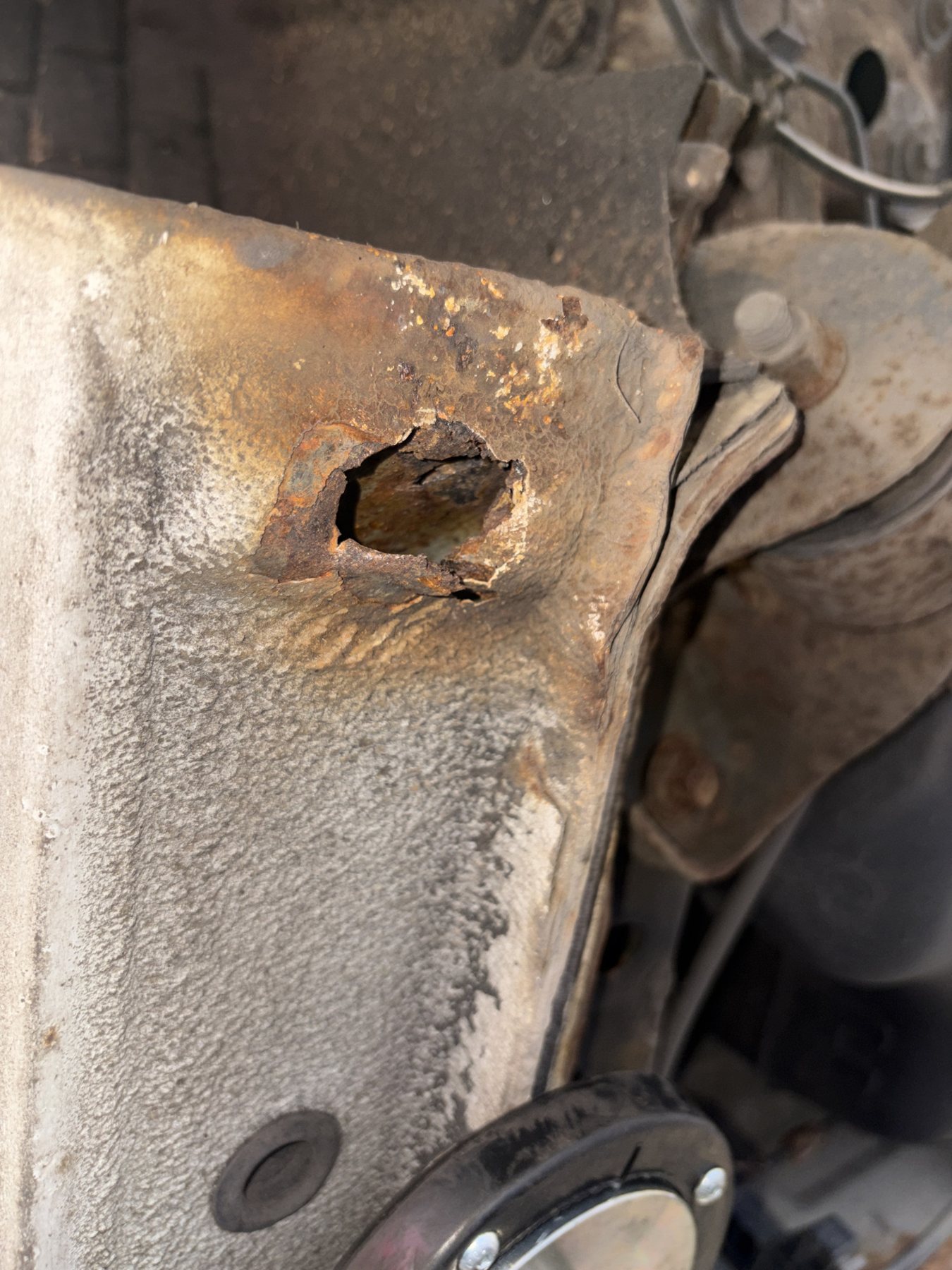
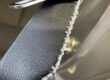
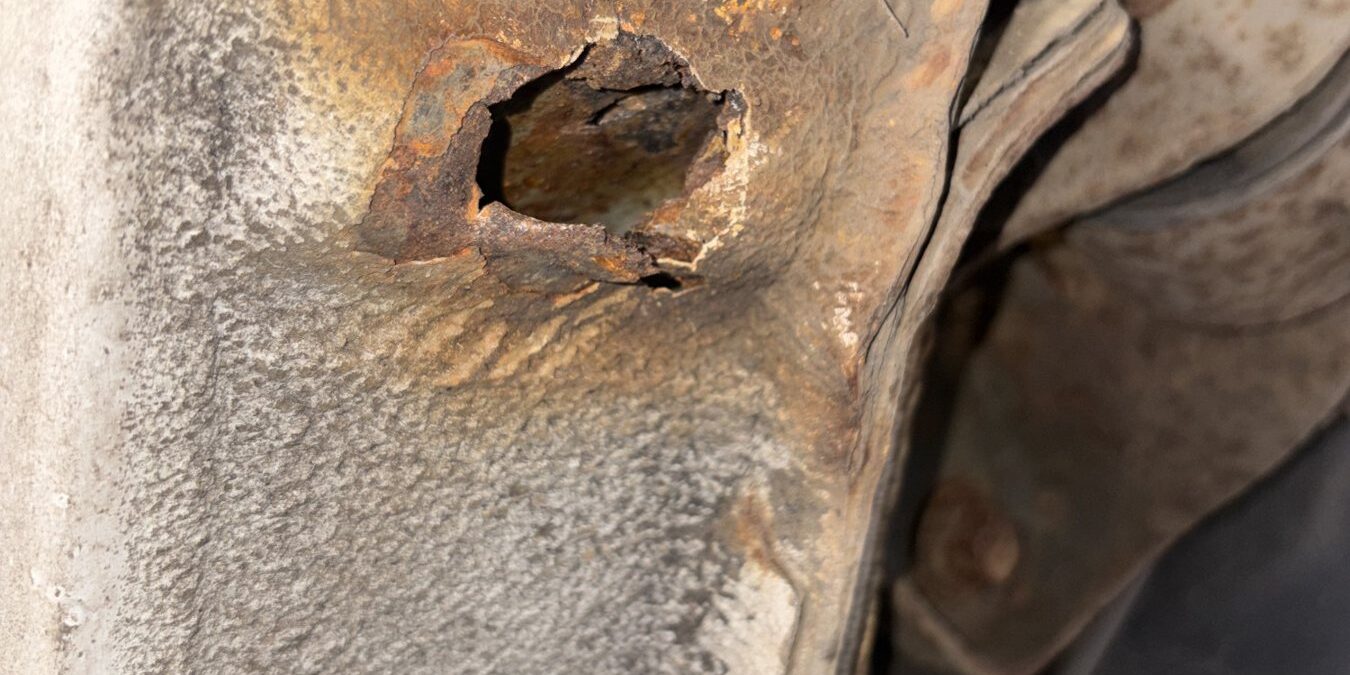
A rear sill rotted through, found on a full service at our Kirkby branch. It sits within 30cm of the suspension mountings, so it is a prescribed area and an MOT failure.
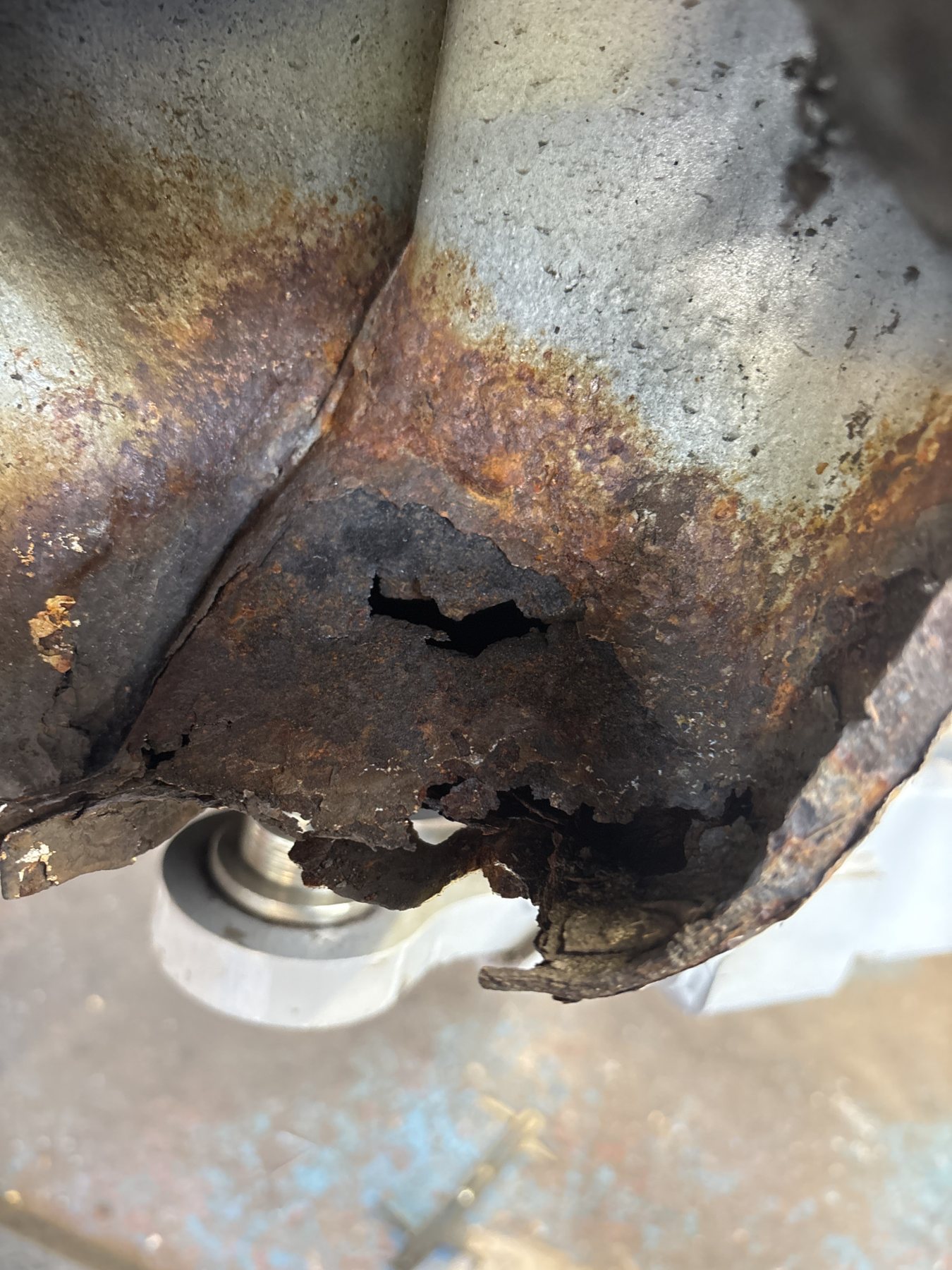
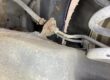
The same car from underneath: the metal has rotted through and is breaking away. It would not stay firm under finger and thumb pressure.
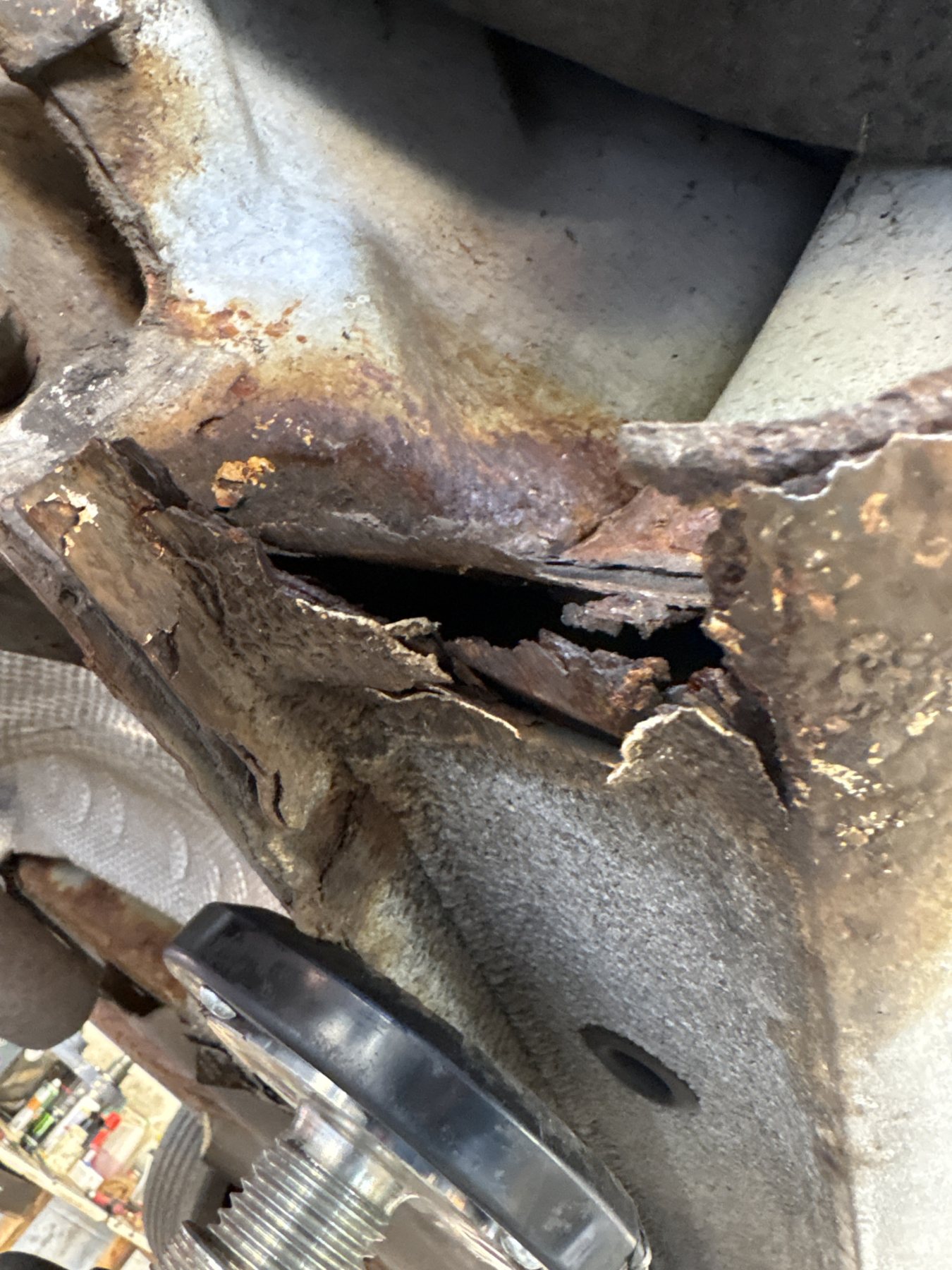
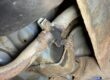
Corrosion splitting the sill open along its seam. The technician recorded both rear sills as an MOT failure needing repair before the test.
Frequently asked questions
What is a prescribed area on an MOT?
Any load-bearing structure within 30cm of a brake, steering, suspension or sub-frame mounting, or a seat belt anchorage. Corrosion in these areas is judged more strictly because it affects how securely those parts are held.
Will rust fail my MOT?
It depends where it is. Within a prescribed area, corrosion that has made a hole or feels soft under finger and thumb pressure fails. Elsewhere, rust only fails if it significantly weakens the vehicle’s overall structure.
Can a welded repair pass the MOT?
Yes, if it is done properly. A repair within a prescribed area must restore the strength and continuity of the structure. An inadequate repair is a defect in its own right.
How much does it cost to fix prescribed area corrosion?
It depends on the underlying cause and the vehicle, which is why we always inspect first. Once we can see exactly what is needed we will explain it in plain English and confirm the price with you before any work starts.