Track Rod End Dust Cover on Your MOT: What the Wording Means
Steering wording on an MOT certificate always reads more alarming than suspension wording, because it has the word steering in it. This pair appears constantly:
Steering linkage ball joint dust cover damaged but preventing the ingress of dirt (2.1.3 (g) (i))
Steering linkage ball joint dust cover no longer prevents the ingress of dirt (2.1.3 (g) (ii))
In short: “steering linkage ball joint dust cover” means the rubber boot on a track rod end, the ball joint at the outer end of each steering rod. Damaged but still sealing is a Minor defect and the car passes. Once it no longer keeps dirt out it is a Major defect and a fail, because grit is getting into the joint.
One quick translation before we go any further: nearside means the passenger side of the car, the side nearest the kerb. Offside means the driver’s side. So a defect recorded as nearside front is on the front passenger side, and offside rear is behind the driver. Front and rear, inner and outer, upper and lower simply pin down exactly which component the tester was looking at.
What a Track Rod End Is
Your steering rack pushes and pulls two rods, one to each front wheel. At the outer end of each rod sits the track rod end: a small ball joint that lets the wheel steer while the suspension moves. Like every ball joint on the car, it lives inside a rubber dust cover, or boot, packed with grease. The rubber keeps the grease in and the grit out. The joint is fine for years, until the boot splits.
Why the Dust Cover Is the Whole Story
A split boot does not make the joint loose today. What it does is let the grease escape and invite water and grit into a polished steel socket, which then wears at many times its design rate. That is why the MOT treats the cover itself as the defect: damaged but still keeping dirt out is a Minor defect under 2.1.3 (g) (i), while a cover that no longer seals is a Major defect under 2.1.3 (g) (ii) and fails the car, even if the joint inside still feels tight. If the joint has already developed play, that is its own failure: play in your steering is not something any tester, or any of us, will wave through.
If this logic sounds familiar, it is the same story as the CV boot on your driveshaft: we covered that one in what a split CV boot looks like and why it fails.
Symptoms You Might Have Noticed
- A light knock or rattle from the front over broken surfaces.
- Vague or slightly delayed response just off-centre.
- A front tyre starting to feather or wear unevenly.
- In the later stages, a clunk when turning at parking speeds.
Often there are no symptoms at all: the boot splits silently, which is exactly why it is on the MOT checklist.
How It’s Repaired, and the Step People Skip
A worn track rod end, or one with a perished boot, is replaced: on most cars a straightforward job. The step that separates a proper repair from a cheap one comes afterwards: setting the wheel alignment. The track rod end is literally the adjuster for your front wheel’s toe angle, so replacing it changes the alignment by definition. Skip that step and the car eats a front tyre and pulls on the motorway. Every repair of ours ends on the wheel alignment equipment, and you get the before and after printout.
Book a Steering Check
If your MOT sheet mentions a steering ball joint or its dust cover, any of our 12 branches across Nottinghamshire will put it on the ramp, show you the state of the boot and the joint, and price the fix honestly before anything is agreed. Our free vehicle health check covers the full steering and suspension, or book an MOT online today.
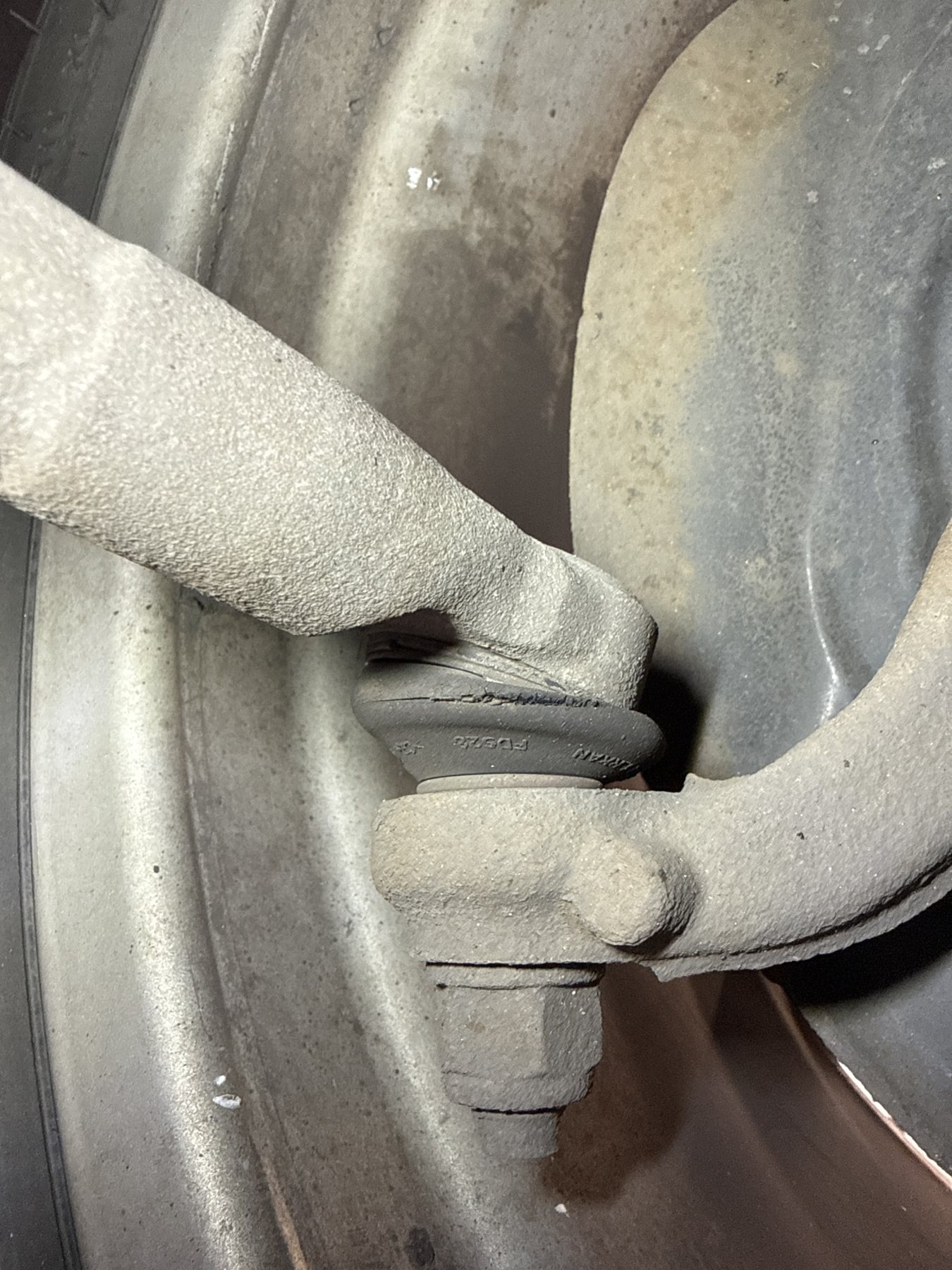
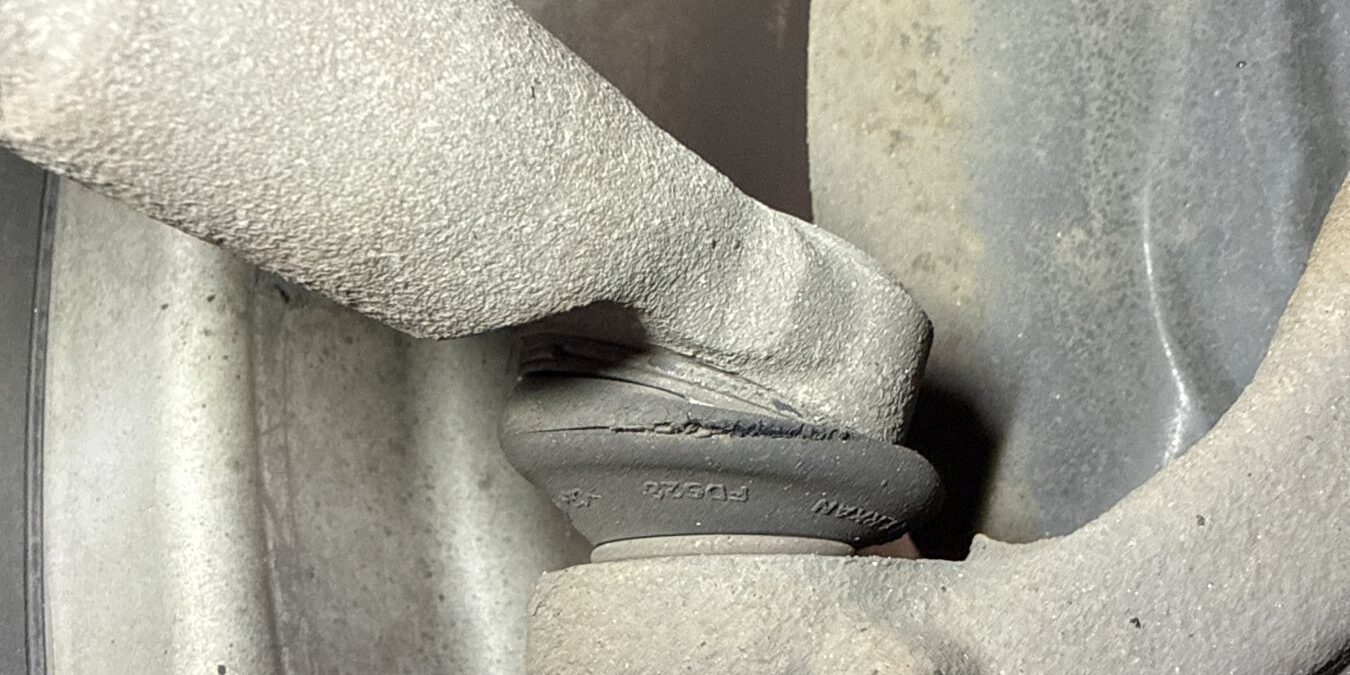
Caught at our Stapleford branch this September: a ring of cracking right around this track rod end’s dust cover. The joint inside was still tight; its seal was finished.
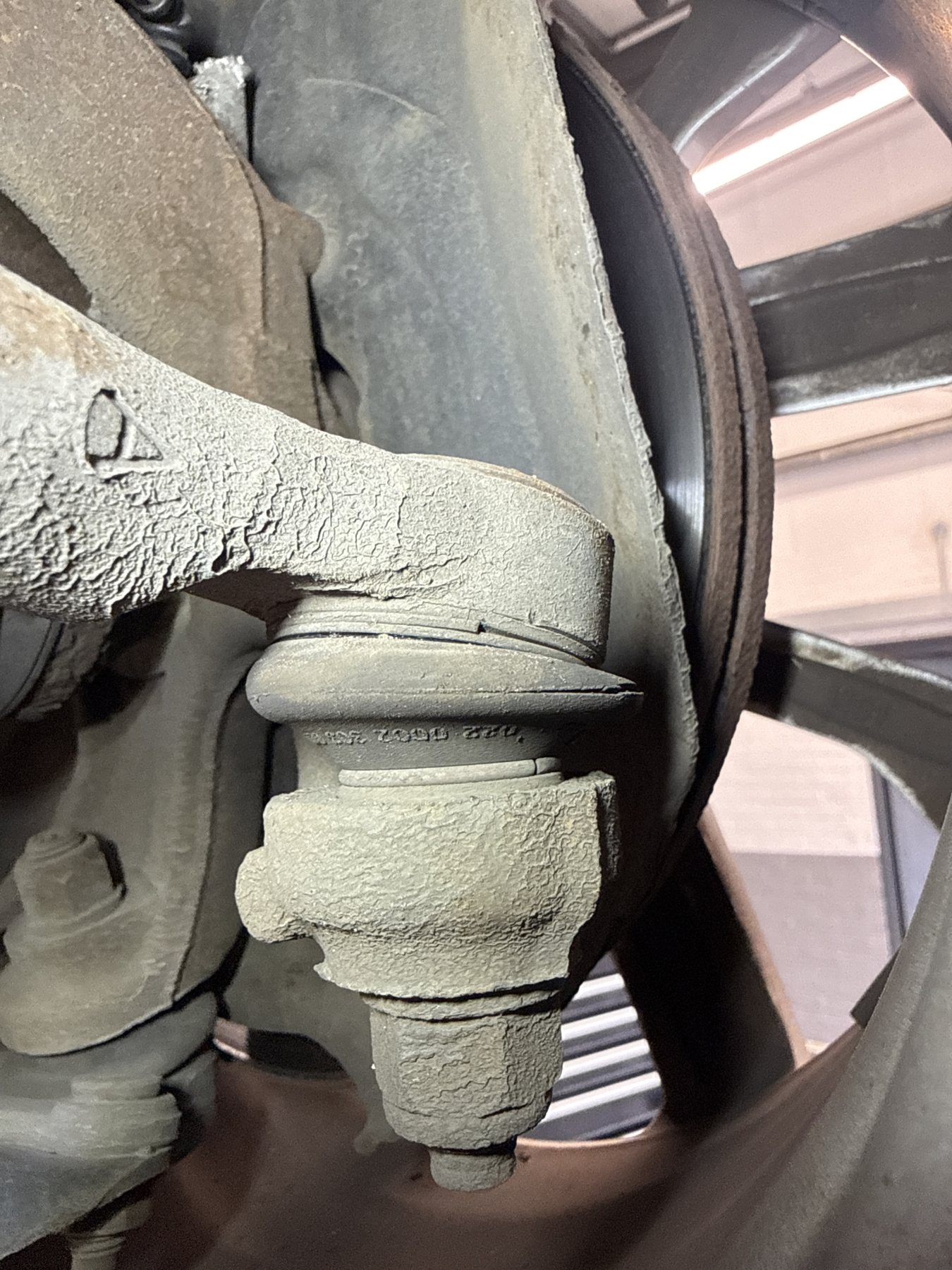
The same car’s other side. Both track rod end boots were splitting together, which is exactly how they age.
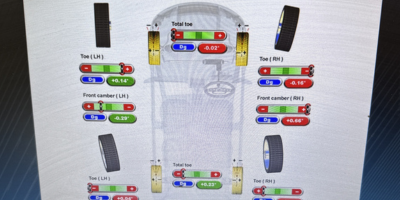
A new track rod end changes the toe angle by definition: the job is only finished when the alignment is set and proven.
Frequently asked questions
What does “steering linkage ball joint dust cover” mean on my MOT?
It is the rubber boot protecting a steering ball joint, usually the track rod end. Damaged but still sealing is a Minor defect under 2.1.3 (g) (i). No longer keeping dirt out is a Major defect under 2.1.3 (g) (ii), and the car fails: an unsealed joint wears out quickly from that point.
Is a split track rod end boot serious if the steering feels fine?
Today, no: the joint is usually still tight. But grease is escaping and grit is getting in, so its wear rate has jumped. It fails the MOT because of what happens next, not what has happened already. Replacing it promptly is much cheaper than replacing it plus the tyre it ruined.
Do I need wheel alignment after a track rod end is replaced?
Yes, always. The track rod end is the front wheel’s toe adjuster, so changing it changes the alignment. Without a proper alignment afterwards the car will typically pull slightly and wear the front tyres unevenly.
What do nearside and offside mean on an MOT?
Nearside is the passenger side of the vehicle, the side closest to the kerb when you are driving in the UK. Offside is the driver’s side. The MOT certificate uses these words so there is no confusion about which corner of the car the defect relates to.
How much does it cost to fix a track rod end?
It depends on the underlying cause and the vehicle, which is why we always inspect first. Once we can see exactly what is needed we will explain it in plain English and confirm the price with you before any work starts.