Failed Your MOT for Headlamp Aim? Here’s Why It’s So Common
It feels almost unfair. The car drives perfectly, both headlights work, and yet the failure sheet says:
Headlamp aim too high (4.1.2 (a))
Headlamp aim too low (4.1.2 (a))
Often it names the nearside or offside lamp as well. Either way you are in the most popular club in motoring: lighting defects sit at the top of the DVSA’s failure statistics year after year, and headlamp aim is consistently the single most common item within them. The good news: it is usually one of the quickest and cheapest MOT failures to put right.
In short: the tester’s beam checker found a dipped beam pointing outside the permitted band, either too high, which dazzles oncoming drivers, or too low, which shortens your view of the road. It is a Major defect, so the car fails, but in most cases the fix is a quick adjustment on a beam setter.
What the Tester Actually Measures
Every MOT bay has a headlamp beam tester: the box on rails that gets wheeled in front of the car. It measures exactly where each dipped beam’s cut-off line falls and at what angle the beam is dipping. The rules exist for one simple reason: a beam aimed too high dazzles oncoming drivers, and one aimed too low leaves you driving on a fraction of your visibility. There is a defined tolerance band, and outside it the car fails with a Major defect under 4.1.2 (a). It is a measurement against a standard, not a judgement call.
Why Aim Goes Wrong When Nothing Seems Broken
- A bulb was replaced and the new one sits fractionally differently in the reflector, or the headlamp unit was disturbed and never re-aimed.
- The wrong type of bulb is fitted. An LED “upgrade” bulb in a headlamp designed for halogen is the classic modern cause: the light source sits in the wrong place, the beam pattern breaks up, and the car fails. Factory-fitted LED headlamps are fine; retrofit LED bulbs in halogen units are not.
- The headlamp levelling adjuster, the little thumbwheel on the dash, is set down for a loaded car, or the automatic levelling motor has failed.
- The headlamp unit itself is loose, or a previous bump nudged its mounting.
- Sagging rear suspension tips the whole front of the car, and the beams, upward.
How It’s Fixed
In most cases the fix is adjustment: the car goes in front of the beam setter and the aim screws are turned until the cut-off sits inside the tolerance band. That is minutes, not hours. Where the cause is a wrong or poorly seated bulb, the correct bulb goes in first and the aim is set after. A failed levelling motor or a loose unit takes a little longer, but it is still rarely a big job. After a failure, the car can usually be re-aimed and retested the same day.
Can You Still Drive It?
Headlamp aim is a Major defect, so the car has failed. If your old certificate has expired you can only drive to a pre-booked test or to a garage for repair; the full rules are in our guide on driving away with an MOT failure. And while it can feel like a technicality, it is worth fixing for its own sake: dazzling oncoming traffic on a dark A-road is genuinely dangerous, and it is usually strangers who pay for it, not you.
Book an MOT or Get Your Headlights Checked
If your car failed on headlamp aim, any of our 12 branches across Nottinghamshire can re-aim it on the beam setter and get you retested. If you are heading into winter with a bulb you fitted yourself, we will happily check the aim before it costs you a test. Book an MOT or a retest online, and see what’s checked in an MOT if you want the full picture before test day.
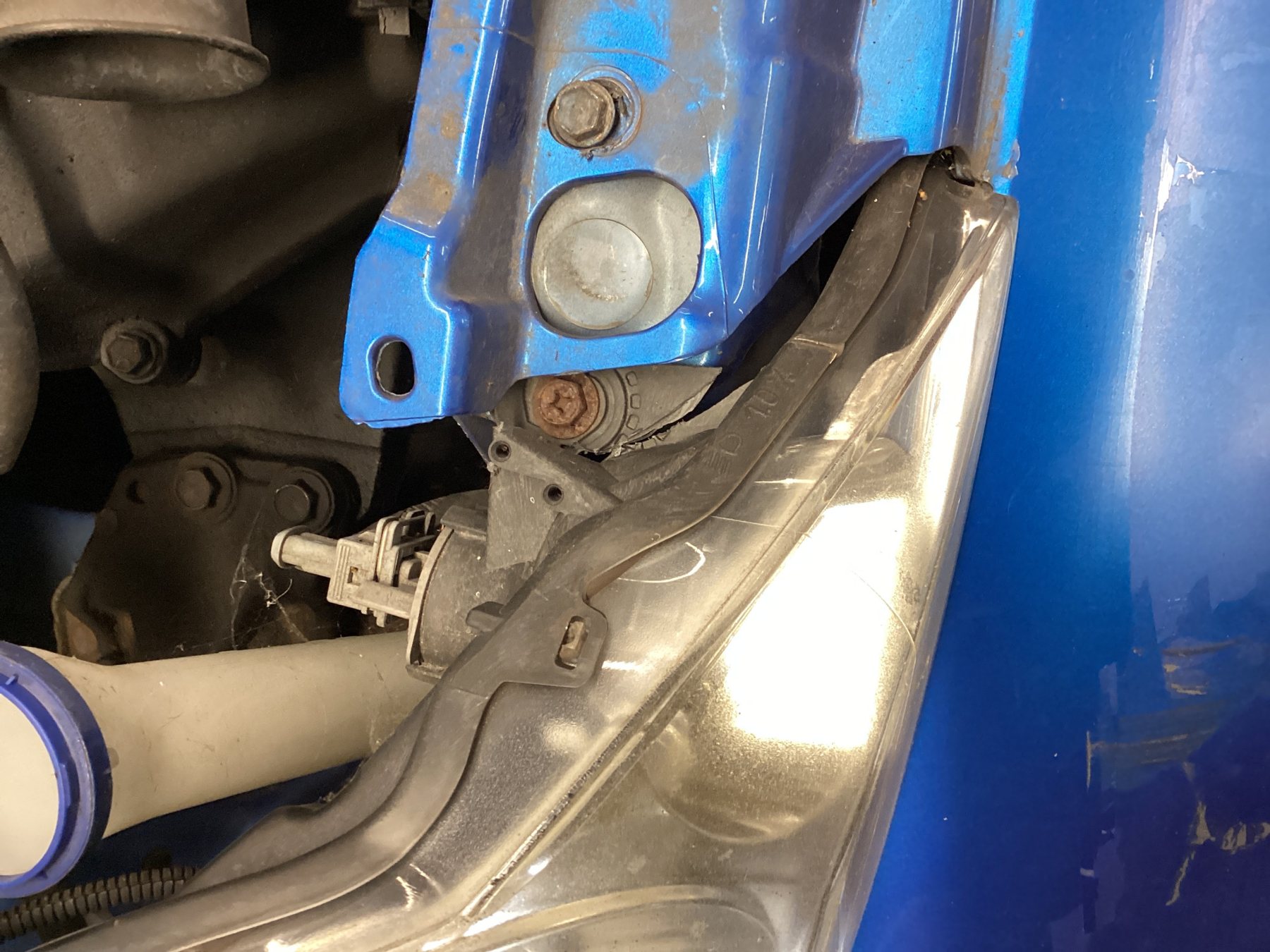
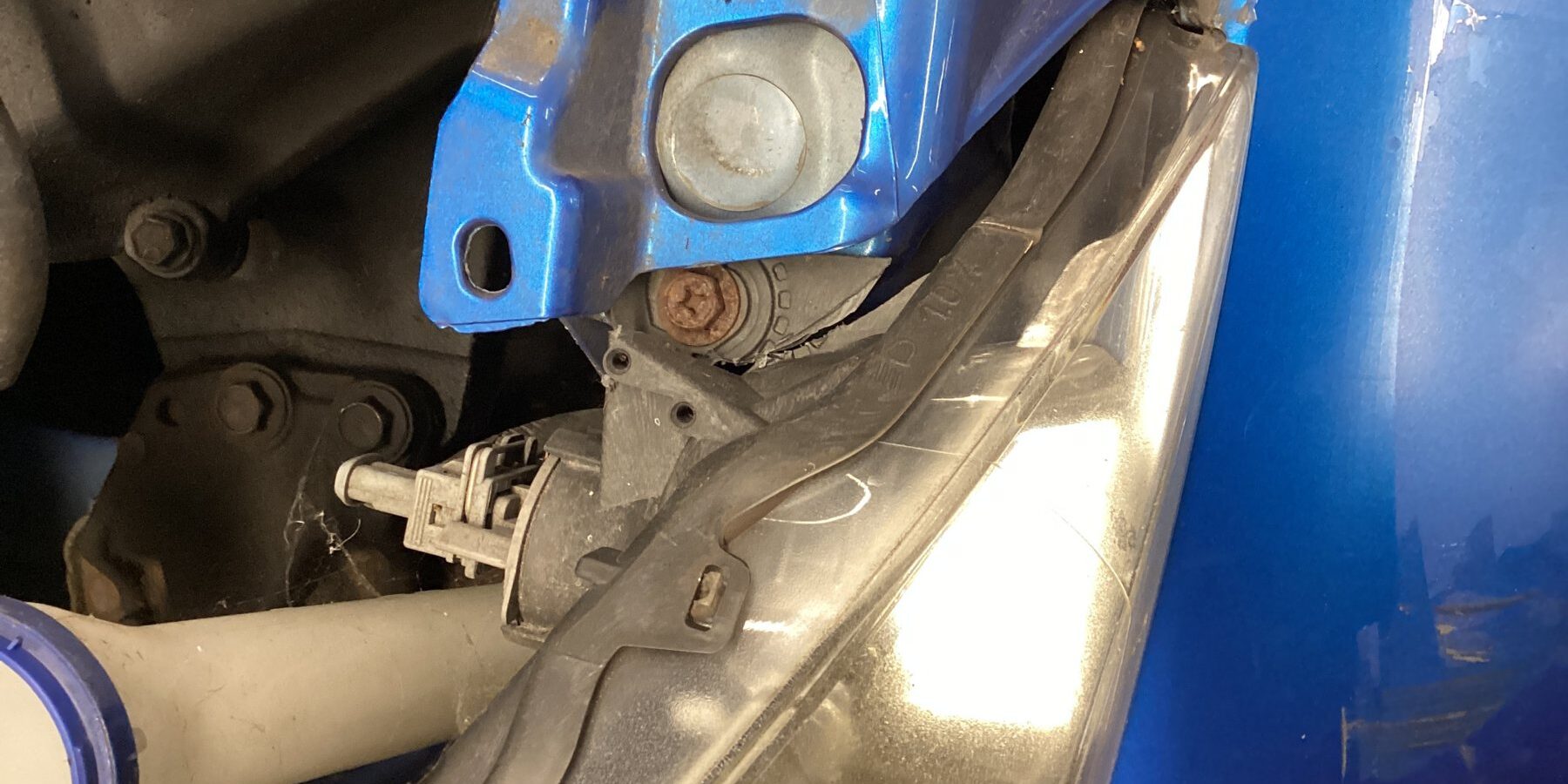
Found on inspection at our Arnold branch this September: a loose headlamp with a broken mounting bracket. A lamp that can move cannot hold its aim.
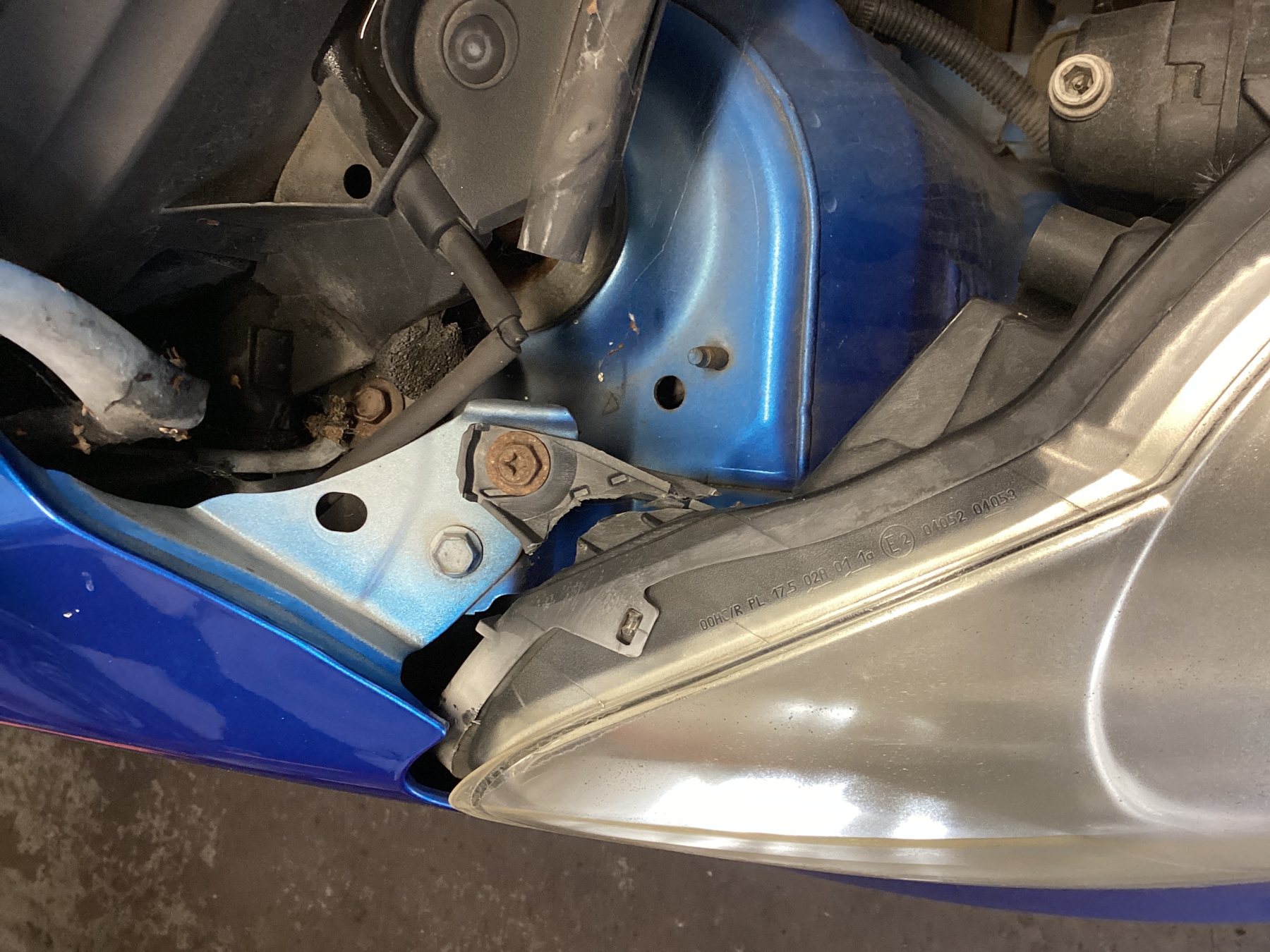
The snapped mounting tab up close. The bulb worked perfectly; the beam still pointed the wrong way.
Frequently asked questions
Why did my car fail on headlamp aim when both headlights work?
Because the MOT measures where the beam points, not just whether it lights up. The beam tester checks the cut-off line of each dipped beam against a tolerance band. A working headlamp aimed too high dazzles oncoming drivers, so it fails under 4.1.2 (a) even though the bulb is fine.
Are LED bulbs an MOT failure?
Headlamps that were designed and built with LEDs from the factory are fine. The problem is retrofit LED bulbs fitted into headlamps designed for halogen bulbs: the beam pattern and aim are almost never right, and they are not permitted, so they commonly fail. If in doubt, bring it in and we will tell you straight.
Can I adjust my headlights myself?
There are adjuster screws on most headlamp units, and a garage door and a tape measure will get you in the rough zone. But the pass or fail is decided by a calibrated beam setter, and without one you are guessing. Having the aim set properly takes minutes.
Does carrying a load affect headlamp aim?
Yes. A boot full of weight tips the beams upward, which is exactly what the manual levelling thumbwheel is for. Cars are tested unladen, so a levelling adjuster left wound down, or a failed automatic levelling motor, can be all it takes to fail.
How much does it cost to fix a headlamp aim failure?
It depends on the underlying cause and the vehicle, which is why we always inspect first. Once we can see exactly what is needed we will explain it in plain English and confirm the price with you before any work starts.