Electric Car Brake Discs: Why Rust Is the MOT Risk
Electric cars are famously easy on brake pads. Most of the slowing down is done by the motor feeding energy back into the battery, so the friction brakes get far less work. That sounds like nothing but good news for the MOT, and mostly it is. But it creates a different problem, one we see on electric and hybrid cars far more than on petrol cars of the same age: discs that rust rather than wear.
In short: EVs and hybrids need brake work far less often than petrol and diesel cars: in our workshops, about 75% fewer pad jobs per mile on EVs and 60% fewer on hybrids. When EV brakes do need attention, it is usually because the discs have corroded from lack of use, not worn thin. Heavily corroded or pitted discs can fail the MOT, and can drag down the brake efficiency result.
Why EV Brake Discs Rust
Every steel brake disc picks up a film of surface rust when it gets wet. On a normal car, the next few brake applications scrub it off. On an electric car, regenerative braking handles most everyday slowing, so the pads may barely touch the discs for days. The rust stays, builds up, and starts to eat into the friction surface, usually worst on the rear discs, which do the least braking of all.
Once the surface is pitted, the pads cannot grip it properly, and the corrosion tends to spread from the edges inwards. Our post on Tesla brake disc corrosion shows exactly what this looks like on the ramp.
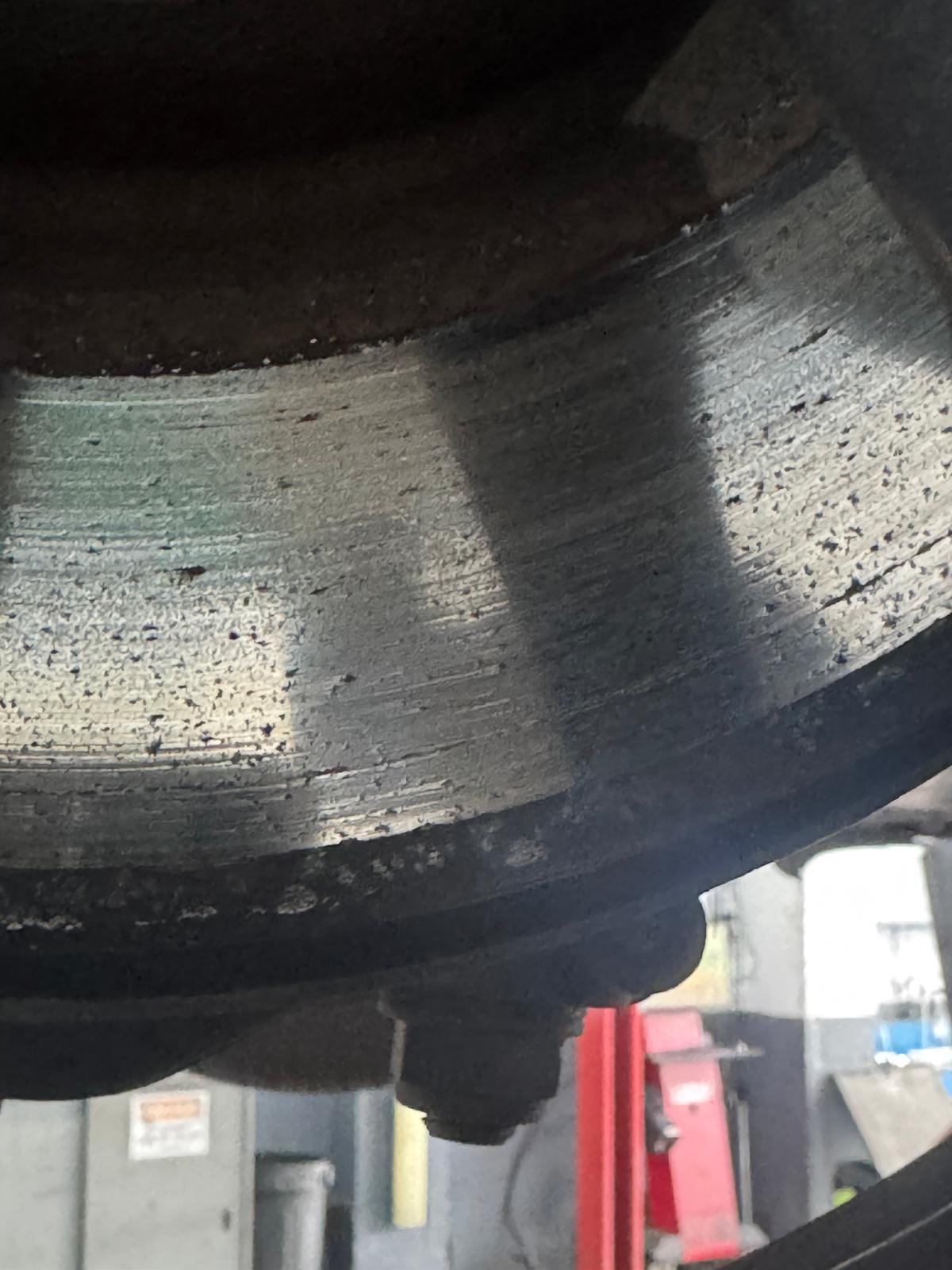
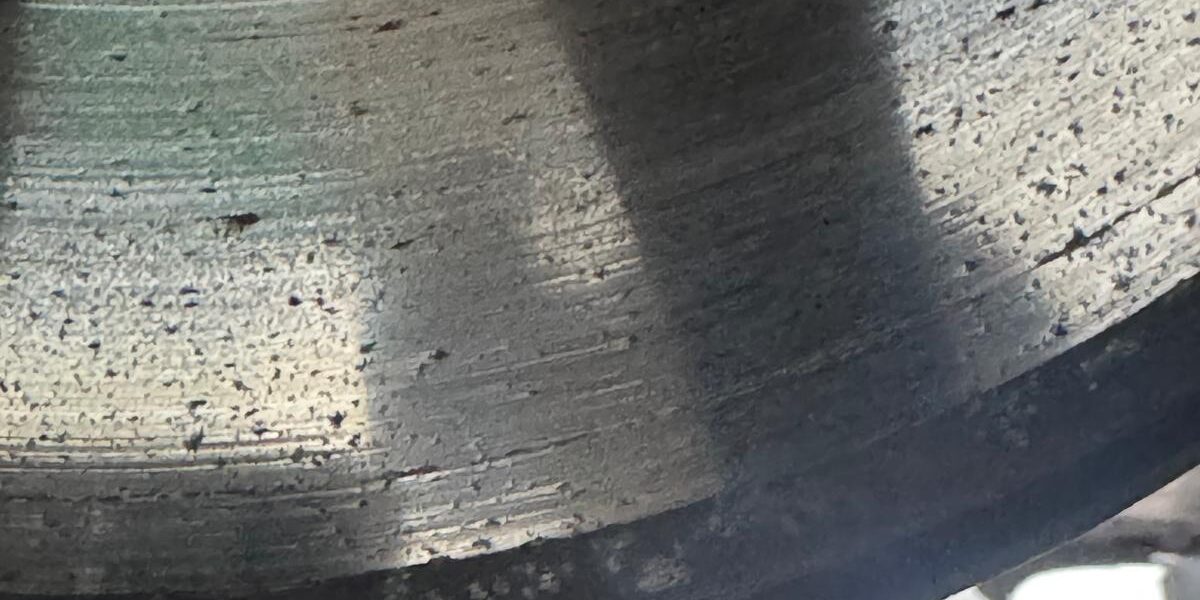
A corroded, pitted friction face on an EV disc: plenty of thickness left, but the surface the pads grip has gone.
What Our Own Numbers Show
We looked at what we actually replaced on cars that came to us for an MOT at three to ten years old, comparing electric cars with petrol and diesel cars of the same age. On the same visit as the MOT:
- Front brake pads were replaced on 1.2% of electric cars against 5.2% of petrol and diesel cars.
- Front brake discs on 1.2% against 4.1%.
- Rear brake discs on 0.8% against 2.5%.
So EVs come out well. Over their whole lives, the pattern is the same: per mile driven, we do about 75% fewer pad jobs on EVs and 60% fewer on hybrids, and about 69% and 57% fewer disc jobs. These are figures for the cars that come to us, not failure rates for any model, but they are drawn from thousands of jobs across our branches.
How Corroded Discs Show Up at the MOT
Discs are checked under section 1.1.14 of the manual. A disc that is significantly and obviously worn is a Major defect (1.1.14 (a) (i)), and one that is insecure, fractured or otherwise likely to fail is Dangerous (1.1.14 (a) (ii)). The manual is clear that a disc must be significantly worn before it fails, so light corrosion or pitting is usually recorded as an advisory, worded along the lines of disc worn, pitted or scored but not seriously weakened. Corrosion also shows up on the brake rollers: a rusty disc can give a weak or uneven reading, and an imbalance across an axle is a fail in its own right, so a car can fail on brake performance even though the discs look thick enough.
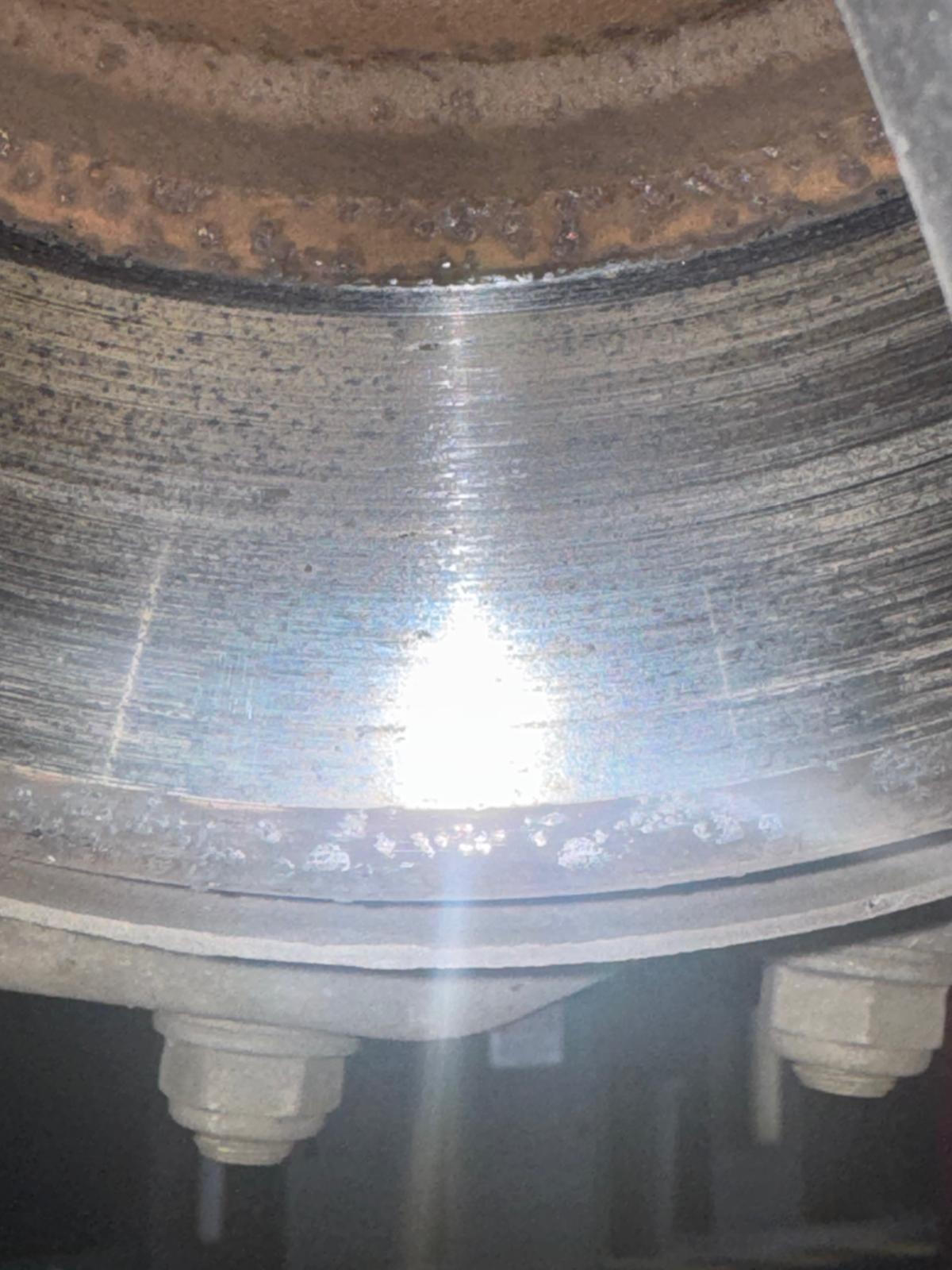
Rust creeping in from the hub and the outer edge, typical of a disc that rarely gets used hard.
How to Keep EV Discs Healthy
- Use the brakes firmly now and then, in a safe place, to clean the discs.
- Try a lower regenerative braking setting for part of a journey if your car allows it.
- Do not let the car sit for weeks at a time without driving it.
- Have the brakes checked at every service, wheels off, rather than waiting for the MOT.
If you want them looked at before the test, our free brake check will tell you where they stand.
Booking an EV or Hybrid MOT?
EV or hybrid due its MOT? We test electric and hybrid cars at our branches across Nottinghamshire, and with over 20,000 MOT tests a year behind us there is not much we have not seen. If anything needs doing we will show you what we found, explain it in plain English and confirm the price before any work starts. Book an electric car MOT or a hybrid MOT when you are ready.
Frequently asked questions
Why do electric car brake discs rust?
Because the friction brakes get so little use. Regenerative braking does most of the slowing down, so the surface rust that forms when the discs get wet is not scrubbed off by the pads, and it builds up into corrosion and pitting.
Can rusty brake discs fail an MOT?
Yes. A disc that is significantly and obviously worn fails as a Major defect under section 1.1.14, and badly corroded discs can also cause a fail on brake efficiency or imbalance on the rollers. Lighter corrosion is usually an advisory.
Do electric cars need new brake pads less often?
Much less often. In our workshops EVs need about 75% fewer pad jobs per mile than petrol and diesel cars, and hybrids about 60% fewer.
Is surface rust on brake discs normal?
A light orange film after rain or washing is normal on any car and clears after a few stops. It becomes a problem when it does not clear and the friction surface becomes pitted or ridged.
How often should EV brakes be checked?
At every service, with the wheels off. Because EV discs fail from corrosion rather than wear, a visual check through the wheel spokes can miss it.