Have you heard the term E10 petrol in the news recently and wondered what it was all about?
In September 2021, the standard petrol grade in Great Britain will become E10. In Northern Ireland, this will happen early in 2022.
This change only applies to petrol. Diesel fuel will not be changing.
What is E10 petrol?
E10 petrol contains up to 10% renewable ethanol, which will help to reduce carbon dioxide (CO2) emissions associated with petrol vehicles and help tackle climate change. Petrol in the UK currently contains up to 5% renewable ethanol (known as E5).
By blending petrol with up to 10% renewable ethanol, less fossil fuel is needed, helping us reduce carbon emissions and meet climate change targets.
The introduction of E10 at UK forecourts could cut transport CO2 emissions by 750,000 tonnes a year – the equivalent of taking 350,000 cars off the road!
Are there any downsides to using E10 petrol?
Using E10 can slightly reduce fuel economy (the number of miles you are able to drive on a gallon of fuel). You may see a reduction of around 1%, but it is unlikely to be noticeable in everyday driving.
Other factors – such as your driving style, under-inflated tyres or carrying unnecessary weight will have a much more significant impact on fuel economy than using E10 petrol. If fuel economy is a concern, be sure to read our blog Top 5 tips to improve fuel efficiency and put them into practice!
What does changing to E10 petrol mean for drivers?
For the majority of drivers, changing to E10 will mean very little, and most will probably not notice any changes at all. Diesel or electric car drivers will not be affected at all, and almost all (95%) petrol cars on the UK roads currently are compatible with E10.
If you have a petrol car produced after 2011, your vehicle is compatible with E10 fuel.
The following vehicles, however, may not be compatible with E10:
- Classic, cherished, and older vehicles
- Some specific models, particularly those from the early 2000s
- Some mopeds, particularly those with an engine size of 50cc or under
You can check whether your vehicle is approved to use E10 petrol using the E10 vehicle checker by clicking here. This covers cars, motorcycles, and mopeds.
What should you do if your car isn’t compatible with E10 petrol?
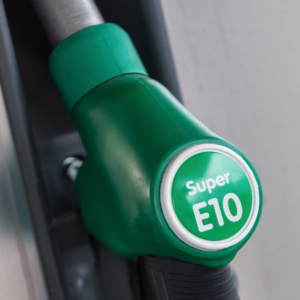
Continue to use E5 petrol in the ‘super’ grade (97+ octane), which will remain available at many larger filling stations. Make sure you check the label before you fill up.
If you mistakenly fill your vehicle with E10 rather than E5, don’t worry! Using a single tank of E10 petrol in a vehicle that is not compatible should not be a major problem. Just make sure you fill up with the correct E5 (‘97+ octane) petrol grade next time.
Unlike putting petrol into a diesel engine, you shouldn’t need to drain the tank. On a one-time basis, your vehicle will not suffer engine damage as a result. Prolonged use of E10 petrol in a non-compatible vehicle, however, may cause harm and is not recommended.