
Ever found yourself wondering how anybody came up with the random collection of letters and numbers in your registration plate?
Wonder no longer, we have all the answers to your question.
What do the letters on a registration plate mean?
When the DVLA issues a car registration plate, they follow a very distinct system.
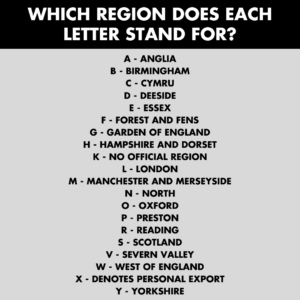
The first section of a number plate is called a local memory tag – the first two letters of the plate – which identifies where the vehicle was registered.
The first letter stands for the local area, for example, B denotes Birmingham, whilst R stands for Reading.
The plate’s second letter then identifies at which DVLA office in that area the registration took place – multiple letters can signify the same DVLA office.
The letters I, Q and Z are not used as local office identifiers, while Z can be used only as a random letter.
How can I tell how old my car is from the registration plate?
The two numbers in the middle of your registration plate identify how old your vehicle is.
The DVLA issues two lots of number plate combinations each year, with new registrations taking place on 1st March and 1st September.
All plates issued between March 1 and the end of August will use the same two numbers as the year they are registered.
For example, a car registered in May 2019 would have “19”.
For cars registered between September and the end of February, they use the current “60” format.
Vehicles registered after September 2010 were marked with a 60, where the “0” stands for 2010.
So, any motor registered after September in the following years can have its age identified by the second number.
For example, a car registered in November 2019 will use “69”.
From 2020, post-September registrations will use the “70” format.

What about the final 3 letters?
The final three letters of the number plate tend to be a random combination that makes the registration unique.
But it’s not uncommon for cars with neighbouring letter sequences to be from the same manufacturer, due to batch allocation of new registrations to dealers by the DVLA.
The letters “Q” and “I” are excluded from the random sequence, along with any phrases that are deemed offensive.
If nothing changes with the current scheme, there are enough sufficient combinations to last until the end of February 2051.