Tyre Cut, Cracking or Perishing on Your MOT: What It Means
Tread depth gets all the attention, but a tyre can be illegal with 8mm of tread if its structure is damaged. This family of wording covers the sidewall and casing, and it ranges from a quiet note to a do-not-drive:
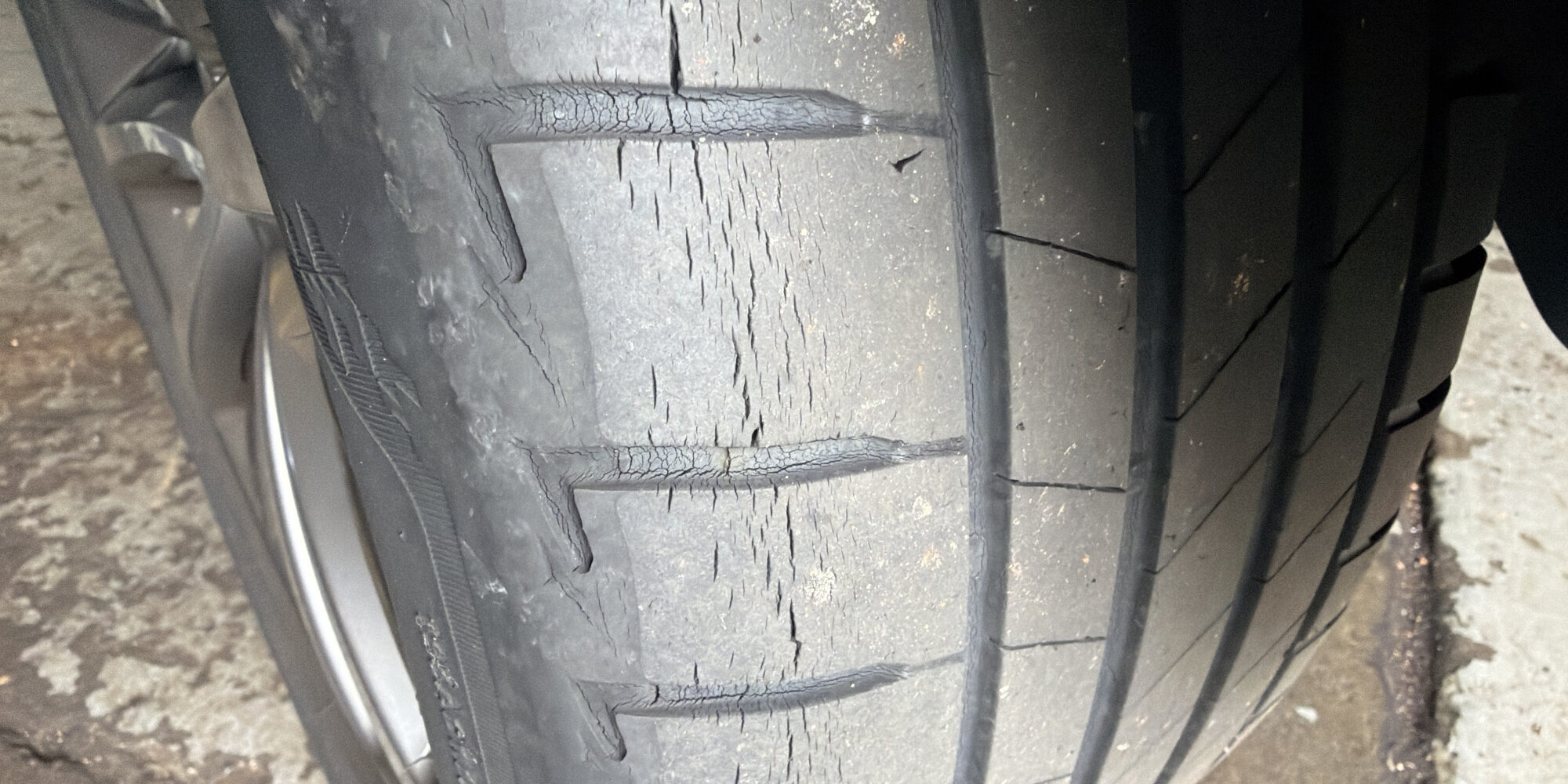
Tyre slightly damaged/cracking or perishing (advisory)
Tyre has a cut in excess of requirements deep enough to reach the ply or cords (5.2.3 (d) (i))
Tyre has a lump, bulge or tear caused by separation or partial failure of its structure (5.2.3 (d) (ii))
In short: the tyre’s rubber or structure is damaged. Light cracking or perishing from age is an advisory and the car passes. A cut deep enough to reach the cords is a Major defect and fails. A lump or bulge is Dangerous: do not drive on it.
One quick translation before we go any further: nearside means the passenger side of the car, the side nearest the kerb. Offside means the driver’s side. So a defect recorded as nearside front is on the front passenger side, and offside rear is behind the driver. Front and rear, inner and outer, upper and lower simply pin down exactly which component the tester was looking at.
Cracking and Perishing: the Age Advisory
Rubber ages whether or not the tyre is used. Sunlight, ozone and temperature swings slowly harden the compound until fine cracks appear, usually in the sidewall or between the tread blocks. Light, surface-level cracking earns the advisory: the tyre is legal, but it is showing its age. It is most common on cars that do low mileages, caravans and anything that lives outside: the tread outlasts the rubber. From around five or six years old, check sidewalls yearly; a tyre approaching ten years old has earned retirement regardless of tread.
Cuts: When Damage Reaches the Cords
A cut becomes a failure when it is deep enough to reach the ply or cords: the fabric and steel skeleton that actually carries the load. At that point the tyre’s structure is compromised and it is a Major defect. Kerb strikes, pothole edges, glass and debris are the usual authors. A scuff in the rubber surface is cosmetic; exposed cords are a different category entirely, and the difference is exactly what a tester, or one of our fitters, is trained to judge.
Bulges: the One That Cannot Wait
A lump or bulge in the sidewall means the internal structure has already let go: air is pushing into a weak spot like an aneurysm. That is recorded as a Dangerous defect, and a tyre with a bulge can fail suddenly at speed. It cannot be repaired, and it is the one item on this page where our advice is blunt: do not drive on it, change it now, use the spare or call our mobile fitters.
What We Check When a Tyre Is Flagged
- The full sidewall, inner and outer: the inner face hides half of all damage, which is why our checks turn the wheels.
- Crack depth: surface crazing versus cracking that opens when the tyre flexes.
- Any cut, for depth and for whether cords are visible or reachable.
- Age, from the date code moulded into the sidewall, and the tyre’s repair history.
- Pressures: chronic under-inflation overheats and flexes the casing, and it is the fastest way to age a tyre from the inside.
We have seen every version of this: our post on driving on unsafe tyres shows real finds from our workshops, and the danger of part-worn tyres explains why second-hand rubber so often carries hidden structural damage. If your certificate flagged wear rather than damage, our guide to the tyre worn close to legal limit advisory from earlier this month covers that side.
Free Tyre Checks at Every Branch
If cracking, a cut or any damage is on your MOT sheet, call into any of our 12 branches across Nottinghamshire and we will give you a straight answer: safe to run, plan the replacement, or change it today. Fitting while you wait from our tyre fitting teams, honest options across our tyre range, and MOT bookings online whenever you are ready.
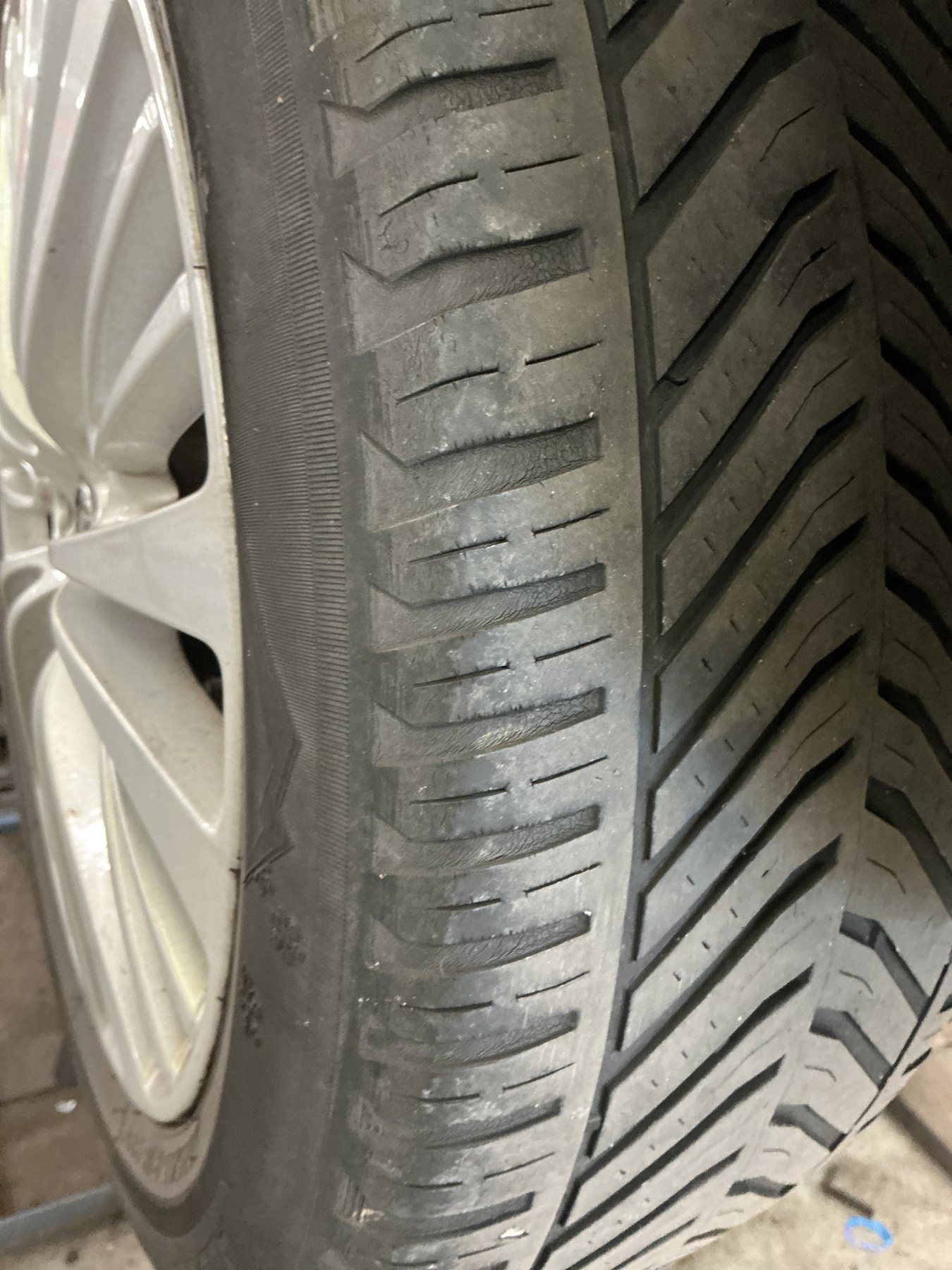
Cracking across the tread blocks of a 2021-dated tyre at our Keyworth branch: the rubber ages even while the tread depth lasts.
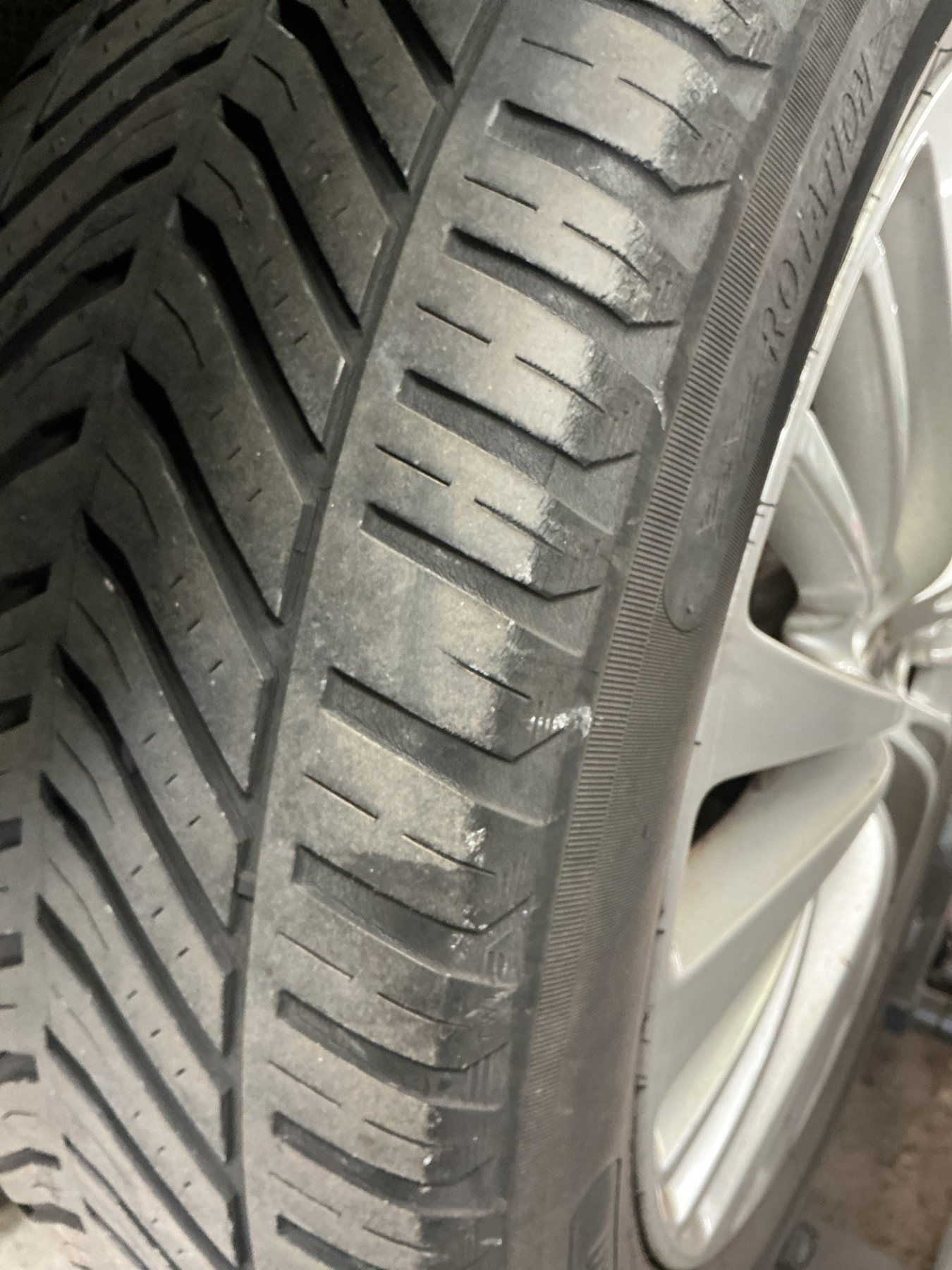
The other rear corner of the same car, same story: fine cracks opening along the shoulder blocks.
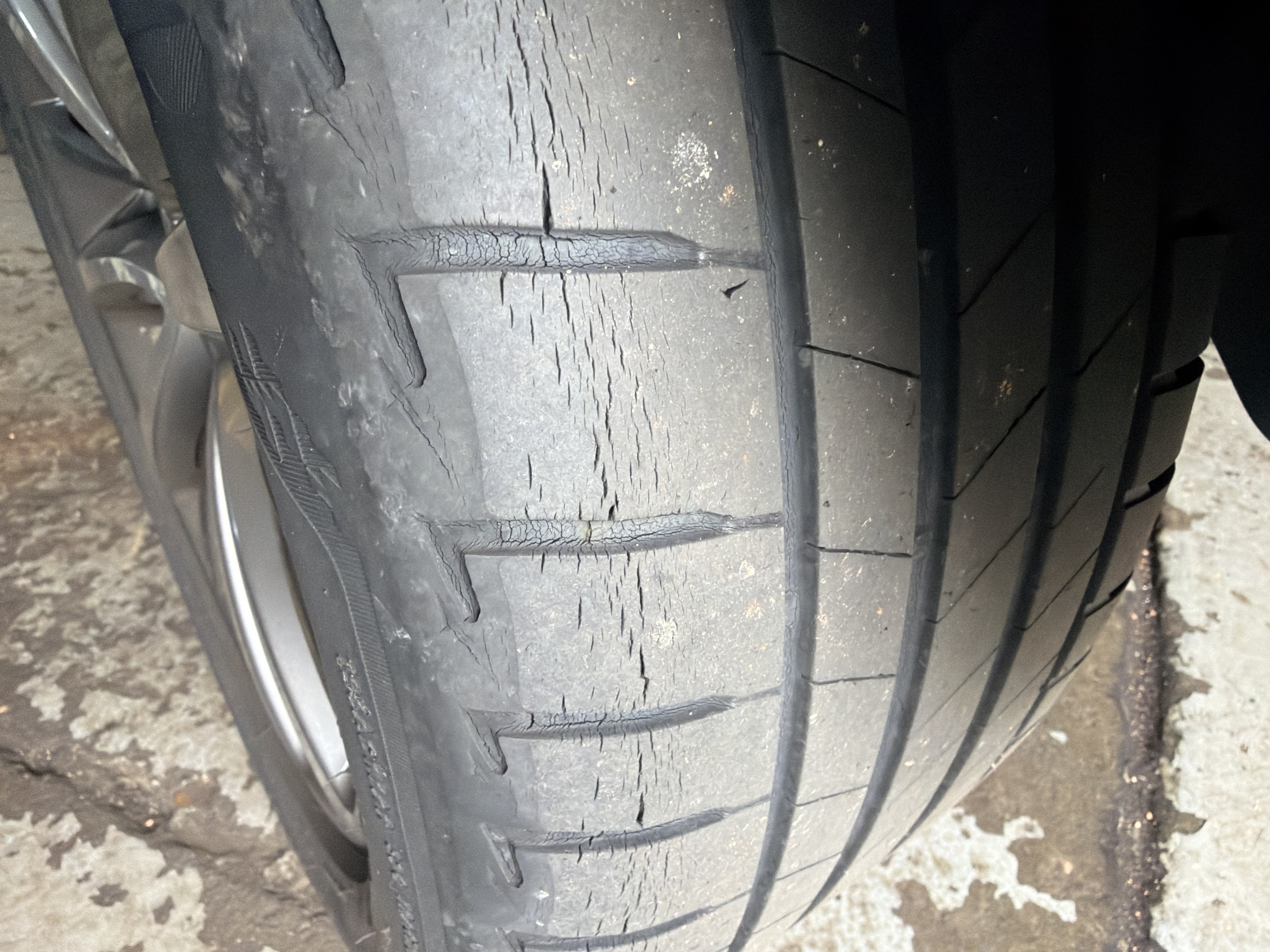
Perishing in an ageing tyre: the tread can be legal while the rubber itself is finished.
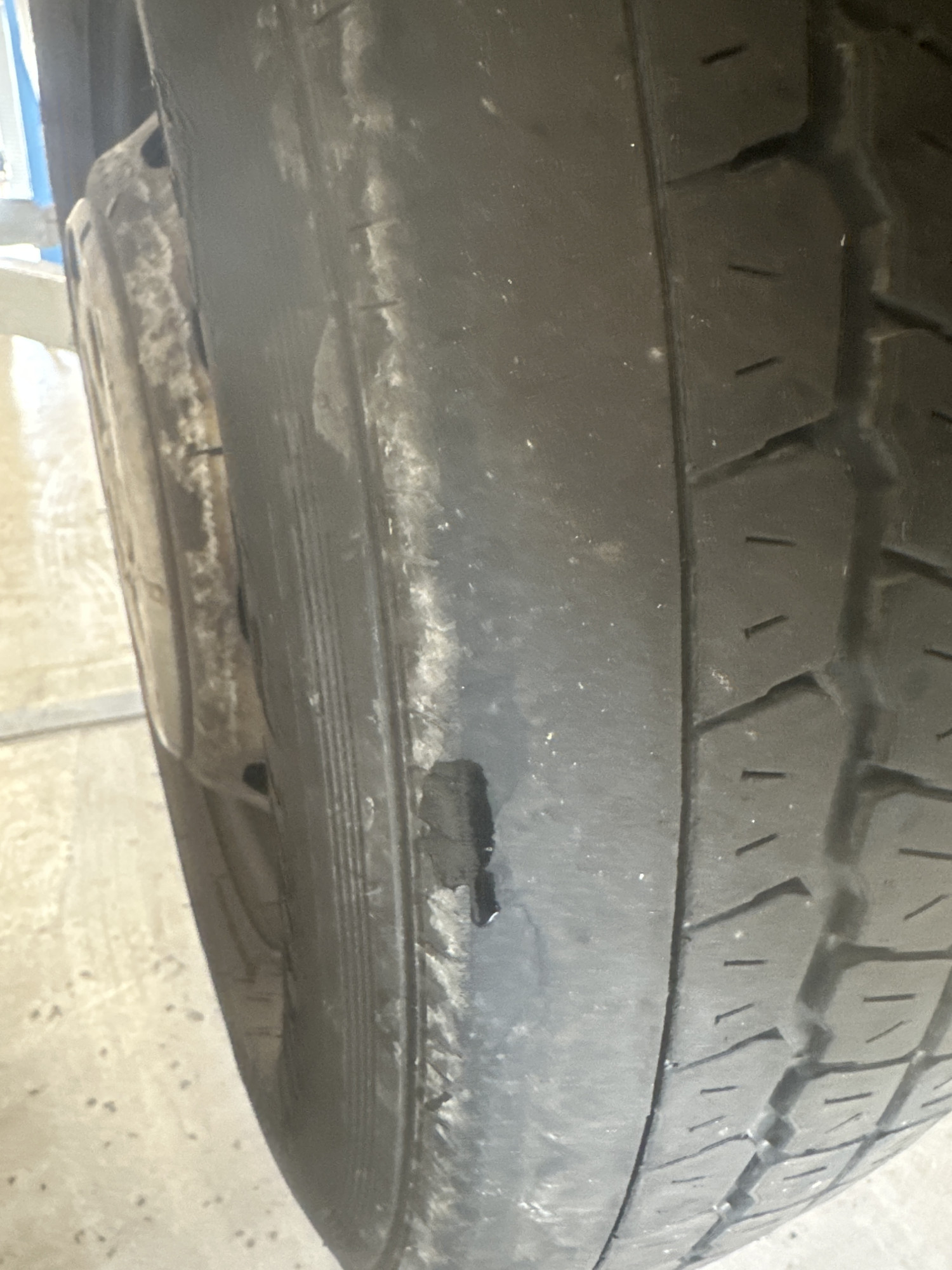
Sidewall damage like this is structural, not cosmetic: once cords are exposed the tyre has failed.
Frequently asked questions
Is tyre cracking an MOT failure?
Light surface cracking or perishing is an advisory: the tyre passes but is ageing. Cracking deep enough to expose the cords, or any cut reaching the ply, is a Major defect under 5.2.3 and fails the car.
Can I drive with a bulge in my tyre?
No: our honest advice is not to. A bulge means the internal structure has partially failed and the tyre can let go without warning at speed. It is recorded as Dangerous on an MOT, it cannot be repaired, and it should be replaced before the car is used again.
How old is too old for a tyre?
There is no legal age limit for car tyres, but rubber hardens and cracks with age regardless of tread. From five or six years check the sidewalls every year, and by around ten years a tyre has done its service whatever the tread says. The date code on the sidewall tells you the week and year it was made.
Will a repaired puncture affect the MOT?
A proper repair in the repairable zone of the tread is fine and test-legal. What fails is damage outside the repairable area, repairs done badly, or structural damage like bulges, which can never be repaired.
What do nearside and offside mean on an MOT?
Nearside is the passenger side of the vehicle, the side closest to the kerb when you are driving in the UK. Offside is the driver’s side. The MOT certificate uses these words so there is no confusion about which corner of the car the defect relates to.
How much does a replacement tyre cost?
It depends on size and brand level. Give any branch your registration or the size from the sidewall and we will quote budget, mid-range and premium options honestly, with fitting, balancing and disposal included in the quoted price.