Do Electric Cars Wear Tyres Faster? We Checked
Ask around and you will hear that electric cars eat tyres, sometimes twice as fast as a petrol car. They are heavy, they have instant torque, and plenty of owners have been surprised by a tyre bill at the first MOT. We have the records of thousands of cars through our branches, so we checked how much of that is true.
In short: Electric cars do wear tyres a little faster, but nowhere near twice as fast. Across 441 EVs we could measure, tyre wear per mile was about 14% higher than petrol and diesel cars of the same age. The bigger difference is cost: a typical EV tyre costs us about 1.8 times as much to supply as a petrol car’s.
What We Measured
For every car that came to us at least twice with a mileage reading at least 5,000 miles apart, we counted the tyres fitted per 10,000 miles, and compared like with like by allowing for the car’s age. That gave us 441 electric cars and over 15,000 cars in total.
- Tyre wear per mile: EVs about 14% higher than petrol and diesel, with a likely range of 5% to 22%.
- The Tesla Model 3: 0.93 tyres per 10,000 miles, against 0.91 across the whole fleet. Effectively the same.
- Cost per tyre: about 1.8 times a petrol car’s, because EVs run larger, higher load-rated tyres, often with noise-reducing foam inside.
So if your EV tyre bill feels like double, it probably is, but mostly because each tyre costs more, not because you are buying twice as many.
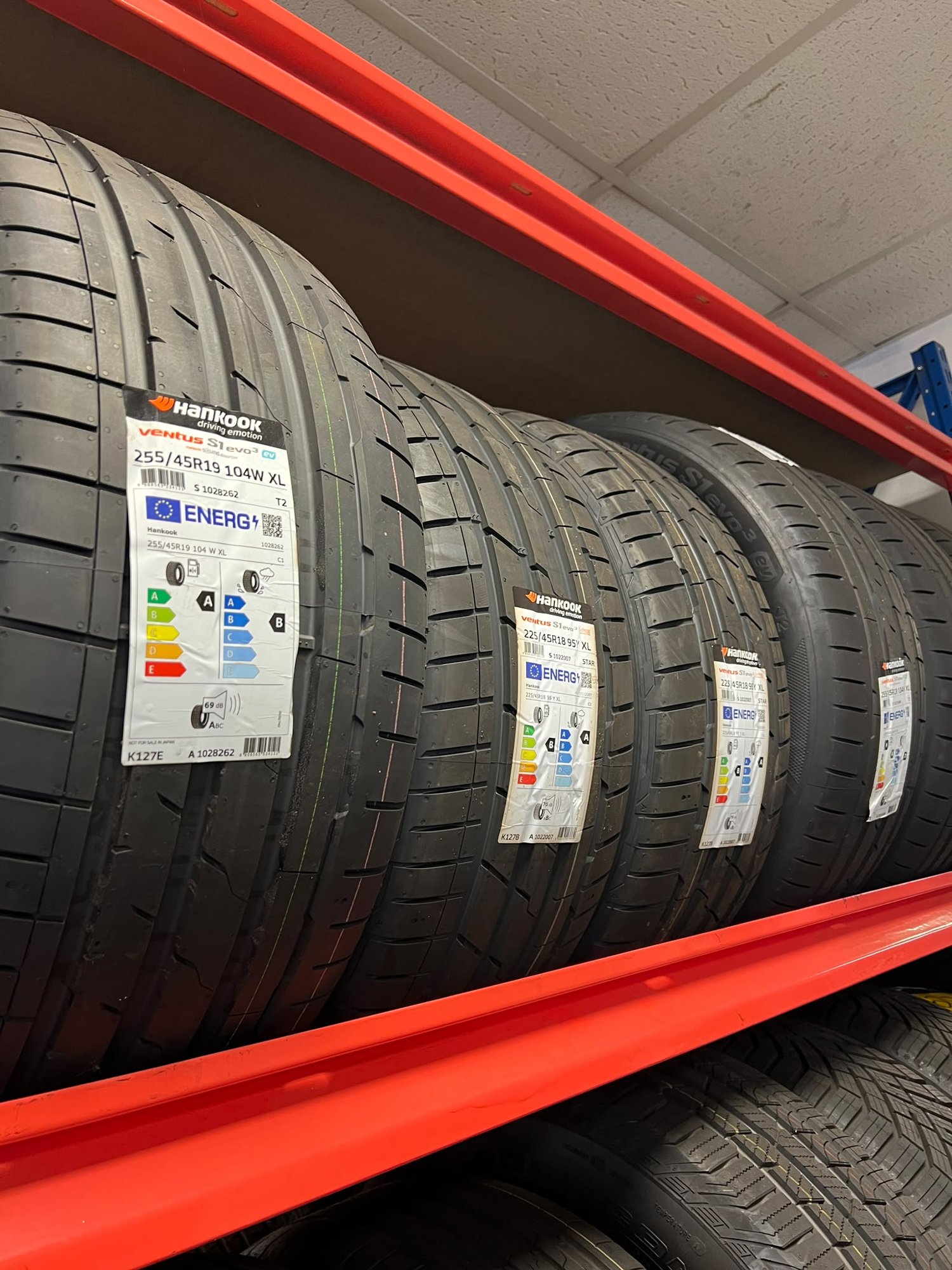
Manufacturer-approved EV tyres in our rack: bigger, higher load-rated and dearer than a typical hatchback tyre.
Do EVs Fail More MOTs on Tyres?
You may have seen national figures suggesting electric cars fail more often on tyres. In our own workshops, among cars aged three to ten coming in for an MOT, we replaced tyres on the same visit on 8.8% of electric cars against 9.6% of petrol and diesel cars of the same age. Not a meaningful difference either way.
Where EVs do catch owners out is the inside edge. Heavy cars with sporty alignment settings often wear the inner shoulder first, out of sight. The MOT checks tread depth across the central three quarters of the tread, and a tyre below the legal limit is listed as a Dangerous defect under 5.2.3 (e). See our tread depth guide for how to check.
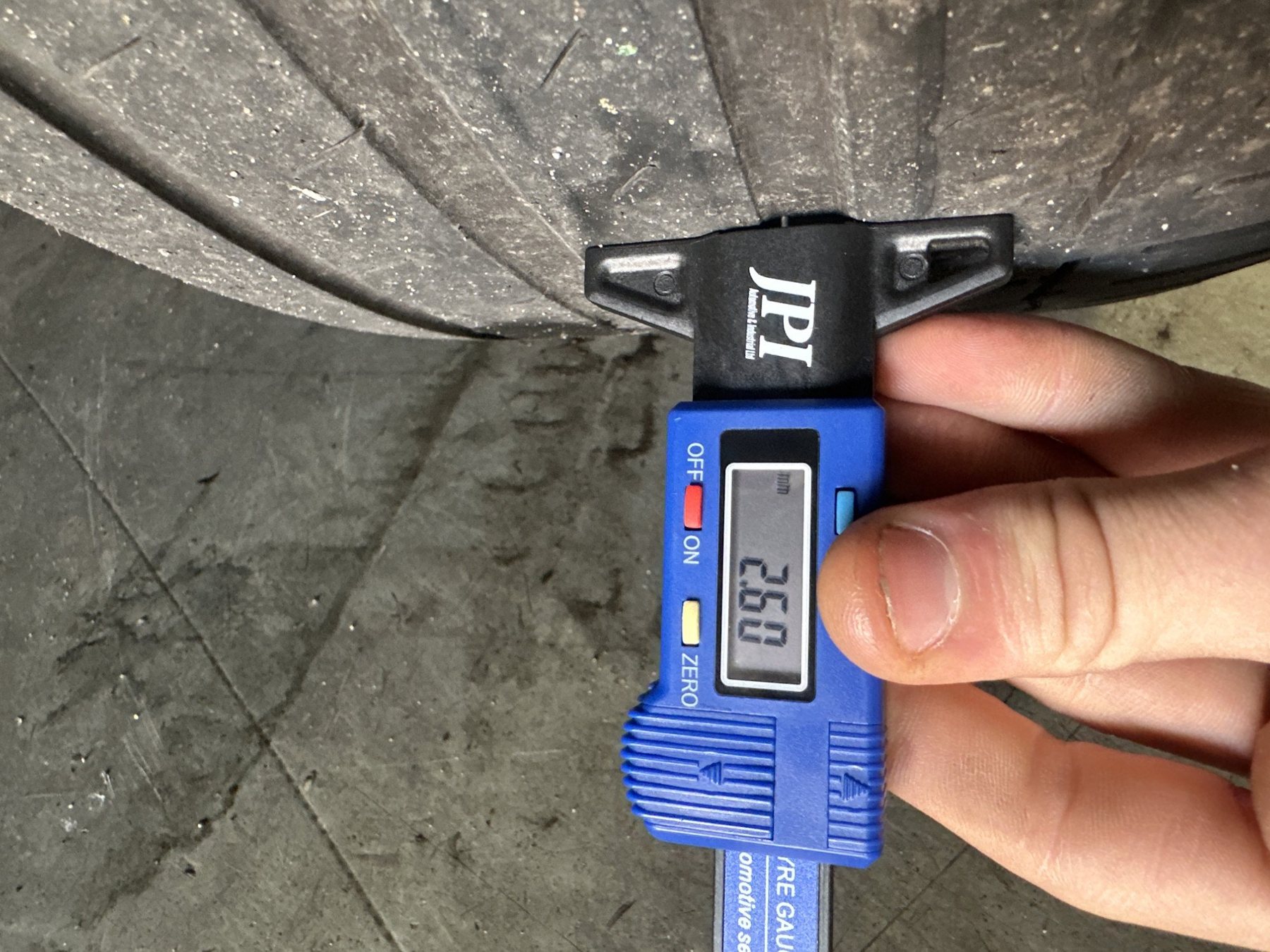
Measuring tread on an EV tyre: 2.6mm. Legal, as the limit is 1.6mm, but not far off, and worth checking across the whole width, inside edge included.
Load Ratings: What the MOT Does and Does Not Check
EVs need tyres that can carry their weight, which is why many are marked XL or HL. Interestingly, the MOT only checks a tyre’s load and speed rating on Class 5 and Class 7 vehicles such as minibuses and larger vans, not on ordinary cars. A car will not fail its MOT for the wrong load index, but fitting a tyre that is not rated for the car’s weight is still unsafe and can be an insurance problem. Always match the rating in your handbook.
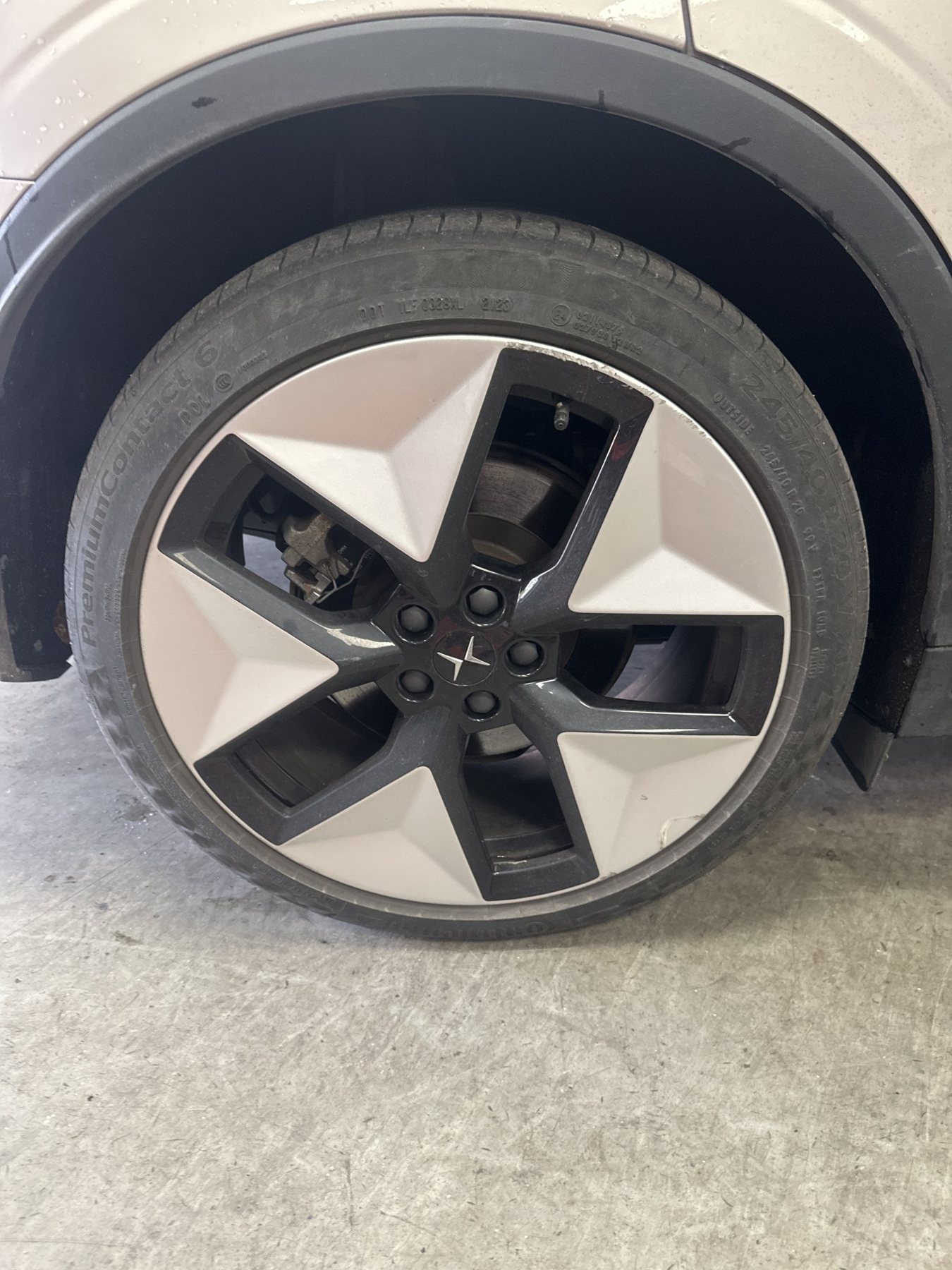
A 245/40 R20 tyre on an electric Polestar: big, low-profile and built to carry the weight of the battery.
The tyre pressure monitoring warning light is checked on cars first used from 1 January 2012, and a system that is malfunctioning is a Major defect under 5.2.3 (h).
Making EV Tyres Last
- Keep the pressures right: EVs are heavy and under-inflation wears the shoulders fast.
- Have the alignment checked if you see uneven wear or after hitting a kerb.
- Go easy on the instant torque, especially from standing starts.
- Rotate front to rear where the tyre sizes allow it.
Our EV tyres page covers the tyres we fit, and earlier in this series we looked at why EV brake discs rust.
Booking an EV or Hybrid MOT?
Due an MOT, or worried about your tyres? We test electric and hybrid cars at our branches across Nottinghamshire, and with over 20,000 MOT tests a year behind us there is not much we have not seen. If anything needs doing we will show you what we found, explain it in plain English and confirm the price before any work starts. Book an electric car MOT or a hybrid MOT when you are ready.
Frequently asked questions
Do electric cars go through tyres faster?
A little. In our data EV tyre wear per mile is about 14% higher than petrol and diesel cars of the same age, nowhere near the twice-as-fast figure often quoted.
Why are EV tyres more expensive?
They are usually larger and higher load-rated, and many have foam inside to cut road noise. A typical EV tyre costs us about 1.8 times as much to supply as a petrol car’s.
Do Teslas wear out tyres quickly?
Not in our records. A Tesla Model 3 uses 0.93 tyres per 10,000 miles, against 0.91 across all the cars we look after.
Does the MOT check tyre load index on an electric car?
No. Load and speed ratings are only checked on Class 5 and Class 7 vehicles. You should still fit tyres with the correct rating for your car’s weight.
Can I fit normal tyres to an electric car?
You can fit any tyre of the right size with the correct load and speed rating, but EV-specific tyres are designed to cope with the weight and to keep noise and rolling resistance down, so they usually suit the car better.