Stop Lamp Inoperative: Why a Brake Light Fails the MOT
No defect on an MOT sheet is more frustrating to fail on, and few are more common. The certificate will say something like:
Stop lamp(s) not working (4.3.1 (a) (ii))
Often with nearside or offside in front of it. One dead bulb, one failed test. Here is why the rules treat brake lights so seriously, what usually causes it, and the two-minute check that would catch it before any test.
In short: one or more brake lights did not light when the pedal was pressed. One out is a Major defect and a fail, and all out is Dangerous. A high-level third brake light is tested too where one is fitted.
One quick translation before we go any further: nearside means the passenger side of the car, the side nearest the kerb. Offside means the driver’s side. So a defect recorded as nearside front is on the front passenger side, and offside rear is behind the driver. Front and rear, inner and outer, upper and lower simply pin down exactly which component the tester was looking at.
Why One Brake Light Is a Fail, Not a Minor
Your stop lamps are how the driver behind finds out you are braking. Cars must have two working stop lamps, and one inoperative is a Major defect: the car fails. If all the stop lamps are out the defect is recorded as Dangerous, because nothing at all is warning traffic behind you, and a car in that state should not be driven. Compare that with a number plate lamp, where one dead lamp out of two is only a Minor defect: the difference tells you exactly how much the rules care about brake lights.
High-level third brake lights count too: where one is fitted it is inspected, and a clearly dead one is defective, so do not ignore the strip in the rear window just because the two main lamps work.
What Usually Causes It
- The bulb: the overwhelming favourite, and the cheapest fix on the car.
- A corroded bulb holder or a poor earth in the rear light cluster, the usual suspect when a new bulb makes no difference or the fault comes and goes.
- The brake light switch on the pedal: when both stop lamps die at once, suspect the switch rather than two bulbs failing together.
- A blown fuse or chafed wiring, especially where towbar electrics have been added.
- On LED clusters, a failed section or module: individual LEDs are not replaceable, and the cluster is judged on whether it clearly works.
The Two-Minute Check That Saves a Retest
Brake lights are the one lighting fault you cannot see from the driver’s seat. Once a month, and especially before an MOT: reverse up to a window or garage door at dusk, press the brake pedal and look for three red glows in the reflection. Or have someone stand behind the car for ten seconds. The lighting section is the biggest single source of MOT failures in Britain, and most of it is bulbs: our guide to what’s checked in an MOT lists the rest of the walk-round.
Fixed While You Wait
Any of our 12 branches across Nottinghamshire will check and replace exterior bulbs while you wait. If a fresh bulb does not cure it, we will trace the holder, switch, fuse or wiring properly and confirm the price before any work starts: chasing an electrical gremlin with guesswork helps nobody. Failed on a stop lamp? We can fix and retest the same day. Book an MOT or a retest online today.
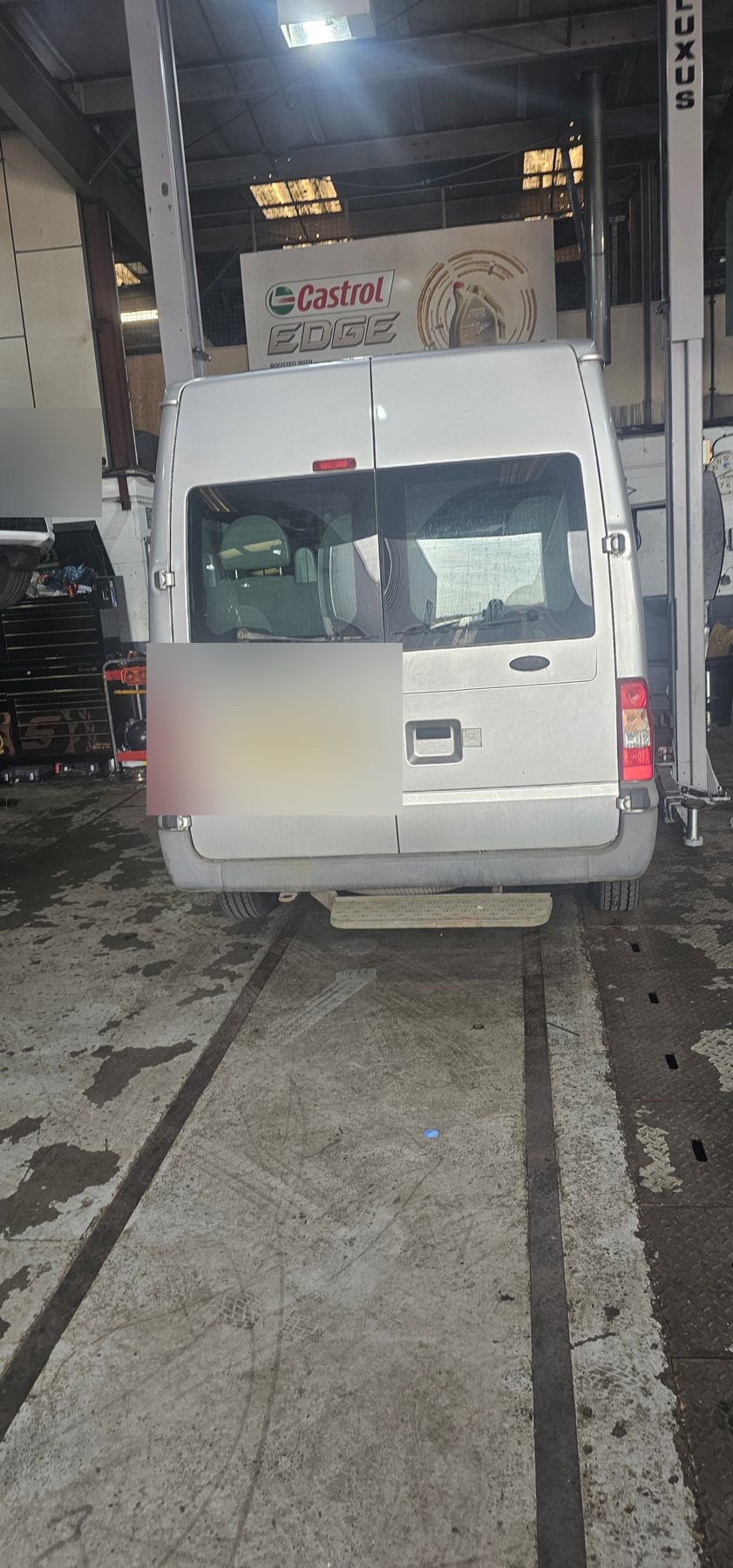
The van behind this post, in at our Old Basford branch this September with its high-level brake light dead.

The ten-second check that catches it before the MOT does: lights on, and a walk to the back of the car.
Frequently asked questions
Will one brake light out fail the MOT?
Yes. A car needs its stop lamps working, and one inoperative is a Major defect under 4.3.1: the car fails. All stop lamps out together is recorded as Dangerous, and the car should not be driven until it is fixed.
Does the third, high-level brake light matter for the MOT?
Yes: where a high-level stop lamp is fitted it is inspected, and one that is clearly not working is defective. On LED strips the tester judges the lamp on whether it plainly lights and shows a proper red signal.
Why are both my brake lights out at the same time?
Two bulbs rarely die together. When both stop lamps go at once, the usual cause is the brake light switch at the pedal, or the fuse that feeds the circuit. Both are quick, inexpensive diagnoses.
Can I drive my car after failing on a stop lamp?
If the old MOT has expired, only to a pre-booked test or a garage for repair. And if all the stop lamps are out, the defect is Dangerous: do not drive it at all until it is repaired. The full rules are in our guide on driving after an MOT failure.
How much does it cost to fix a stop lamp fault?
It depends on the underlying cause and the vehicle, which is why we always inspect first. Once we can see exactly what is needed we will explain it in plain English and confirm the price with you before any work starts.