“Brake Pads Wearing Thin” on Your MOT: What It Means
The most self-explanatory advisory on the sheet, and still the most postponed. The wording is usually exactly this, with a corner or an axle in front of it:
Brake pad(s) wearing thin (advisory)
And the failure it turns into if it is left long enough:
Brake pad(s) worn down to wear indicator (1.1.13 (a) (i))
Brake pad(s) less than 1.5 mm thick (1.1.13 (a) (ii))
In short: the pads are getting low but have not reached the fail point, so the car passes. New pads start at around 10 to 12mm. Pads worn down to their wear indicator fail as a Major defect, and below 1.5mm it is Dangerous.
One quick translation before we go any further: nearside means the passenger side of the car, the side nearest the kerb. Offside means the driver’s side. So a defect recorded as nearside front is on the front passenger side, and offside rear is behind the driver. Front and rear, inner and outer, upper and lower simply pin down exactly which component the tester was looking at.
What the Advisory Means
Brake pads are blocks of friction material clamped against the discs to stop the car. New, most have around 10 to 12mm of material. The MOT fails a pad worn down to its wear indicator, and a pad below 1.5mm is recorded as Dangerous; the advisory means the tester saw pads getting low, typically in the 2 to 4mm zone, and put it on record. The car has passed: this is the planning window, not a fault.
It is worth knowing the tester can only record what can be seen without dismantling. Pads hide behind wheels and calipers, so “wearing thin” is sometimes conservative: the honest way to know is a wheel-off measurement, which is exactly what our free brake check does.
How Fast Do Pads Wear Down?
There is no single answer: a gentle motorway commuter can get 50,000 miles from a set, a town car with a heavy right foot a fraction of that, and hybrids often make pads last ages while their discs corrode instead. As a rough rule, a 3mm pad has most of its life behind it, and winter braking is not the season to run the last of it out. Front pads usually wear faster than rears, and the inner pad often wears faster than the outer one you can see through the wheel.
The Signs Pads Are Getting Low
- A high-pitched squeal on light braking: many pads have a metal wear indicator designed to sing at exactly this stage.
- A brake wear warning light, on cars with pad sensors.
- Grinding: that is metal on metal, the pad backing against the disc. Stop treating it as a noise and treat it as a fault, because it is destroying the discs.
- Longer, softer stops, or dust patterns heavier on one wheel than its pair.
Our guide on how to tell if your brakes need replacing goes deeper on symptoms.
Why Leaving It Costs More
Run pads to the backing plate and the repair doubles: the discs they ground against need replacing too. Pads and discs are always measured together, and replaced in axle pairs, because uneven friction side to side is exactly what you do not want in an emergency stop. Earlier this month we covered the worn, pitted or scored disc advisory that so often appears alongside this one: they age as a set.
Free Brake Check at Every Branch
If your MOT certificate says the pads are wearing thin, do not guess how much is left: call into any of our 12 branches across Nottinghamshire for a free brake check. Wheels off, pads and discs measured, and a plain English answer: how much material is left, how long that realistically means for your driving, and the price if and when it needs doing. Our brake repair service covers every make, or book an MOT online today.
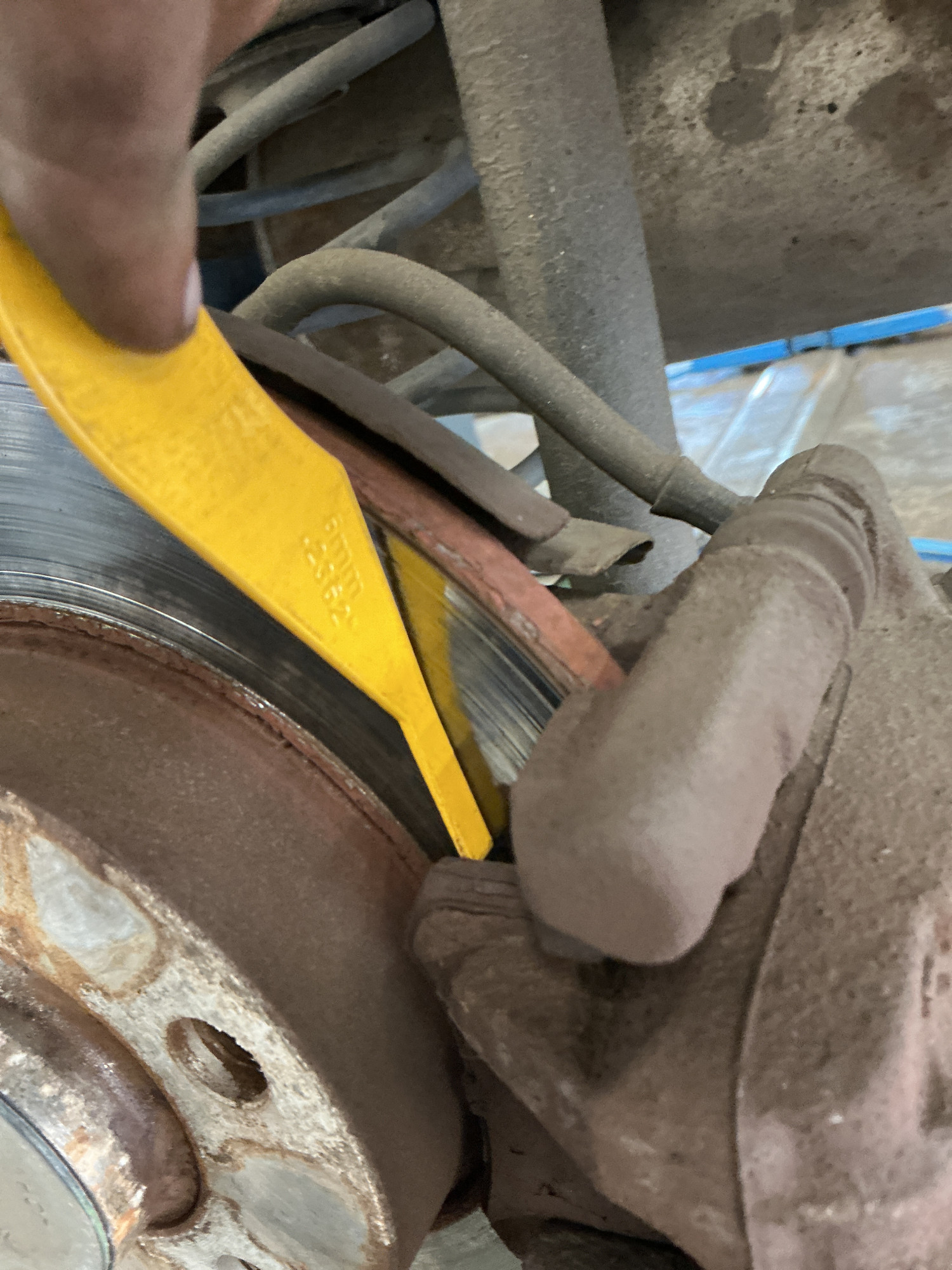
Pad material is measured with a gauge, wheel off: the only honest way to answer how much is left.
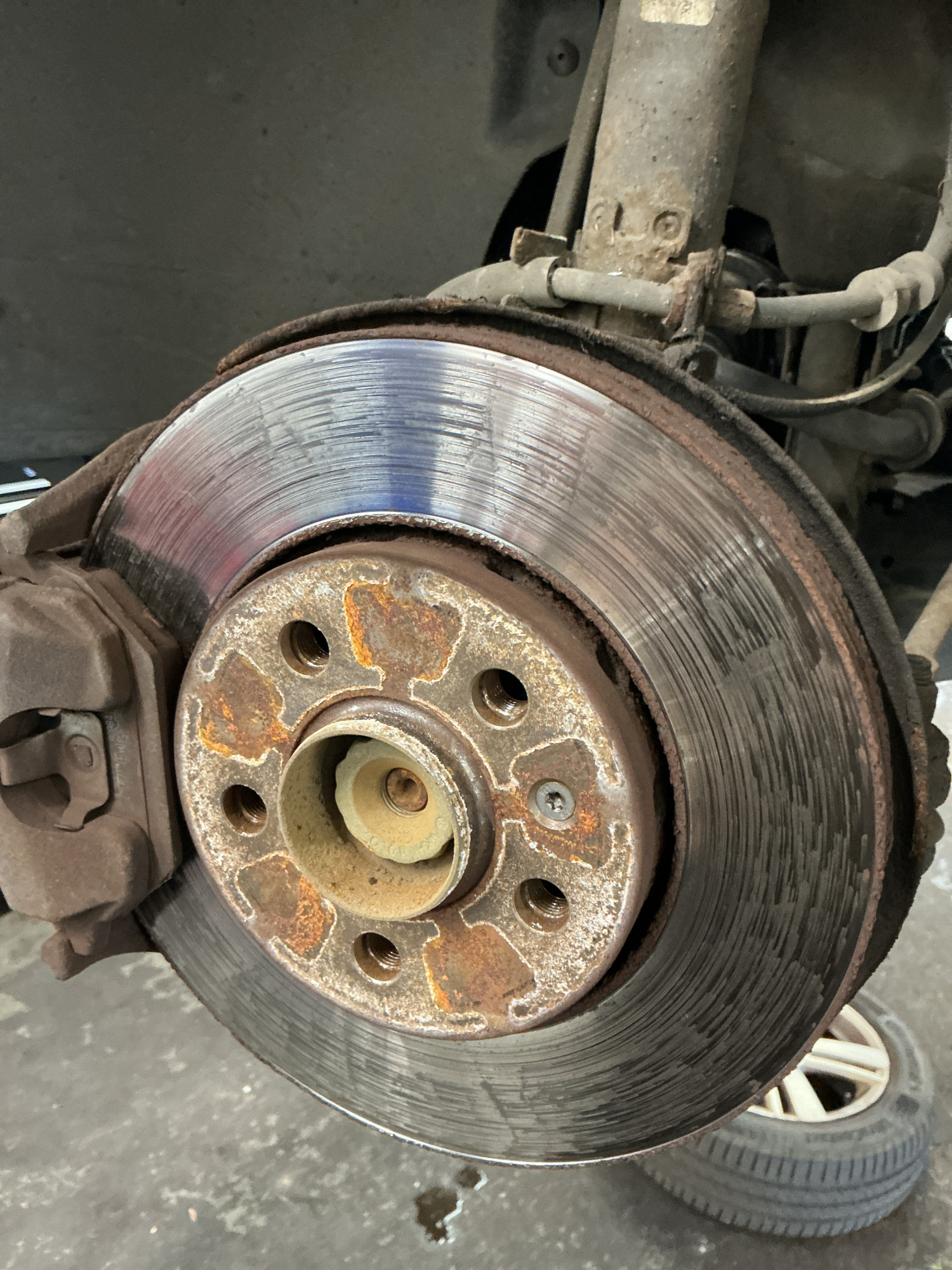
Left too long, worn pads take the discs with them: this is what the grinding stage looks like.
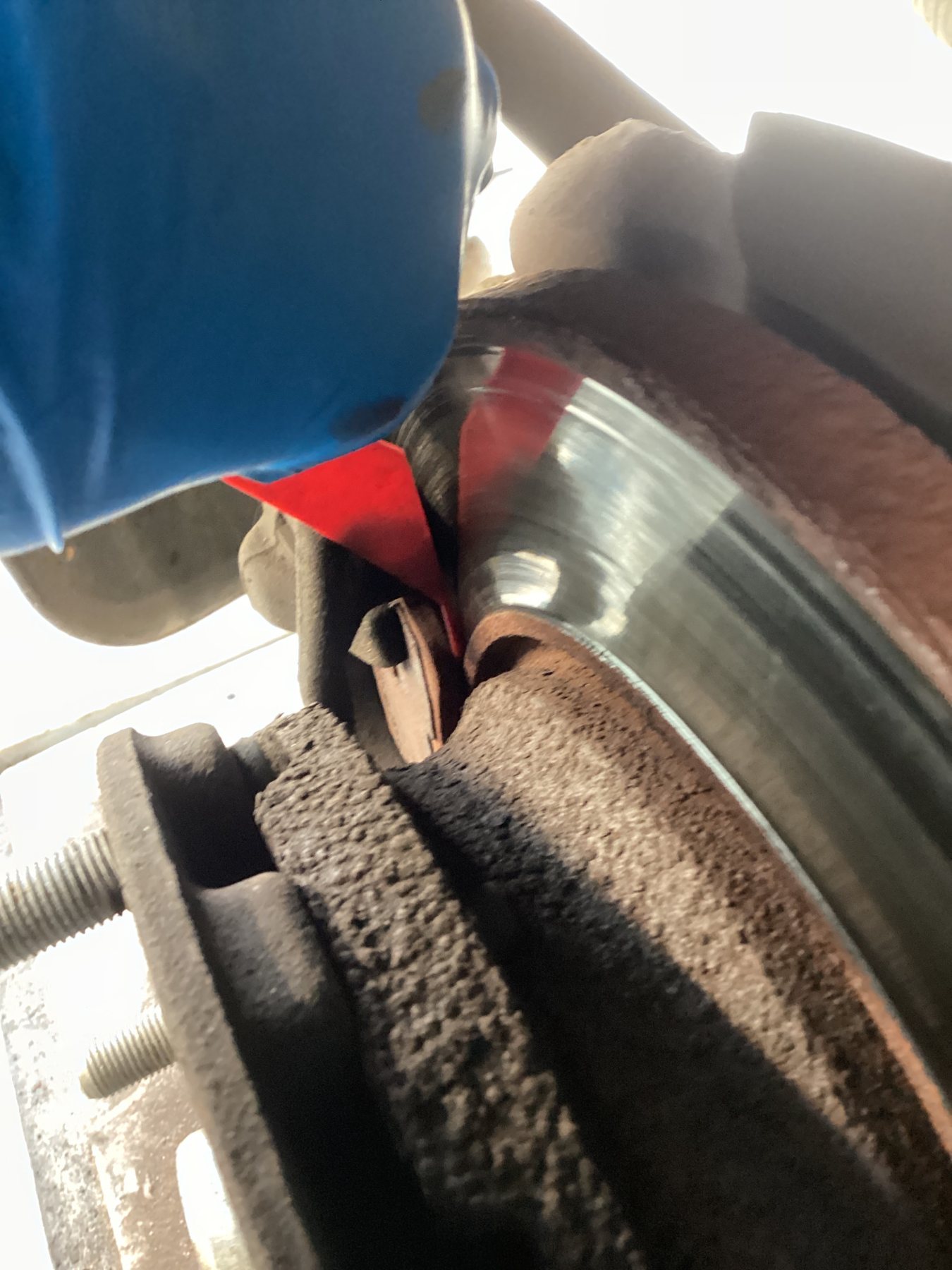
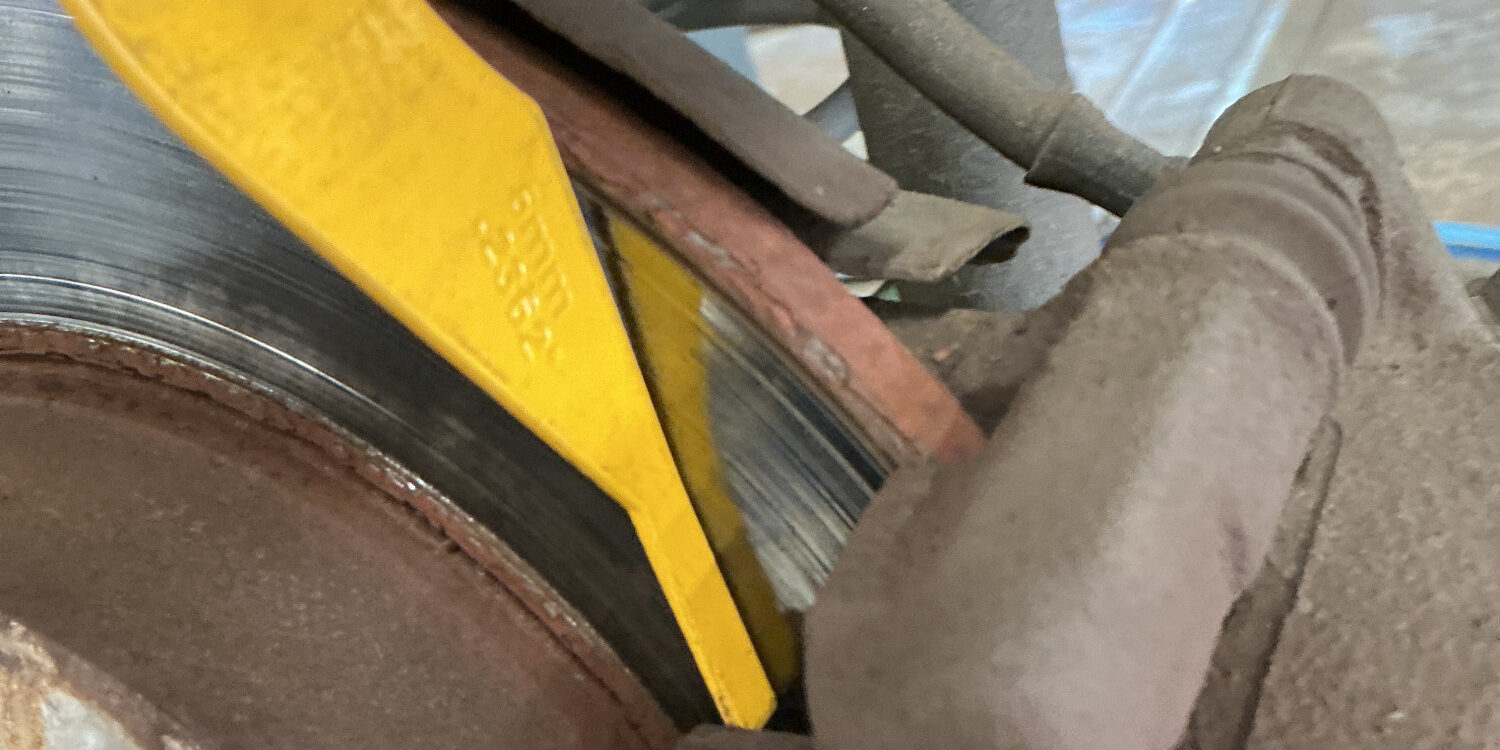
The gauge in action: pad material measured directly against the disc, wheel off, so the answer is a number rather than a guess.
Frequently asked questions
Is “brake pads wearing thin” an MOT failure?
No: it is an advisory, and the car has passed. The car fails once a pad is worn down to its wear indicator, a Major defect under 1.1.13 (a) (i). Below 1.5mm it is recorded as Dangerous under 1.1.13 (a) (ii), and the car should not be driven. The advisory is your notice to plan the replacement on your own terms.
How long can I drive with pads wearing thin?
It depends how thin they are and how you drive, which is why the honest answer is a measurement rather than a guess. As a rule of thumb, pads around 3mm are due soon; squealing or a wear light means now; grinding means you are already damaging the discs.
Do brake pads and discs have to be replaced together?
Not always: pads wear roughly twice as fast as discs, so discs often survive one or two pad changes. Both are measured, and discs are only recommended when thickness or condition says so. Whatever is replaced is done in axle pairs.
What do nearside and offside mean on an MOT?
Nearside is the passenger side of the vehicle, the side closest to the kerb when you are driving in the UK. Offside is the driver’s side. The MOT certificate uses these words so there is no confusion about which corner of the car the defect relates to.
How much does it cost to fix worn brake pads?
It depends on the underlying cause and the vehicle, which is why we always inspect first. Once we can see exactly what is needed we will explain it in plain English and confirm the price with you before any work starts.