Engine MIL Inoperative or Indicates a Malfunction: MOT Fail Explained
The amber engine symbol has been glowing for weeks. The car drives fine, so it can wait, right? Then the MOT comes around and the certificate says:
Engine MIL inoperative or indicates a malfunction (8.2.1.2 (b))
MIL stands for malfunction indicator lamp: the check engine light. Since May 2018 it has been a straightforward MOT failure, and it catches out thousands of drivers who had simply learned to live with the glow.
In short: the engine warning light is either on with the engine running, or does not work at all. Either one fails the MOT as a Major defect. Clearing the codes the night before rarely works, because the fault that lit it is still there.
What the Rule Actually Says
Two things are checked. First, the lamp itself must work: it should light when you switch the ignition on and go out once the engine is running. A MIL that never lights at all, because the bulb has been removed or has failed, is a defect in its own right: “inoperative”. Second, if the lamp stays on with the engine running, it is indicating an emissions malfunction, and that is a Major defect. The petrol wording is 8.2.1.2 (b); on diesels the same rule appears as 8.2.2.2 (b).
The logic is simple: the MIL is the engine’s own emissions warning. A car with the light on is telling everyone, including the tester, that its emissions control system has a recorded fault.
What Usually Turns the Light On
- A lambda (oxygen) sensor drifting out of range: the single most common culprit.
- Misfires: tired coil packs, plugs or leads, which also dump unburnt fuel into the catalytic converter.
- EGR valve faults, especially on diesels doing short urban journeys.
- A blocked diesel particulate filter: if that is your story, our DPF cleaning service exists for exactly this situation.
- Catalytic converter efficiency below threshold, often after a long period of ignored misfires.
- Loose or failed sensors and wiring: occasionally something as small as a fuel filler cap seal.
Why Clearing the Light Before the Test Doesn’t Work
Plugging in a code reader and wiping the light the night before is the oldest trick there is, and it rarely survives contact with reality. The fault that lit the lamp is still there, so the light comes back, sometimes on the drive to the test station. The car also still has to pass the actual tailpipe emissions test, which a genuine fault will sabotage on its own. Diagnosing and fixing the cause is the only version of this that stays fixed.
How We Approach It
Every one of our branches carries diagnostic equipment. We read the stored fault codes, but codes are the starting point, not the answer: a lambda code can mean a tired sensor or a genuine mixture problem, and the difference matters to your wallet. We test the actual component, confirm the cause, explain it in plain English and agree the price with you before any repair. Then the codes are cleared properly and the car is run to prove the lamp stays out.
Book a Diagnostic Check or MOT
If your engine light is on and the MOT is looming, get ahead of it: a diagnostic check at any of our 12 branches across Nottinghamshire takes the guesswork away. If you have already failed, we can diagnose, repair and retest. Book an MOT online, and see what’s checked in an MOT for the rest of the emissions section.
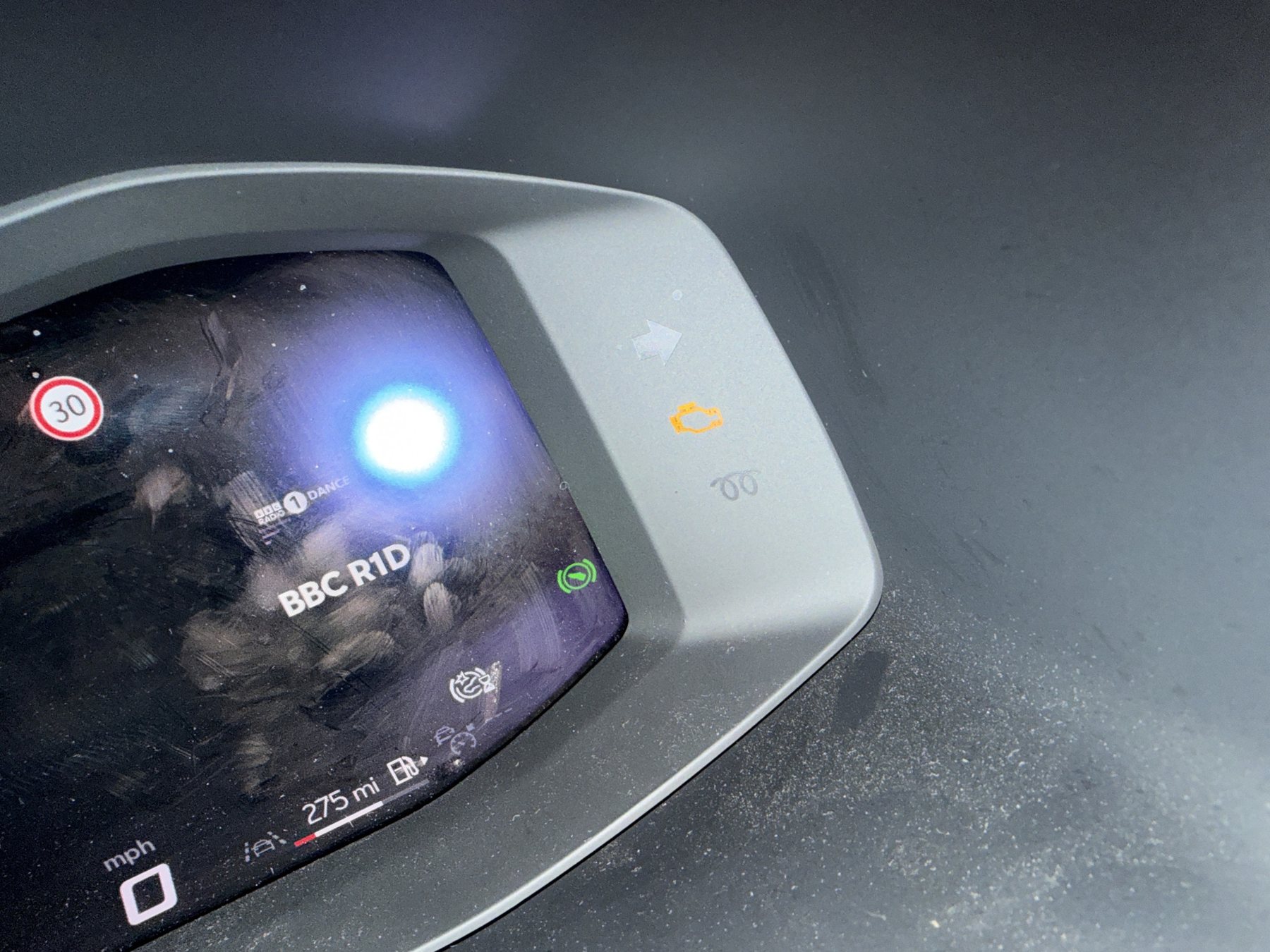
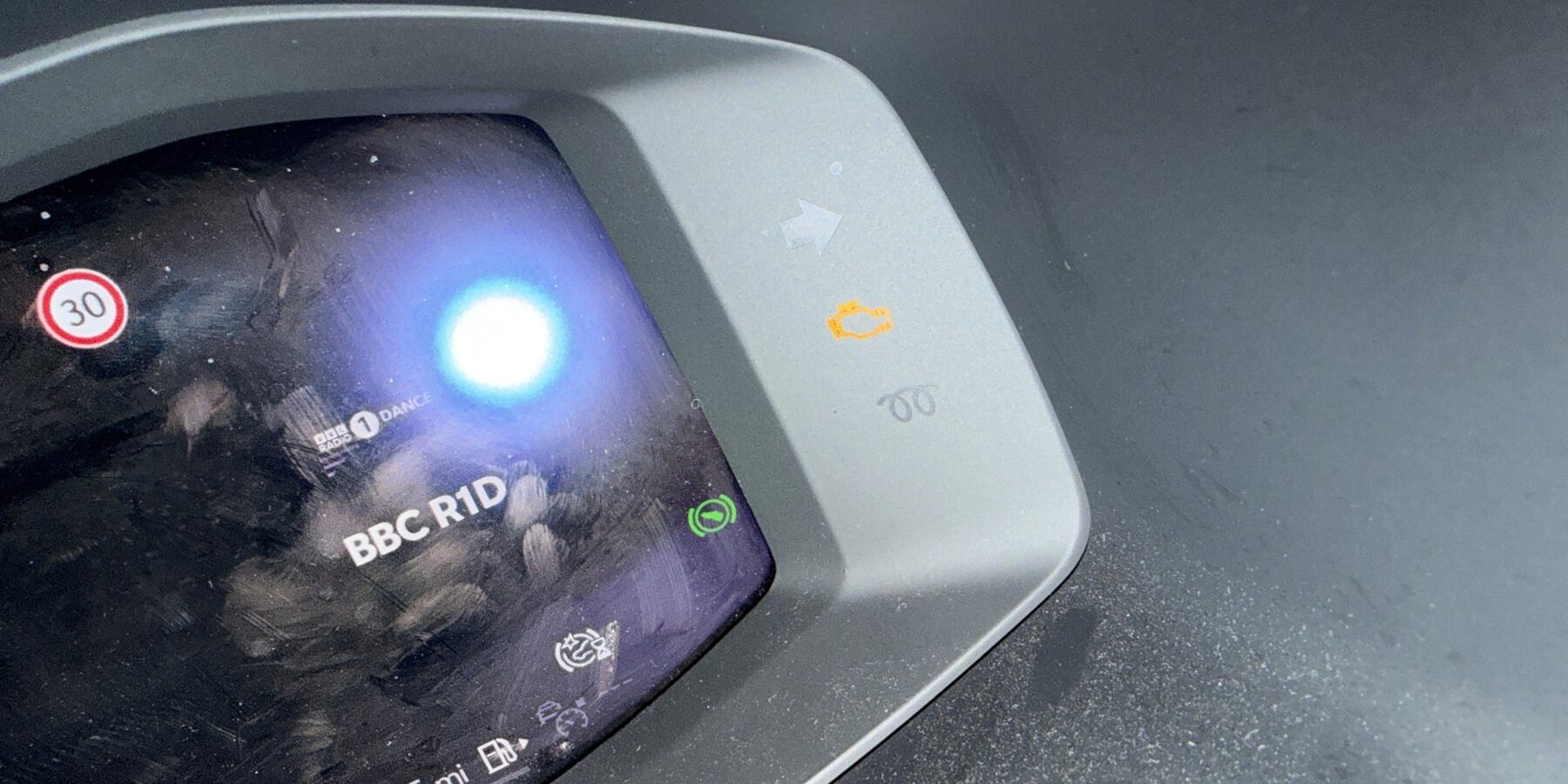
Taken by our technician at Old Basford this week: the amber engine symbol lit with the engine running. As it stands, this car fails its next MOT.

If the MIL stays on with the engine running, the car fails: it is the engine’s own emissions warning.
Frequently asked questions
Will the engine management light fail my MOT?
Yes. If the malfunction indicator lamp stays on with the engine running, the car fails with a Major defect: 8.2.1.2 (b) on petrols, 8.2.2.2 (b) on diesels. The lamp must also work in the first place: one that never lights at ignition is a failure too.
Can I just clear the fault codes before the test?
The light will return because the fault is still there, and the car still has to pass the tailpipe emissions measurement, which a real fault undermines by itself. Diagnosing and repairing the cause is the only reliable route to a pass.
The car drives fine: does the light really matter?
The MIL is an emissions warning, so the car can feel normal while running rich, misfiring intermittently or quietly cooking its catalytic converter: a much bigger bill than the sensor that started it. Amber means book it in soon; a flashing MIL means stop driving and get it seen now.
How do I know why my engine light is on?
Only a diagnostic read tells you. The codes point to the circuit that complained; proper testing then separates a failed sensor from the genuine mechanical cause. Guess-and-replace is the expensive way to do it.
How much does it cost to fix an engine management light fault?
It depends on the underlying cause and the vehicle, which is why we always inspect first. Once we can see exactly what is needed we will explain it in plain English and confirm the price with you before any work starts.