Windscreen Damaged on Your MOT: The Chip and Crack Rules Explained
A stone flicks up on the A52, leaves a white star in the glass, and from that moment every MOT feels like a coin toss. Here is the wording you might see, and the actual rules behind it:
Windscreen damaged but not adversely affecting driver’s view (3.2 (a) (i))
Windscreen damaged and affecting the driver’s view of the road (3.2 (a) (ii))
In short: the tester has found a chip, crack or scratch in the glass. If it does not affect your view, it is a Minor defect and the car passes. It fails when damage in front of the driver is bigger than 10mm, or bigger than 40mm elsewhere in the area the wipers sweep.
The Rules Are About Where, Not Just How Big
The windscreen is judged in zones. Zone A is the part that matters most: a 290mm wide band centred on the steering wheel, within the area the wipers sweep. In Zone A, damage has to fit within a 10mm circle: roughly a one-pence piece. Across the rest of the swept area, the allowance is a 40mm circle. Damage bigger than that, in the wrong place, and the car fails with a Major defect because it genuinely interferes with what the driver can see.
Smaller damage does not simply vanish from the record: chips and light scratches are commonly noted with the “not adversely affecting” wording. The car passes, and the certificate quietly tells you the glass is being watched.
Why a Passing Chip Is Still Worth Dealing With
Chips do not stay chips. Glass expands and contracts with temperature, and the first frosty morning with the heater on full is exactly when a tidy star becomes a running crack. Vibration, potholes and even slamming a door help it along. A chip caught early can usually be repaired by a glass specialist: quick, inexpensive, and many comprehensive insurance policies cover chip repair with little or no excess. Once it becomes a crack in the driver’s view, the conversation is a replacement screen: a far bigger job, and on modern cars one that can involve recalibrating the camera behind the glass.
Our honest advice is simple: get chips repaired when they are small. We do not fit windscreens ourselves, so there is no sales angle here: it is just the cheapest moment to act, and autumn is exactly when waiting stops being free.
What We Check at Test Time
- Where the damage sits: Zone A in front of the driver, the wider swept area, or out at the edges where the rules are more forgiving.
- Its size against the 10mm and 40mm allowances.
- The wipers and washers on the same glass: a smeared sweep over a chipped screen compounds the visibility problem, and wipers have their own MOT section.
- Anything else obstructing the view: sat-nav mounts, dashcams and air freshener trees hanging in the swept area can all attract attention.
Booked In Soon?
If you are not sure which side of the line your chip sits on, ask us to look at it honestly before your test: any of our 12 branches across Nottinghamshire will tell you in thirty seconds whether it is a repair-it-now job. See what’s checked in an MOT for the rest of the visibility section, and book an MOT online when you are ready.

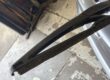
Photographed at our Old Basford branch this September: a crack reaching across the glass. Repair territory has passed; this is a replacement screen.
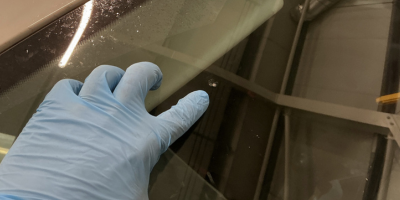
In Zone A, in front of the driver, damage has to fit within a 10mm circle: about the size of a one-pence piece.
Frequently asked questions
Will a windscreen chip fail my MOT?
It depends on size and position. In Zone A, the 290mm band in front of the driver, damage larger than 10mm fails. In the rest of the swept area the limit is 40mm. Smaller chips are typically recorded with the “not adversely affecting driver’s view” wording, and the car passes.
What is Zone A on a windscreen?
A 290mm wide vertical band centred on the middle of the steering wheel, taken within the area swept by the wipers. It is the part of the glass the driver actually looks through, which is why its 10mm limit is so much stricter than the 40mm allowed elsewhere in the swept area.
Should I repair a chip that passed the MOT?
Yes, and sooner rather than later. Temperature swings and vibration turn chips into cracks, usually in winter, and a chip repair is quick and often covered by comprehensive insurance with little or no excess. Once it cracks across the driver’s view, the fix is a full replacement screen.
Can a cracked windscreen be an instant fail?
A crack that affects the driver’s view of the road fails under 3.2 (a) (ii) as a Major defect. Long cracks in the swept area are exactly what the rule exists for: they scatter light at night and sit permanently in your line of sight.