Failed Your MOT for Parking Brake Efficiency Below Requirements? Here’s What It Means
If your MOT certificate says your parking brake efficiency is below requirements, you’re probably wondering what that actually means — especially if the handbrake feels perfectly normal when you park up on your drive.
At Lindleys Autocentres we carry out over 20,000 MOT tests every year across Nottinghamshire, and this is one of the most common brake-related failures we see:
Parking brake: efficiency below requirements (1.4.2 (a) (i))
It sounds technical, but the meaning is simple: when the parking brake was tested, it didn’t hold the vehicle back with enough force to meet the legal minimum. Below we explain how the test works, the difference between a manual handbrake and an electronic parking brake, how it all works on electric vehicles, and what usually causes the failure.
What Does “Parking Brake Efficiency Below Requirements” Actually Mean?
During the MOT, your vehicle’s brakes are measured on a roller brake tester (or, in some cases, a decelerometer). The tester measures the braking force produced at each wheel and compares it against the weight of the vehicle. That figure is your brake efficiency, expressed as a percentage.
For most cars, the parking brake has to achieve at least 16% efficiency, while the service brake (your foot brake) needs a much higher figure. If the parking brake can’t reach the minimum, the vehicle fails with a Major defect — 1.4.2 (a) (i).
It’s worth understanding that this is a measured, numerical result. It isn’t the tester’s opinion, and “it’s always been like that” or “it holds fine on my drive” won’t change the reading. A handbrake that holds on a flat car park can still be well under the legal minimum.
Manual Handbrake vs Electronic Parking Brake
The traditional manual handbrake
On a conventional car, pulling the lever tensions one or two steel cables. Those cables pull a mechanical lever either on the rear caliper (on disc-braked cars) or on the brake shoes inside a rear drum. It’s a purely mechanical system, completely separate from the hydraulics that operate your foot brake — which is exactly why the MOT tests it separately.
Because it’s mechanical, it’s vulnerable to age and the British weather. Cables stretch, seize inside their outer sleeves, and rust; drum-brake self-adjusters seize solid; caliper levers stick.
The electronic parking brake (EPB)
Most modern cars use a switch instead of a lever. Press it and a control module drives a small electric motor on each rear caliper, which winds the piston out mechanically to clamp the pads against the disc. Some systems use a cable puller motor instead, tugging traditional cables electrically.
An EPB is far less likely to go out of adjustment — it self-adjusts every time it’s applied — but it isn’t immune to failure. Actuator motors wear out, wiring and connectors corrode, and the system almost always needs to be electronically retracted and recalibrated with diagnostic equipment when rear pads or discs are replaced. Get that wrong and the efficiency reading suffers.
How it works on electric vehicles
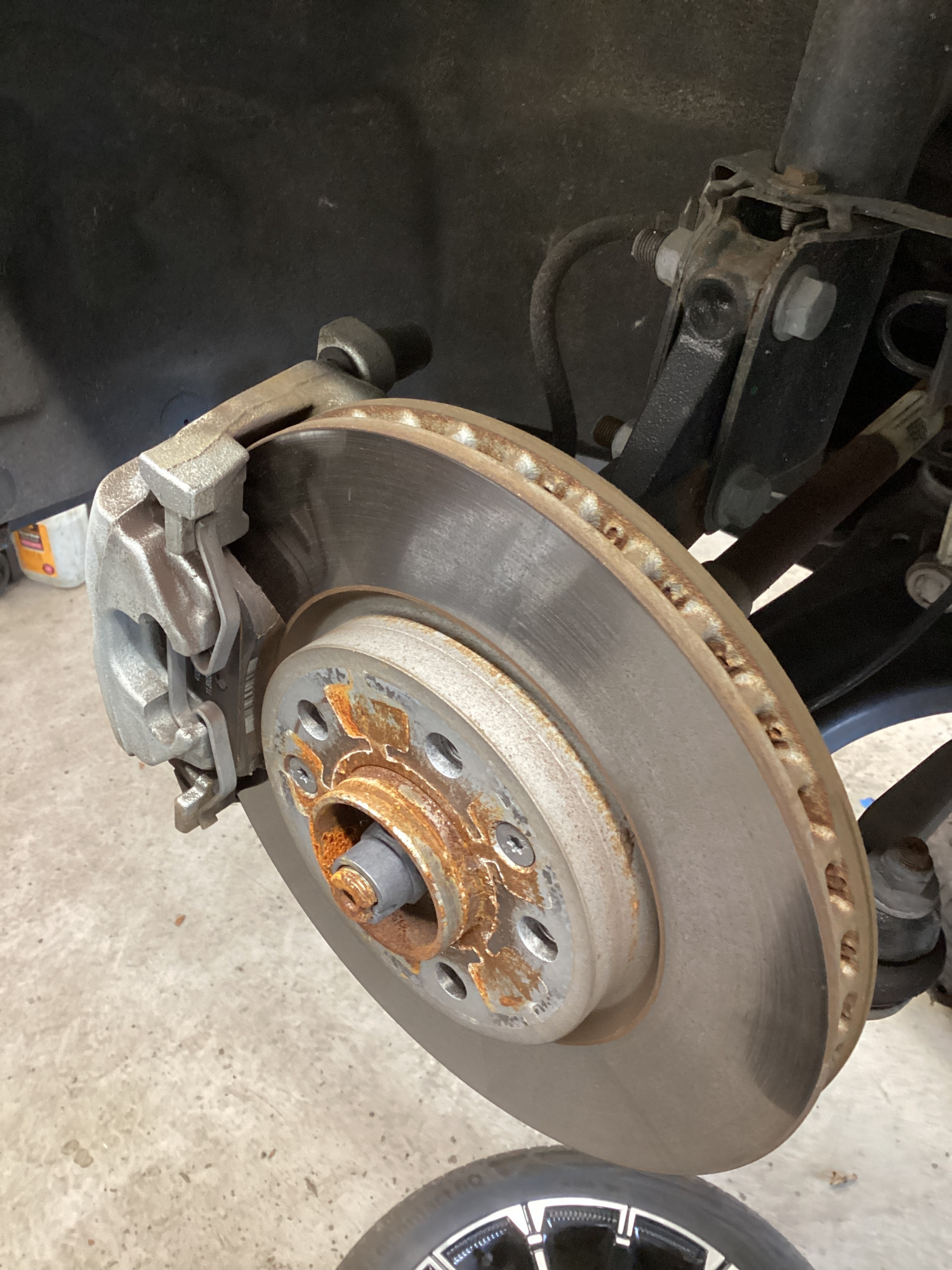
Electric and hybrid vehicles nearly all use an electronic parking brake, and their rear brakes tend to lead a very easy life. Regenerative braking does most of the slowing down, so the friction brakes are used far less. That sounds like good news, but it means rear discs and pads corrode rather than wear — and a corroded, glazed disc simply doesn’t generate the friction needed to pass the efficiency test.
It’s also important to understand that regenerative braking counts for nothing in the MOT. The parking brake on an EV is still a purely mechanical clamp on the rear discs, and it’s tested the same way as on any other car. Testers follow the manufacturer’s procedure for putting the vehicle into the correct mode for roller testing, and on some models the parking brake has to be applied in stages rather than in one go.
What We Find When We Investigate
Once a vehicle fails on parking brake efficiency, the wheels come off and we look at why. These are genuine examples from our workshops.
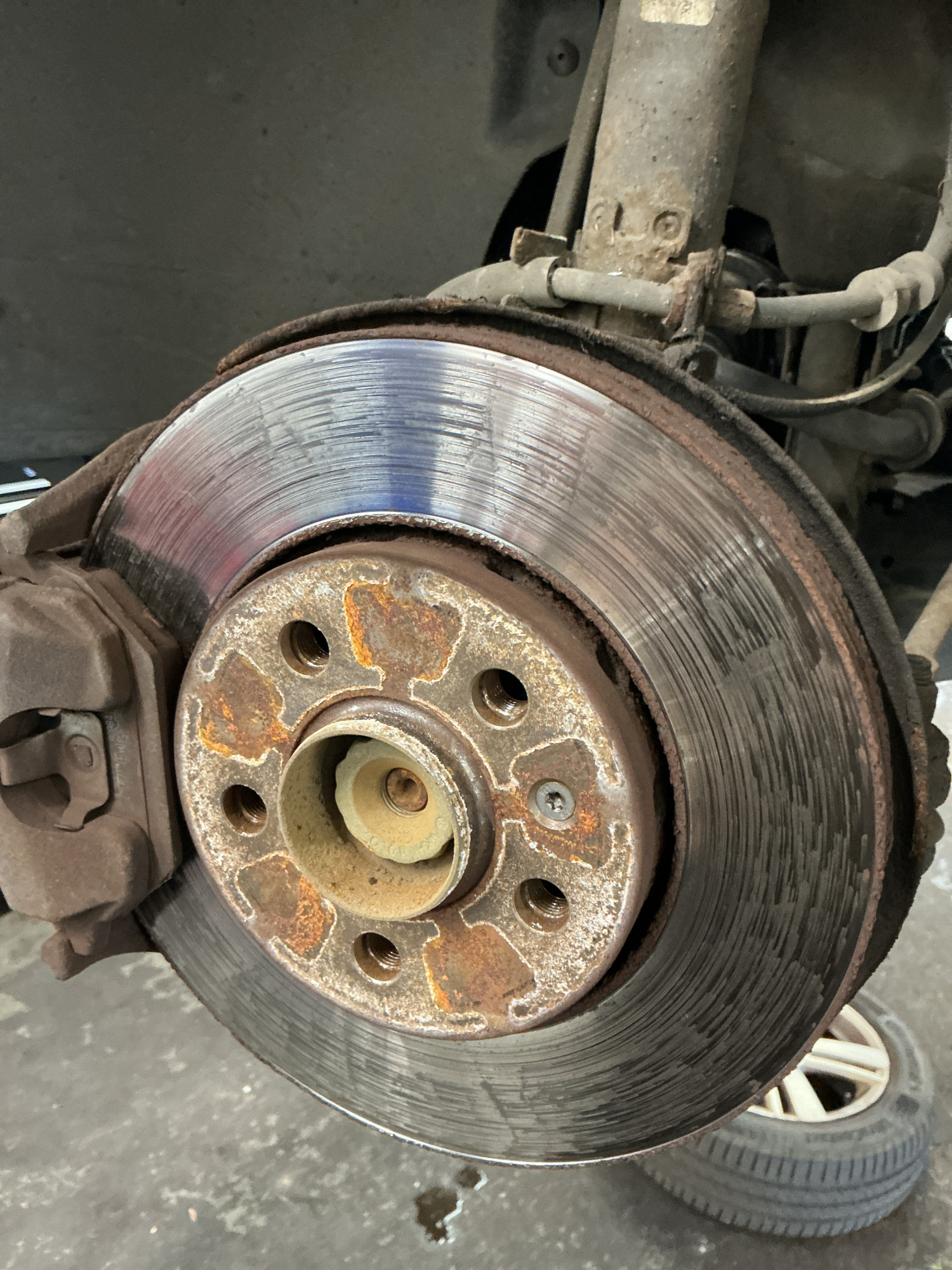
Corroded and lipped rear discs
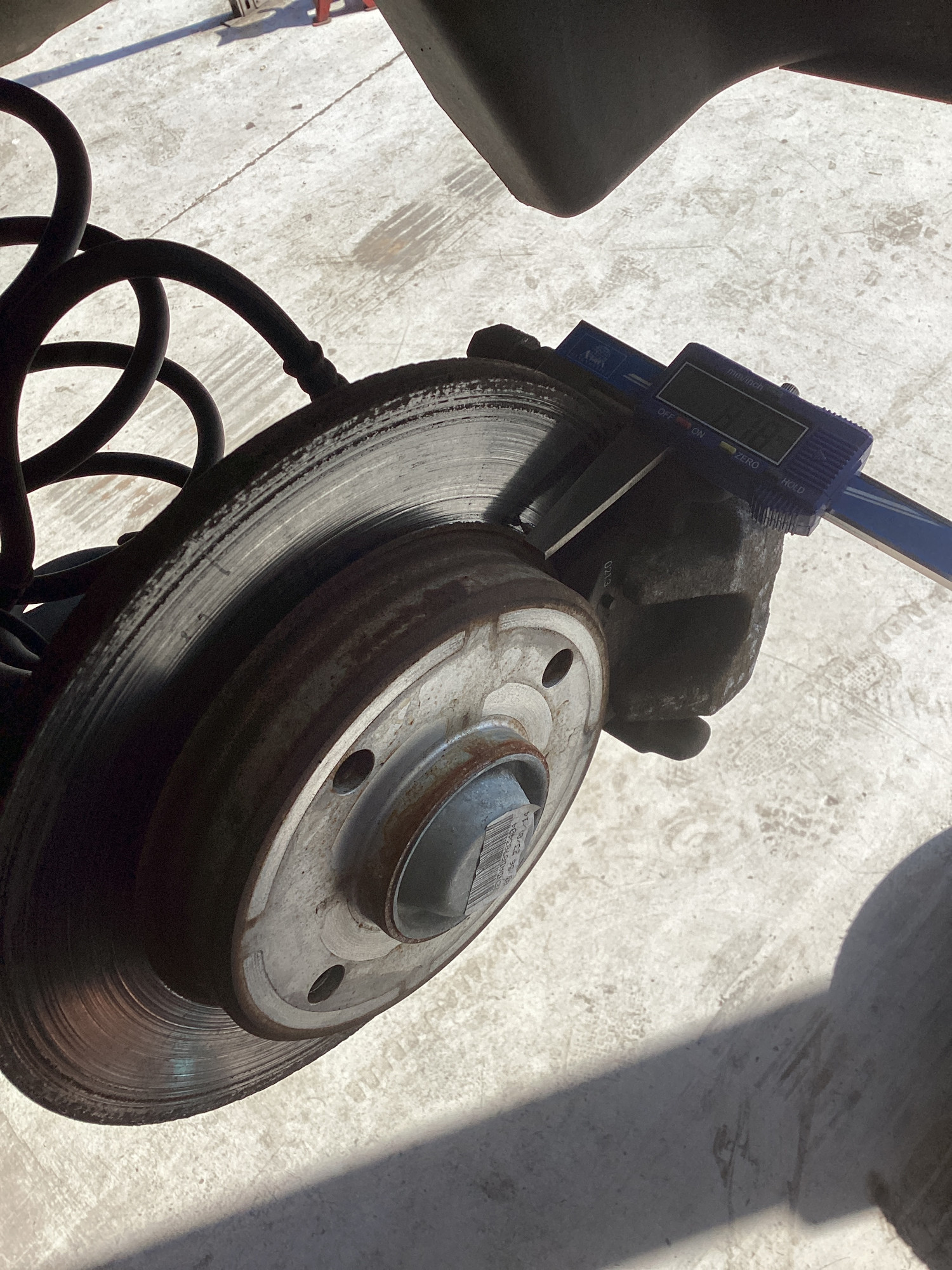
The classic cause. The disc face is heavily rusted and a pronounced lip has built up around the outer edge, so the pad only contacts a narrow band of usable surface. The parking brake can be working perfectly and still not generate enough force.
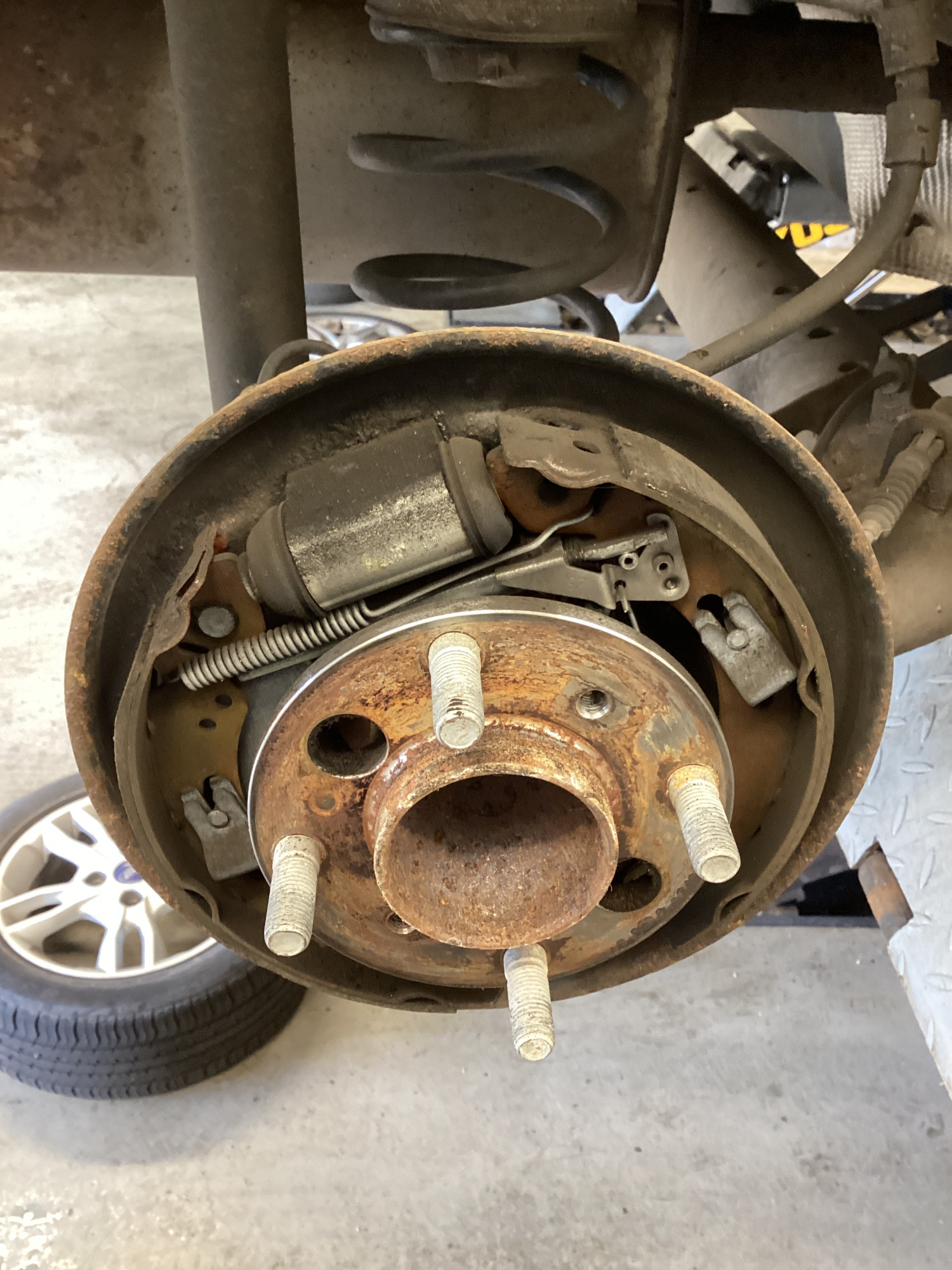
Seized and worn drum-brake mechanisms
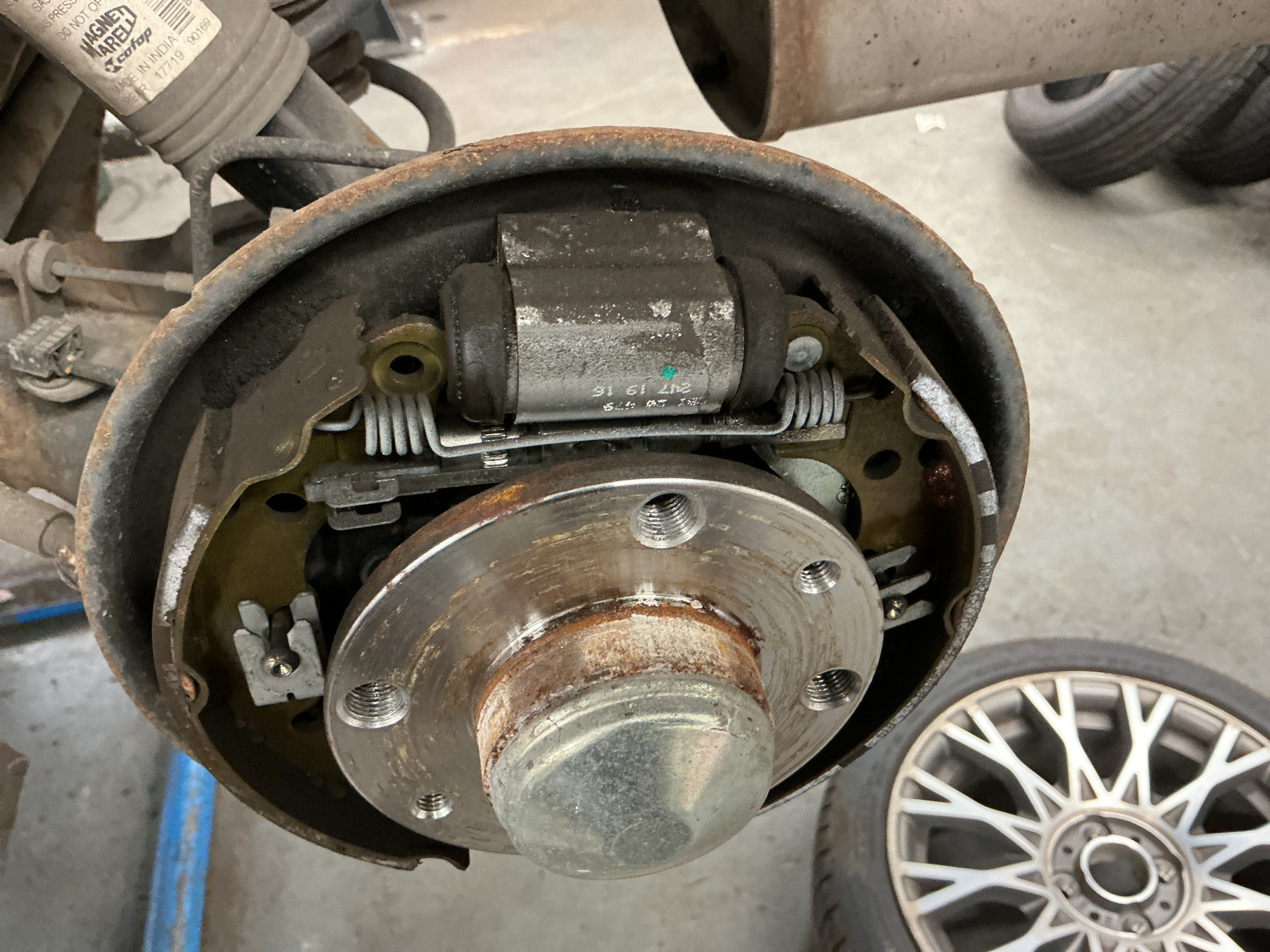
On cars with rear drums, the drum comes off to reveal the shoes, springs, adjuster and the handbrake lever. Rust, worn linings and a seized self-adjuster are all common — and any one of them will drop your efficiency figure.
Measuring rather than guessing
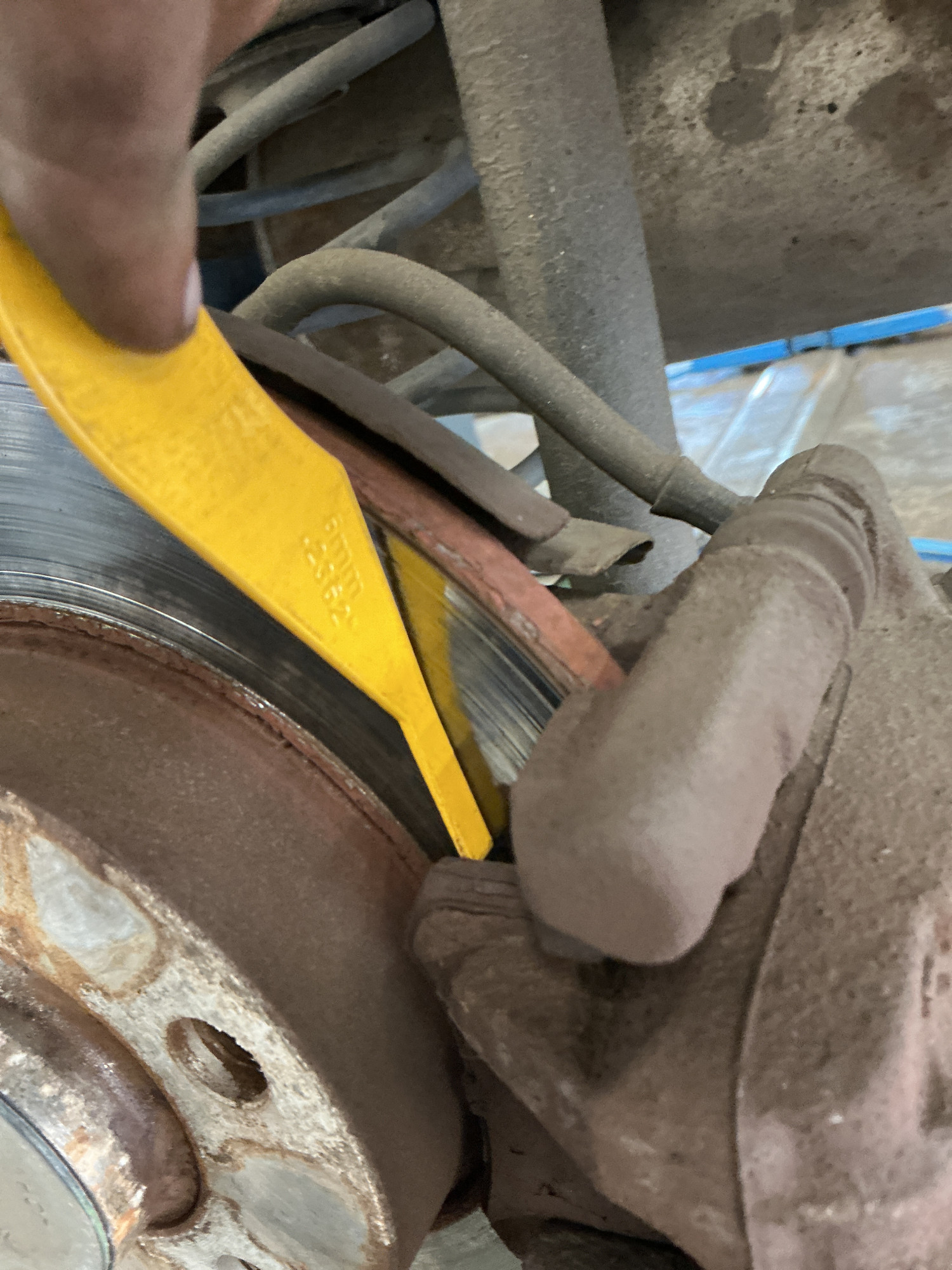
Discs are measured with a digital gauge against the manufacturer’s minimum thickness, and pad and shoe material is checked with a gauge too. That’s how we know whether the parts are genuinely worn out or whether the fault lies with the cables, caliper or actuator.
Why It Fails the MOT — and Why It Matters
The parking brake isn’t just for parking. It’s your secondary braking system: the legal back-up if the hydraulic service brake ever loses pressure. That’s why it has its own minimum standard and its own line on the MOT.
A weak parking brake also means:
- Your car may creep or roll away on a slope.
- An imbalance side-to-side can pull the car off line if used at speed.
- On automatics, extra strain is put on the transmission parking pawl.
Can You Still Drive It?
A parking brake efficiency failure is recorded as a Major defect, not Dangerous — so the vehicle isn’t automatically banned from the road. However, if your previous MOT has expired, you cannot legally drive it away except to a pre-booked test or to a garage for repair.
Even where the MOT is still valid, we’d always advise getting it sorted promptly. It’s a system you rely on every time you park on a hill, and the underlying cause — corroded discs, seized cables, a failing actuator — will only get worse. If you’ve noticed other symptoms too, our guide on how to detect issues with your brakes is worth a read.
How Is It Repaired?
There’s no single fix, because there’s no single cause. Once we’ve stripped and inspected, the repair is usually one or more of the following:
- Replacing corroded or worn rear discs and pads, or drums and shoes.
- Freeing off or renewing seized handbrake cables.
- Overhauling or replacing a seized rear caliper or handbrake lever mechanism.
- Cleaning, adjusting and lubricating drum-brake mechanisms and self-adjusters.
- Renewing a failed EPB actuator motor, then recalibrating the system with diagnostic equipment.
- Bedding the brakes in and retesting on the rollers to confirm the efficiency figure.
That final step matters. We don’t just fit parts and hope — the vehicle goes back on the brake tester so you can see the numbers for yourself. Understanding how car disc brakes work makes it much easier to see why regular use and proper brake maintenance keep these figures healthy.
Book an MOT, Retest or Brake Inspection
If your vehicle has failed its MOT for parking brake efficiency below requirements, our technicians will find out exactly why — worn friction material, corroded discs, seized cables or an electronic parking brake fault — and explain it in plain English before any work is agreed.
We test and repair petrol, diesel, hybrid and electric vehicles, including EPB systems that need electronic retraction and recalibration. Want to know what else is assessed on the day? See what’s checked in an MOT.
Whether you need an MOT, a retest or brake repairs, contact your nearest Lindleys Autocentres branch or book online today.
Frequently asked questions
What does parking brake efficiency below requirements (1.4.2 (a) (i)) mean?
It means your parking brake was measured on a brake tester and didn’t produce enough braking force compared with the weight of your vehicle. For most cars the legal minimum parking brake efficiency is 16%. It’s recorded as a Major defect, so the vehicle fails the MOT.
My handbrake holds fine on a hill — why has it failed?
Holding on a slope and meeting the measured legal minimum are two different things. The roller brake tester records an actual percentage figure, and a brake that feels acceptable in everyday use can still fall short of the required efficiency, particularly if one side is much weaker than the other.
Can I drive my car after failing on parking brake efficiency?
A parking brake efficiency failure is a Major defect rather than a Dangerous one, so the car isn’t automatically off the road. But if your previous MOT has expired, you can only legally drive it to a pre-booked MOT or to a garage for repair.
Do electric cars fail on parking brake efficiency too?
Yes, and it’s increasingly common. Regenerative braking means the rear friction brakes are used very little, so discs corrode instead of wearing clean. Regen doesn’t count towards the MOT figure — the parking brake is still a mechanical clamp on the rear discs and is tested in exactly the same way.
How much does it cost to fix a parking brake efficiency failure?
It depends entirely on the cause, which is why we inspect before quoting. Freeing off a sticking cable is a small job; replacing corroded rear discs and pads, overhauling a seized caliper or renewing an electronic parking brake actuator all cost more. We’ll always confirm the price with you before any work starts.