Our Ford Transit EcoBlue Wet Belt Failed at 58,000 Miles – And We Didn’t See It Coming
When you run one of Nottinghamshire’s largest independent garage groups, you like to think you’ve seen most things before. That’s why this Ford Transit EcoBlue wet belt failure came as such a surprise.
At Lindleys Autocentres, Ford EcoBlue wet belt replacements are nothing unusual. Across our branches, we carry out these repairs on a regular basis and have seen first-hand the damage that can be caused when they’re left too long. We know the warning signs, we know the risks and, because of that, we had already planned to replace the wet belt on one of our own Ford Transit EcoBlue vans before it became a problem.
Unfortunately, the van had other ideas. At just 58,000 miles, the wet belt failed before we got the chance.
To put that into context, many people would look at a Transit with 58,000 miles and assume it still had plenty of life left before a wet belt replacement became a concern. Truthfully, we’d probably have thought the same if we didn’t know exactly how the vehicle was being used.
That’s because this wasn’t an ordinary Transit. It was one of our mobile tyre fitting vans.
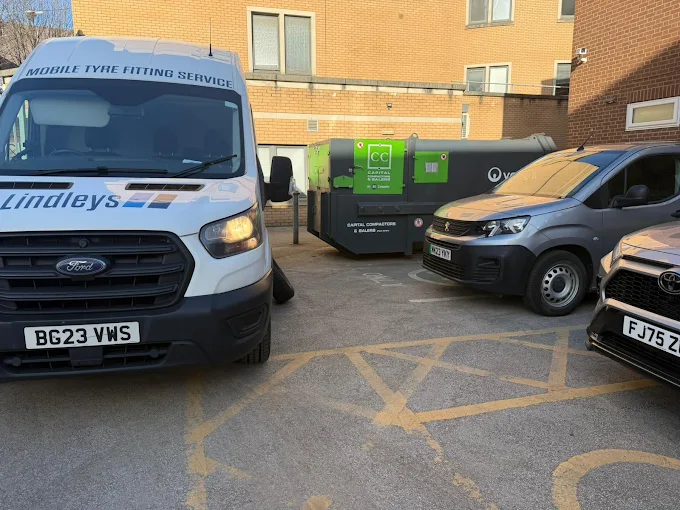
One of our mobile tyre fitting vans in operation across Nottinghamshire. While the mileage remained relatively low, the engine spent thousands of additional hours running compressors and tyre fitting equipment.
Every day, our technicians travel across Nottinghamshire fitting tyres at customers’ homes, workplaces and roadside locations. While the van may only cover a modest number of miles, the engine often spends hours running while stationary, powering the onboard compressor and equipment needed to carry out the work.
Looking back, that’s where we got caught out.
Like many people, we focused on the mileage. What we didn’t pay enough attention to was the sheer number of engine hours the vehicle was accumulating. The odometer was showing 58,000 miles, but the engine had spent far longer running than a typical Transit covering the same distance.
And that’s the lesson we’d like to share.
How This Ford Transit EcoBlue Wet Belt Failure Happened
What makes this story particularly interesting is that we weren’t unaware of the risks. Far from it.
As a group, we replace Ford EcoBlue wet belts virtually every day. We’ve seen Transit vans, Rangers and other EcoBlue-powered vehicles come through our workshops with worn belts, contaminated oil systems and, in some cases, significant engine damage.
We knew this van would eventually need a wet belt replacement and had every intention of carrying it out as preventative maintenance.
What we failed to fully appreciate was how demanding the van’s working life really was – Because it’s a mobile tyre fitting vehicle, it spends much of its day stationary with the engine running. The compressor required for tyre fitting work relies on the engine being on, meaning the vehicle can spend hours every day idling while carrying out jobs.
The result is an engine that accumulates operating hours at a much faster rate than the mileage would suggest.
Even for a business that performs these repairs regularly, it was a valuable reminder that operating conditions matter.
Why Ford Transit EcoBlue Wet Belt Failures Can Happen Earlier Than Expected
Most drivers judge a vehicle’s wear and tear by looking at the odometer.
In many cases that’s perfectly reasonable.
However, specialist commercial vehicles don’t always follow the same rules.
A motorway-driven Transit covering 20,000 miles a year will often experience very different operating conditions to a vehicle that spends much of its day stationary powering equipment.
The wet belt doesn’t know whether the vehicle is travelling at 70mph down the M1 or sitting outside a customer’s house fitting tyres.
If the engine is running, the belt is working.
The longer it spends immersed in engine oil and exposed to heat cycles, the more wear it experiences – That’s why engine hours can sometimes tell a much more accurate story than mileage alone.
What Other Fleet Operators Can Learn
Our experience won’t just apply to mobile tyre fitting vans.
Many of the lessons we’ve learned also apply to businesses using our Fleet Maintenance Services, particularly operators of:
-
Recovery vehicles
- Utility company vans
- Refrigerated vehicles
- Welfare units
- Highway maintenance vehicles
-
Traffic management vehicles
In each case, the vehicle may appear to have relatively low mileage while actually accumulating a substantial number of engine running hours.
For fleet operators, that’s an important distinction.
Maintenance schedules shouldn’t always be based solely on mileage. Understanding how a vehicle is used can be just as important.
What We’ll Do Differently
This experience has changed how we look at our own fleet.
While mileage remains an important indicator, we’re now paying much closer attention to engine hours and overall vehicle duty cycles when planning preventative maintenance.
Our mobile tyre fitting vans perform a very different role to a standard Transit, and their maintenance schedules need to reflect that reality.
It’s a lesson that cost us a wet belt failure to learn, but one that will help us make better decisions moving forward.
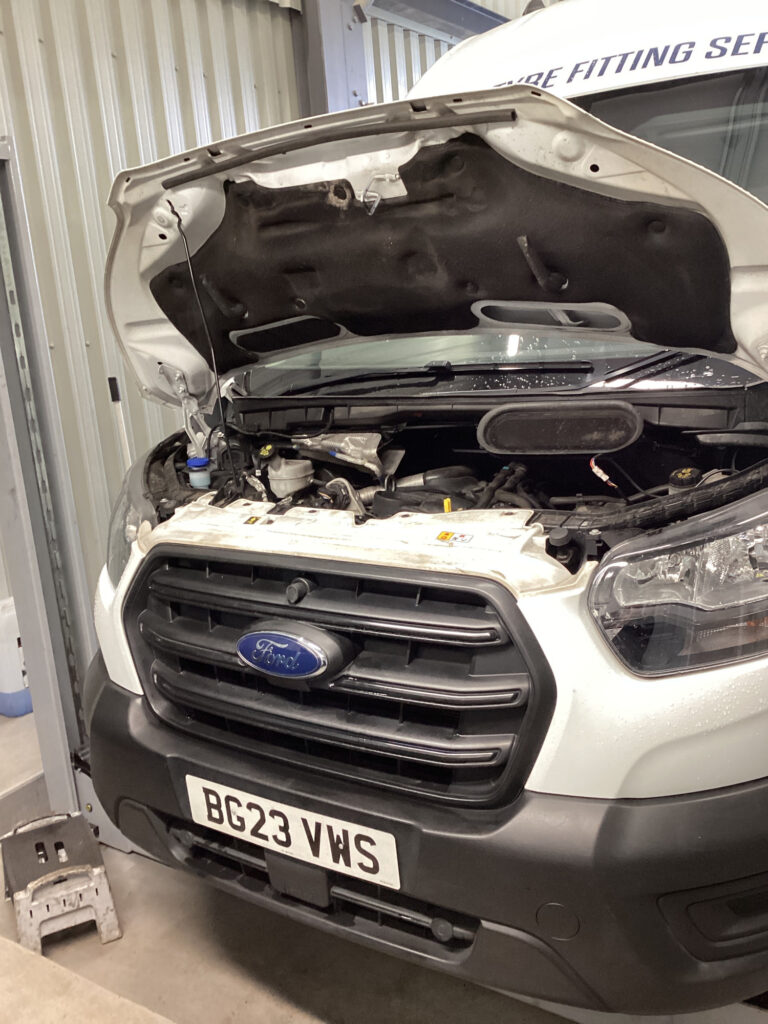
Transit Ecoblue being worked on at Lindleys in Nottingham
Final Thoughts
The irony isn’t lost on us.
We carry out Ford wet belt replacements across our network of Ford Servicing workshops, yet one of our own vans still managed to teach us something.
The lesson wasn’t about poor servicing or ignoring maintenance recommendations.
It was about understanding how the vehicle was being used.
If your Transit spends long periods idling while powering tools, compressors, refrigeration equipment or specialist machinery, don’t assume the mileage tells the full story.
Our own Ford Transit EcoBlue wet belt failure occurred at just 58,000 miles and the biggest contributing factor wasn’t the distance it had travelled. It was the amount of time the engine had spent running.
That’s a lesson we won’t forget, and it’s one we’d encourage other Transit owners and fleet operators to consider when planning preventative maintenance.
If sharing our experience helps another owner avoid an unexpected wet belt failure, then at least something positive came from it.
If you’re concerned about your own Transit, you can Book a Service with your local Lindleys Autocentres branch.
Ford’s maintenance schedules and service requirements can be viewed on the official Ford owner website.